The Islamic Revolutionary Guard Corps (IRGC) announced on 28 June that it will sustain pressure on the United States following a series of recent strikes in the Strait of Hormuz, a development that threatens the bilateral Memorandum of Understanding (MoU) governing navigation in the waterway. The statement, issued by the IRGC’s naval command, underscores Tehran’s resolve to defend its maritime interests despite heightened U.S. military activity.
Naval Tensions in the Strait of Hormuz
At 14:01 GMT, the IRGC reiterated its commitment to “maintain pressure” after two consecutive nights of confrontations over transit rights in the strategic chokepoint. The agency warned that continued U.S. actions could further jeopardise the MoU, which was intended to ensure safe passage for commercial vessels between Iran and the United Arab Emirates. The IRGC’s declaration came after a separate Al Jazeera report at 13:17 GMT highlighted both nations invoking Article 5 of the MoU to justify their respective naval maneuvers.
"Iran and the US trade attacks over navigation through the Strait of Hormuz, which emerges as a major sticking point," Al Jazeera reported.
Both reports note that no weapons were employed in the naval encounters, and there were no reported casualties. The confrontations remain limited to tactical posturing, vessel shadowing, and verbal warnings, but the diplomatic fallout is evident in Iranian market reactions, which have turned negative following the incidents.
U.S. Airstrikes Target IRGC Assets
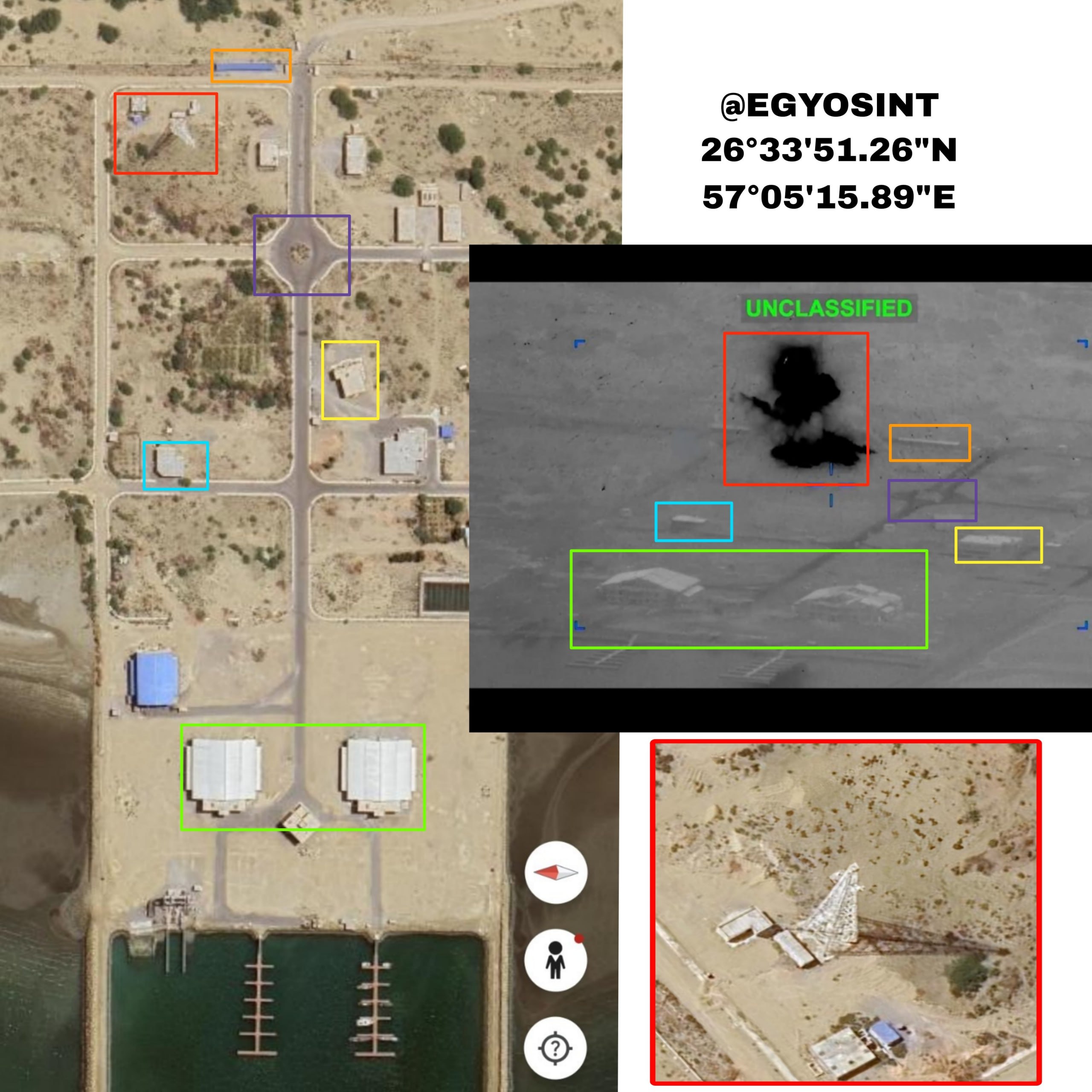
In a parallel escalation, U.S. Central Command (CENTCOM) conducted a precision strike at 11:42 GMT on an IRGC Navy communications tower located within the Sirik naval base in Hormozgan Province. The target, positioned at 26°33'51.26"N, 57°05'15.89"E, was identified as a critical node for Iranian maritime communications. According to the CIG_telegram channel, this was the second strike on the same tower within the month, indicating a sustained U.S. effort to degrade Iranian command‑and‑control capabilities.
"U.S. CENTCOM struck the communications tower at 26°33'51.26'N, 57°05'15.89'E, inside an IRGC Navy base in Sirik, Iran, again yesterday," the telegram read.
No casualties were reported, and the strike employed conventional munitions designed to neutralise electronic equipment without causing extensive structural damage. The operation aligns with U.S. policy to limit Iranian maritime surveillance and deter further interference with commercial shipping.
Later, at 09:41 GMT, CENTCOM expanded its campaign by targeting newly constructed Iranian surveillance and defense installations in the Strait of Hormuz itself. The strike destroyed a suite of assets, including radar installations, communications systems, air‑defence sites, drone storage facilities, and mine‑laying equipment. The Israeli‑based JPost confirmed the breadth of the targets, emphasizing the strategic value of the newly built infrastructure for Iran’s regional maritime posture.
"Two of CENTCOM's targets in weekend strikes in Hormuz were newly built by Iran, source tells 'Post'. Included in the targets were Iranian surveillance infrastructure, communications systems, air defense sites, drone storage facilities, and mine‑laying capabilities," JPost reported.
Again, there were no reported injuries or fatalities, and the weapons employed were precision‑guided munitions aimed at disabling electronic and defensive systems. The strikes represent a clear U.S. intent to curtail Iran’s ability to monitor and potentially control traffic through the strait, a vital conduit for global oil shipments.
Collectively, these events illustrate a rapid intensification of kinetic engagements between Iran and the United States in a region already fraught with geopolitical tension. While the naval confrontations have remained non‑lethal, the airstrikes demonstrate a willingness by U.S. forces to employ forceful measures against Iranian military infrastructure. The IRGC’s public commitment to sustain pressure suggests that diplomatic channels may be further strained, raising the risk of miscalculation in an already volatile environment.