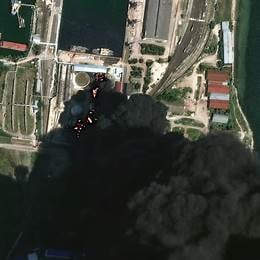
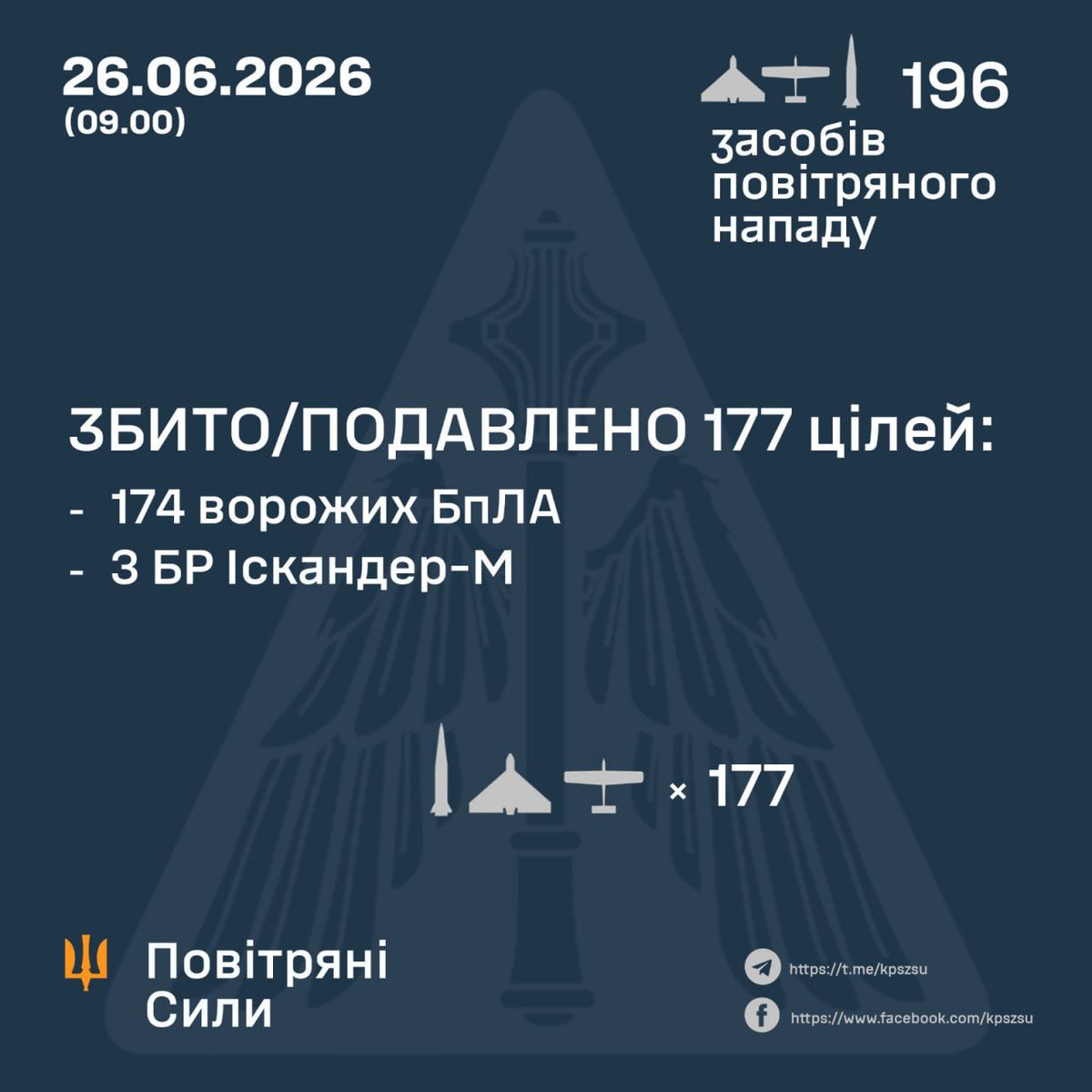
On the night of 26 June 2026, Russia launched a coordinated kinetic operation against Ukraine, employing seven Iskander‑M ballistic missiles and 189 unmanned aerial systems. Ukrainian air‑defence units reported intercepting 177 of the incoming threats, including three missiles and 174 drones, yet impacts were recorded at twelve separate locations across Ukrainian territory. The strike represents the most extensive use of both ballistic and drone assets by Russia in a single episode since the conflict began, underscoring a renewed emphasis on combined‑arms saturation attacks.
Event Details and Immediate Effects
The Iskander‑M missiles, capable of delivering a 480‑kilogram warhead at speeds exceeding Mach 5, were launched from undisclosed launch sites within Russian‑controlled territory. According to the monitoring channel monitor_the_situation, the missiles struck infrastructure targets, though specific facilities were not identified in the initial report. The 189 drones, described as loitering munitions, were deployed in waves to overwhelm Ukrainian surface‑to‑air systems. Ukrainian officials confirmed that the majority of the drones were neutralised by integrated air‑defence networks, but the residual strikes caused localized damage to power substations and transport corridors.
"Russia launched 7 Iskander‑M ballistic missiles and 189 drones at Ukraine; air defenses intercepted 177 targets, including 3 missiles and 174 drones, but impacts occurred at 12 locations." – monitor_the_situation, 27 June 2026, https://t.me/monitor_the_situation/22793
Reciprocal Ukrainian Drone Campaign
In a parallel development, Ukraine conducted its largest documented drone sortie against Russian territory. Russian defence officials reported the interception and destruction of 660 Ukrainian drones during the same overnight period. The drones were reportedly aimed at logistical nodes and energy facilities within the Russian heartland. While Russian sources emphasized the successful interception, the sheer volume of aircraft indicates a significant escalation in Ukraine’s offensive drone capability.
"Ukraine's largest air attack on Russian regions involved 660 Ukrainian drones intercepted and destroyed overnight into June 26, 2026, according to Russia's Defense Ministry." – OSINTdefender, 27 June 2026, https://t.me/OSINTdefender/19331
Al Jazeera independently corroborated the Russian claim, noting that the 660‑drone figure represented one of Kyiv’s most extensive aerial operations to date. The report also highlighted that Russia denied any request for additional Belarusian war aid in connection with the heightened drone activity.
"Russia reports downing 660 Ukrainian drones, denies seeking Belarus war aid." – Al Jazeera, 26 June 2026, https://www.aljazeera.com/news/2026/6/26/russia-reports-downing-660-ukrainian-drones-denies-seeking-belarus-war-aid?traffic_source=rss
Targeted Ammunition Site Strike
At approximately 08:17 UTC, Ukrainian drones attacked a field ammunition depot located within Russian territory, causing material damage to stored munitions. The incident, reported by monitor_the_situation, did not result in reported casualties but demonstrated Ukraine’s capacity to project kinetic effects beyond its borders using low‑observable UAV platforms.
"Ukrainian drones strike a field ammunition site in Russia, causing damage." – monitor_the_situation, 27 June 2026, https://t.me/monitor_the_situation/22805
Regional Escalation: Israel‑Lebanon Incident
Separately, the Middle East witnessed a kinetic episode when Israeli forces reportedly struck targets in Lebanon. The action occurred amid ongoing diplomatic talks involving Israeli and Lebanese delegations. While casualty figures were not disclosed, the strike adds a new layer of volatility to the broader regional conflict that entered its 119th day of hostilities. The International Atomic Energy Agency (IAEA) concurrently announced its intention to resume operations in Iran, a development that may influence strategic calculations across the region.
"Iran war day 119: Israel hits Lebanon as IAEA says it will return to Iran." – Al Jazeera, 26 June 2026, https://www.aljazeera.com/news/2026/6/26/iran-war-day-119-israel-hits-lebanon-as-iaea-says-it-will-return-to-iran?traffic_source=rss
Analytical Assessment
The coordinated use of Iskander‑M missiles and a large drone swarm by Russia reflects a doctrinal shift toward integrated kinetic strikes designed to saturate enemy air‑defence capacities. The partial success of the operation—evidenced by impacts at twelve locations—suggests that while Ukraine’s layered defence architecture remains robust, it is not impervious to high‑volume attacks.
Ukraine’s reciprocal drone offensive, targeting Russian logistical infrastructure, indicates a strategic intent to impose reciprocal costs and to test the resilience of Russian air‑defence systems. The parallel reporting of 660 drones intercepted by Russian forces, both by OSINTdefender and Al Jazeera, underscores the scale of the operation and the importance of open‑source verification.
Both sides appear to be leveraging unmanned systems to achieve tactical effects while minimizing personnel exposure. The Ukrainian strike on a Russian ammunition depot, though limited in scope, exemplifies the expanding operational reach of drone assets in the conflict.
In the broader regional context, the Israeli strike on Lebanon, coupled with the IAEA’s planned return to Iran, highlights the interconnected nature of kinetic events across multiple theatres. While these incidents are not directly linked to the Ukraine‑Russia front, they contribute to a heightened risk environment that may affect diplomatic and military postures regionally.
Overall, 26 June 2026 marked a day of intensified kinetic activity across several fronts, with both state and non‑state actors employing a mix of ballistic, aerial, and unmanned platforms to achieve strategic objectives.