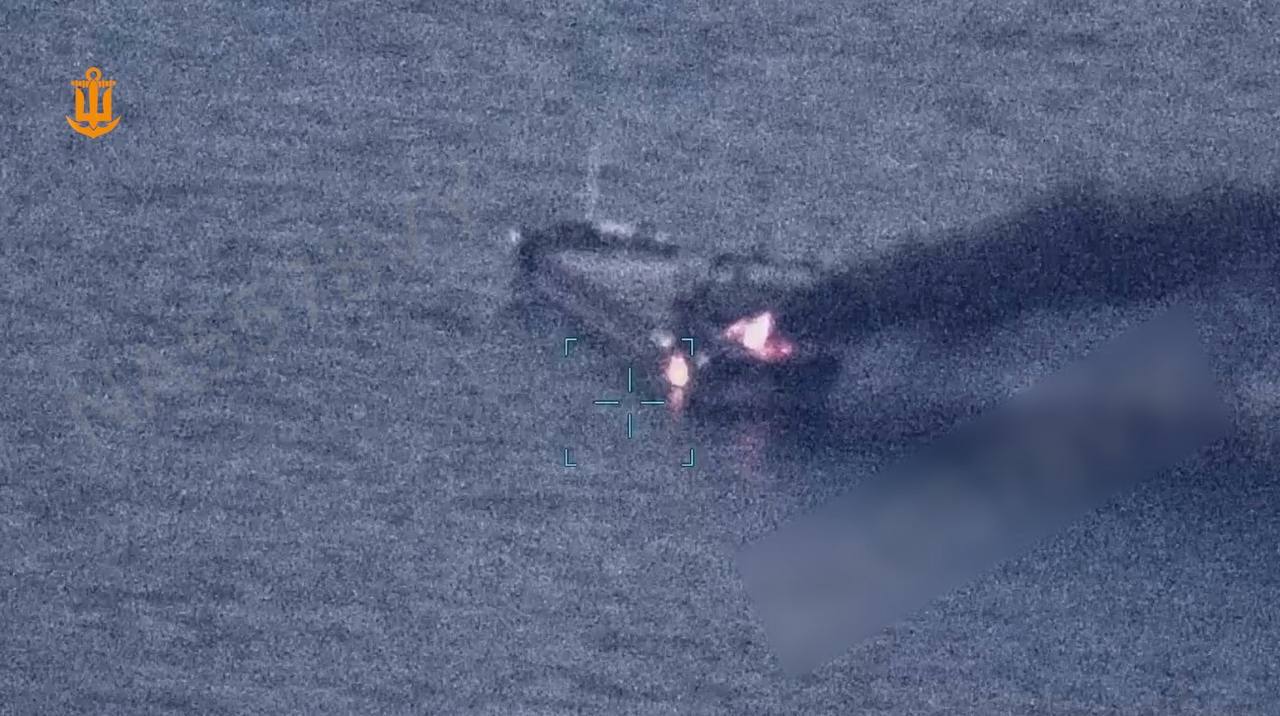
On 22 June 2026, a Russian‑operated unmanned aerial vehicle (UAV) struck the Turkish‑owned, Panama‑flagged cargo vessel VICTRESS in an incident reported by GeoPWatch at 11:56 UTC. The drone impact ignited a fire that engulfed the ship’s deck, resulting in the death of one crew member, an Egyptian national who served as the vessel’s cook. The nine‑person crew was evacuated, and the vessel sustained extensive damage. GeoPWatch provided a photograph of the burning hull and linked to the original Telegram post (https://t.me/GeoPWatch/36560). The attack underscores the expanding use of armed UAVs in maritime contexts and raises concerns about the protection of commercial shipping in contested waters.
Active shooter incident in Montreal
At 17:15 UTC, Canadian media outlet JPost reported an active shooter near Jewish community sites in Montreal, Canada. Police responded and a uniformed officer sustained injuries. The Montreal Police, cited by CBC, declared the situation ongoing and instructed residents to remain indoors. No casualty figures beyond the injured officer were released. The incident highlights heightened security concerns for minority communities in Western urban centers.
Unverified hostage situation in Montreal
Earlier, at 17:05 UTC, a Telegram channel (idkunim_il) posted an unverified claim that armed individuals were holding Jewish hostages inside a kosher supermarket in Montreal. The report lacked corroborating details, including the number of hostages or the identity of the perpetrators. No official statements have confirmed the claim, and the source’s reliability remains uncertain.
Israeli counter‑terror operation
At 16:44 UTC, Israeli defense officials announced that the Israel Defense Forces (IDF) and internal security agency Shin Bet had eliminated a member of the Nukhba terrorist unit involved in the kidnapping of Omer Shm Tov, a civilian held by Hamas. The operation, reported by idkunim_il (https://t.me/idkunim_il/60717), was described as a targeted strike with no collateral damage reported. The elimination of the operative reflects ongoing Israeli efforts to disrupt Hamas‑affiliated networks.
German troop deployment to Lithuania
According to OSINTdefender (https://t.me/OSINTdefender/19304), Germany moved approximately 5,000 soldiers to Lithuania on 22 June, reinforcing NATO’s eastern flank amid heightened tensions with Belarus and Russia. The deployment includes the newly formed Armored Brigade 45, marking Germany’s first permanent foreign troop presence since World War II. No combat engagements have been reported, but the move signals a strategic shift in NATO’s deterrence posture.
Ukrainian strike on Russian missile electronics plant
Al Jazeera (https://www.aljazeera.com/news/2026/6/22/ukraine-says-it-hit-missile-electronics-plant-in-western-russia?traffic_source=rss) reported that Ukrainian forces struck a missile electronics facility in western Russia, describing it as a critical component of Russian defence production. Russian authorities confirmed the attack but did not disclose damage assessments. The strike illustrates Ukraine’s continued targeting of high‑value Russian industrial assets.
Ukrainian cruise missile launch intercepted
At 10:11 UTC, monitor_the_situation relayed that Ukraine launched multiple FP‑5 Flamingo cruise missiles toward the Chuvash Republic. Russian air defence systems intercepted the missiles, preventing impact. No casualties were reported. The incident demonstrates the contested airspace over Russian territory and the effectiveness of Russian integrated air defence.
Missile threat warning in Moscow region
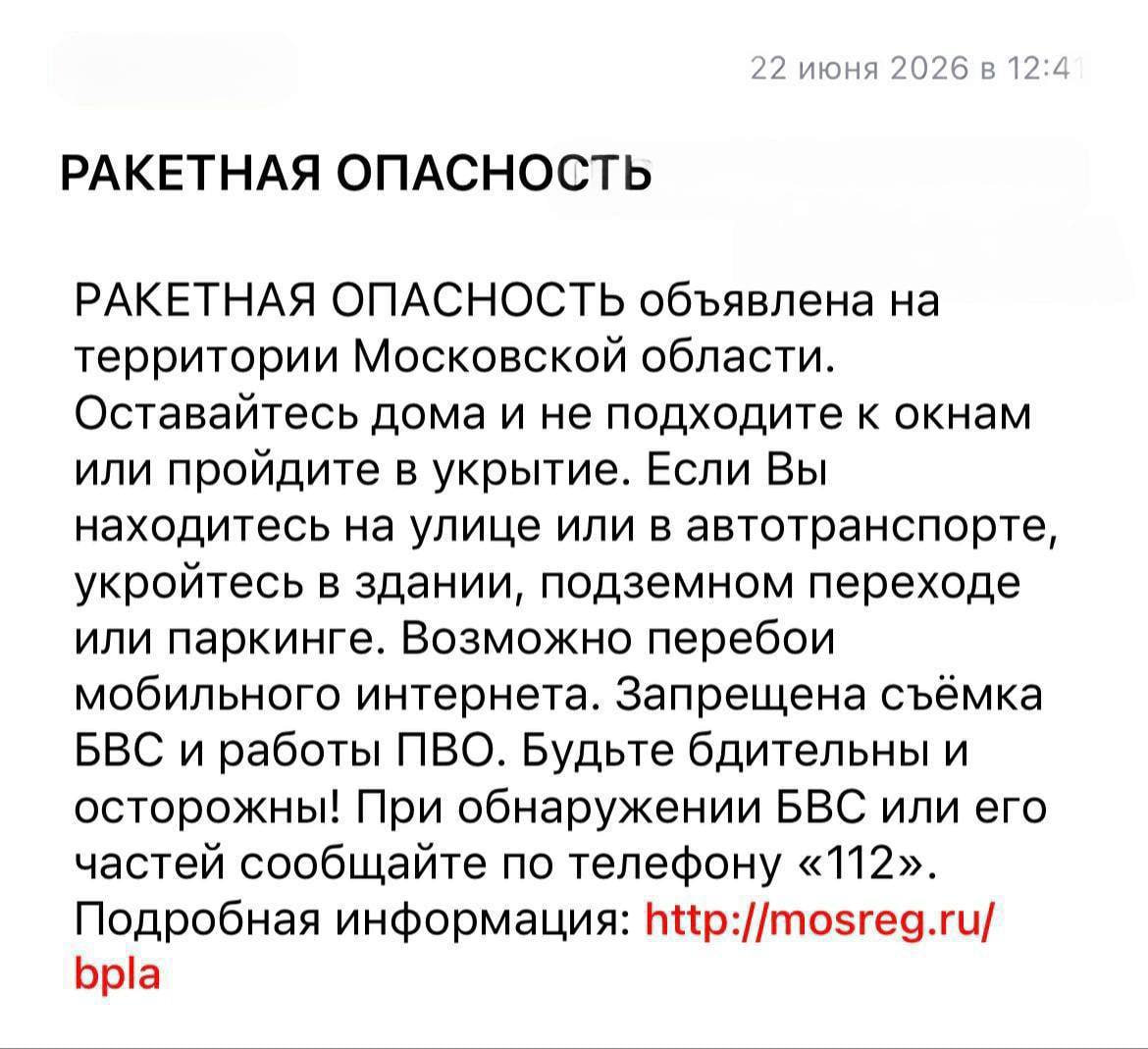
BellumActaNews (https://t.me/BellumActaNews/174464) cited Russian media alerts warning residents of a missile threat in the Moscow region, urging the public to seek shelter in buildings or parking structures. The warning followed reports of Ukrainian missile activity but did not specify the origin or type of missile. No incidents were confirmed at the time of reporting.
US reconnaissance aircraft intercepted near Taiwan
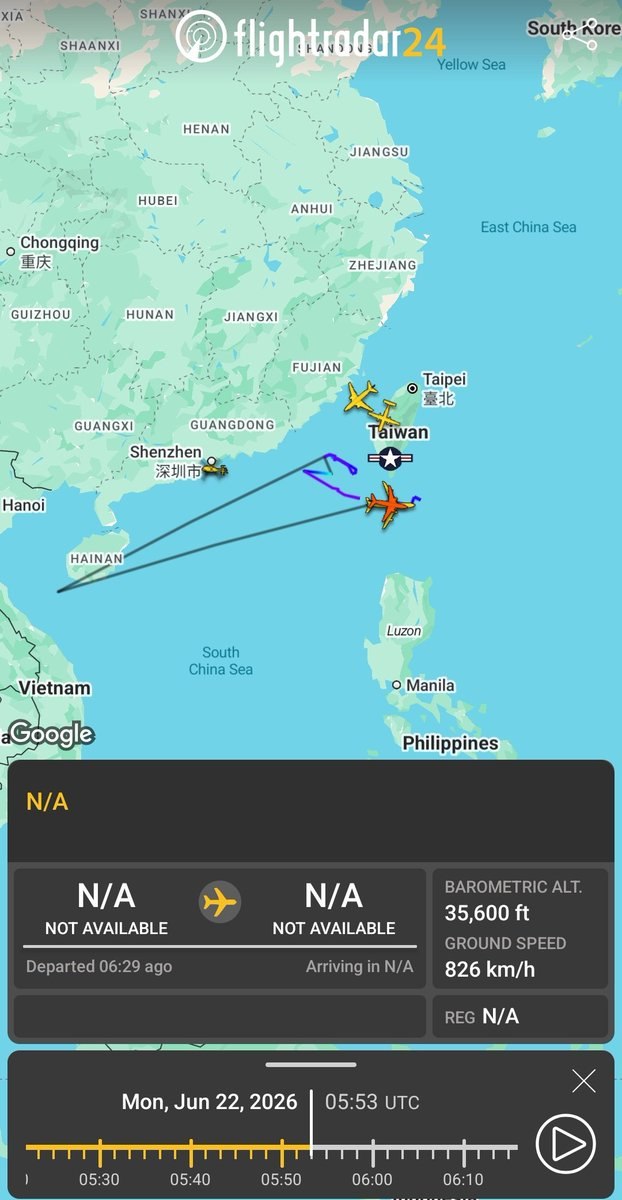
At 07:07 UTC, monitor_the_situation reported that a United States Air Force RC‑135U “Combat Sent” spy plane was intercepted by a People’s Liberation Army Air Force (PLAAF) fighter over the Taiwan Strait. This marks the second interception in as many days, reflecting heightened aerial tension in the region. No hostile engagement was reported, and the US aircraft continued its mission after the encounter.
“The use of armed drones against commercial shipping represents a dangerous escalation that threatens global trade routes,” a maritime security analyst noted, emphasizing the need for coordinated international response.
Collectively, the events of 22 June illustrate a pattern of kinetic engagements across multiple domains—maritime, urban, and aerial—driven by state and non‑state actors. While some incidents, such as the German troop deployment, are strategic posturing, others involve direct lethal force with immediate human cost. Monitoring these developments remains essential for assessing escalation risks and informing policy responses.