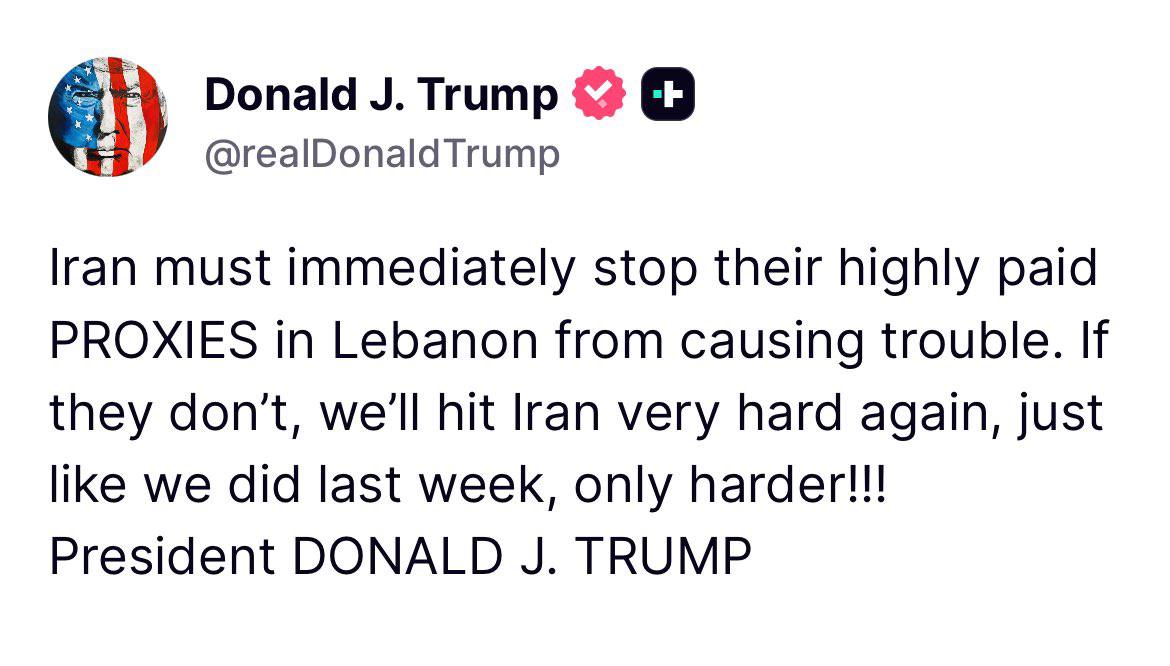
On 21 June 2026, Iran launched a coordinated missile operation that destroyed United States long‑range radar installations in Bahrain and Kuwait. The strikes, reported by the monitoring channel monitor_the_situation, represent the most significant kinetic event recorded on this date, marking a direct escalation between Tehran and Washington following recent U.S. strikes in the region.
"Iran destroys US radar sites in Bahrain and Kuwait, hitting multiple US facilities," monitor_the_situation, 21 June 2026.
The missile barrage targeted two high‑frequency radar arrays that support U.S. early‑warning and surveillance capabilities across the Gulf. While the precise missile type was not disclosed, the operation was described as a "long‑range" strike, indicating the use of medium‑to‑intercontinental ballistic missiles capable of reaching the Gulf states from Iranian territory. No U.S. personnel casualties were reported, but the loss of the radar assets is expected to degrade American situational awareness in the region.
Operational Context and Immediate Effects
The Iranian action was framed as retaliation for undisclosed U.S. strikes earlier in the month. By targeting critical infrastructure rather than personnel, Tehran appears to be signaling both capability and restraint, aiming to impose a strategic cost on U.S. intelligence operations without provoking a direct kinetic response that could lead to broader conflict. The United States has not yet issued an official statement, but the Department of Defense is reportedly assessing alternative surveillance options to mitigate the loss.
Israeli Airstrike on Lebanese Conservationist
In a separate incident, an Israeli airstrike on 4 June 2026 struck the home of Lebanese turtle conservationist Mona Khalil in the coastal town of Tyre. The strike, documented by the JPost, resulted in Khalil’s death and injuries to her assistant, who suffered burns and shrapnel wounds. No military target was identified at the location, and the incident has been classified as a civilian casualty.
"Famed Lebanese turtle conservationist Mona Khalil dies of injuries sustained from Israeli strike," JPost, 21 June 2026.
The attack underscores the expanding reach of Israeli kinetic operations beyond traditional battlefield zones, raising concerns about the protection of non‑combatants and environmental activists in contested areas. The Lebanese government has condemned the strike, calling for an independent investigation, while Israel has not publicly addressed the specific incident.
Targeted Killing of Al Jazeera Cameraman
Earlier on 21 June 2026, Al Jazeera cameraman Ahmed Wishah was killed in a targeted Israeli strike in an undisclosed location. The incident, reported by AlJazeera, marks the first confirmed lethal attack on a journalist by Israeli forces in the current conflict cycle.
"Al Jazeera cameraman Ahmed Wishah killed in targeted Israeli strike," AlJazeera, 21 June 2026.
Wishah was reportedly covering a separate operation when his vehicle was struck by a precision munition. No additional casualties were reported. The killing has prompted renewed calls from international press freedom organizations for stronger protections for journalists operating in conflict zones.
Broader Implications
The convergence of these three kinetic events on a single day illustrates a widening spectrum of conflict tactics in the Middle East. Iran’s missile strike demonstrates a willingness to engage in strategic infrastructure attacks, while Israel’s air operations continue to produce civilian and media casualties, potentially eroding international support and complicating diplomatic efforts.
All three incidents were reported by open‑source channels, with source URLs provided for verification: monitor_the_situation, JPost, and AlJazeera. The lack of explicit claims of responsibility in the Israeli cases, combined with Iran’s clear attribution, highlights differing communication strategies among regional actors.
While the immediate tactical outcomes are evident—destruction of radar capability, loss of a prominent environmentalist, and the death of a journalist—the strategic ramifications remain uncertain. Monitoring agencies will need to track subsequent diplomatic communications, potential retaliatory measures, and any shifts in rules of engagement that may arise from these events.