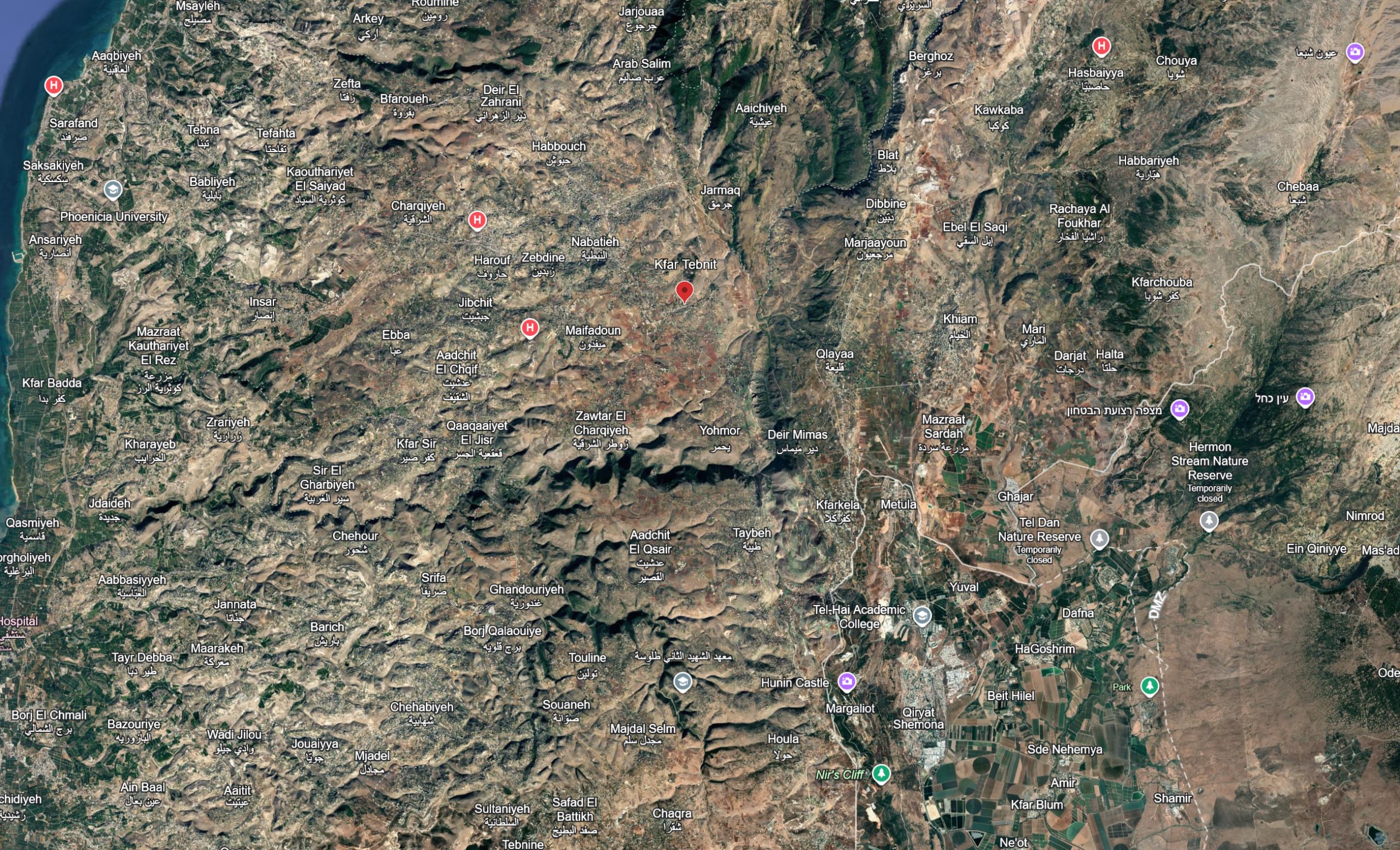
On 18 June 2026, a series of kinetic engagements unfolded across southern Lebanon, reflecting a marked escalation in hostilities between Israeli forces and Lebanese armed groups. The most consequential incident occurred in the village of Kfar Tebnit, where direct combat between Hezbollah fighters and the Israel Defense Forces (IDF) resulted in twenty Israeli soldiers wounded and the death of a staff sergeant. The clash, reported by the CIG telegram channel, illustrates the intensifying ground confrontation that has accompanied aerial and unmanned operations throughout the day.
Hezbollah‑IDF Clash in Kfar Tebnit
According to a CIG telegram post (https://t.me/CIG_telegram/77914), Hezbollah engaged IDF units repeatedly in and around Kfar Tebnit, a settlement situated south of the city of Nabatieh. The engagement produced twenty wounded IDF personnel and one fatality—a staff sergeant—while Israeli helicopters were observed airlifting additional casualties to medical facilities inside Israel. No Lebanese casualties were disclosed. The encounter involved small‑arms fire and indirect fire, although the source did not specify the exact weapons employed. The incident underscores the village’s strategic relevance as a conduit between Hezbollah’s southern strongholds and the broader Litani corridor.
"Hezbollah clashed repeatedly with the IDF in a battle for the village of Kfar Tebnit… 20 IDF soldiers were wounded and a staff sergeant was killed," CIG telegram, 18 June 2026.
Israeli Rocket Interception in Southern Lebanon
Earlier in the afternoon, the Israeli Air Force intercepted a salvo of rockets launched toward IDF positions in southern Lebanon. The rockets landed in proximity to Israeli forces but caused no casualties, as reported by the idkunim_il channel (https://t.me/idkunim_il/60630). The intercepted munitions were identified as standard unguided rockets, a weapon type frequently employed by Hezbollah and affiliated militias. The successful interception demonstrates the operational readiness of Israel’s aerial defense assets, which continue to monitor cross‑border trajectories in real time.
Expansion of the Israeli Security Zone
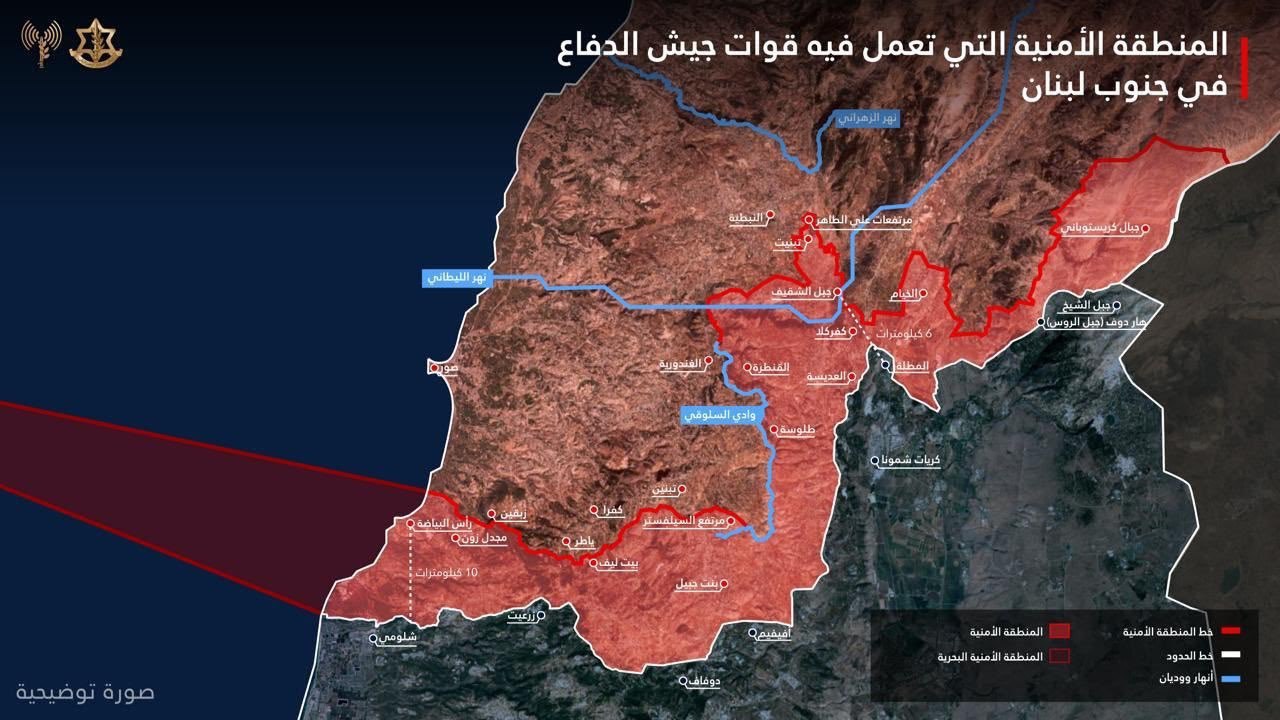
In a separate development, the Israeli army released a map delineating a security zone extending up to ten kilometres inside Lebanese territory. The map, circulated by BellumActaNews (https://t.me/BellumActaNews/174377), indicates that Israeli troops are deployed across this corridor to neutralize perceived threats and to bolster defensive positions for northern Israeli communities. While the map itself does not detail troop numbers, the public disclosure signals a formalization of Israeli forward presence, a factor that may influence the calculus of future engagements.
Hezbollah Drone Strike on IDF Excavator
Hezbollah published video footage of an unmanned aerial vehicle (UAV) strike targeting an IDF excavator near Majdal Zoun, a town in southern Lebanon. The footage, dated 13 June 2026 and shared by intelslava (https://t.me/intelslava/89162), shows an Ababil fiber‑optic first‑person‑view (FPV) drone delivering a precision strike on the construction equipment. No casualty figures were released, and the IDF has not publicly confirmed damage to the excavator. The use of commercially available FPV drones for kinetic attacks reflects a growing trend among non‑state actors to leverage low‑cost technology for targeted strikes.
IED Ambush in Taybeh, Litani District
Resistance groups in the Litani region detonated an improvised explosive device (IED) network against an Israeli military jeep and a command post belonging to the IDF’s 36th Division. The ambush, reported by monitor_the_situation (https://t.me/monitor_the_situation/21904), resulted in multiple Israeli soldiers killed and wounded, though exact numbers were not disclosed. The coordinated use of IEDs indicates a level of planning and operational capability among Lebanese resistance cells, and it highlights the continued vulnerability of ground convoys operating in contested zones.
Israeli Drone Strike Near Nabatieh
At approximately 07:00 UTC, an Israeli UAV conducted a strike near the city of Nabatieh. The rnintel channel (https://t.me/rnintel/62788) described the operation as a likely targeted assassination, though no specific individual was identified. The strike employed a conventional armed drone, but the report did not confirm any casualties or material damage. The incident adds to a pattern of precision UAV operations aimed at high‑value targets within Lebanese territory.
Collectively, these events illustrate a multi‑dimensional escalation: conventional ground combat, aerial interception, unmanned strikes, and explosive ambushes. The convergence of these tactics suggests that both state and non‑state actors are employing a broader spectrum of kinetic tools to achieve tactical objectives while managing the risk of broader escalation.