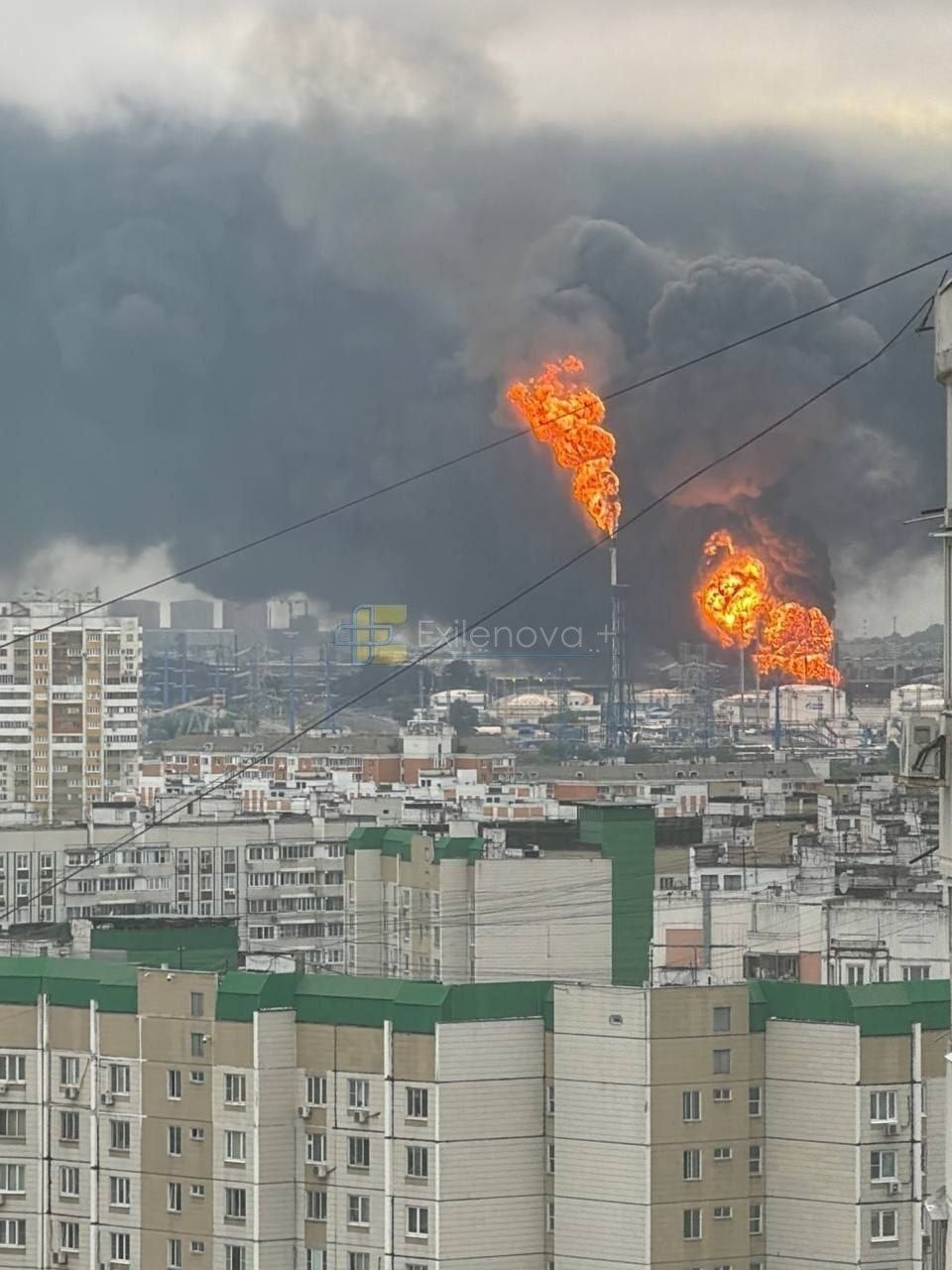
In the early hours of 18 June 2026, Russian authorities reported a coordinated drone assault on the Kapotnya oil refinery on the outskirts of Moscow. More than 50 unmanned aerial systems were engaged by air‑defence units, yet several penetrated the defensive perimeter and struck the processing complex. The attack marks the most intensive aerial incursion on Russian energy infrastructure since the start of the conflict, and it coincides with a separate maritime episode in which Iranian vessels deliberately navigated through a United States naval blockade in the Persian Gulf.
Moscow Oil Refinery Drone Assault
The mayor of Moscow, Sergei Sobyanin, confirmed that the Russian capital’s air‑defence network shot down “over 50 drones” attempting to approach the city at approximately 04:50 GMT. According to the official Telegram channel of intelslava, “several of them managed to reach the plant” after evading interception. No casualties were reported among refinery personnel, and damage assessments are pending, though initial satellite imagery suggests localized fire damage to auxiliary storage tanks.
"We have neutralised the majority of the hostile UAVs, but a handful succeeded in striking the Kapotnya facility," Sobyanin said in a televised briefing. "Our priority remains the protection of critical infrastructure and the safety of Moscow’s residents." – Source: intelslava (https://t.me/intelslava/89135)
The weapons employed were described only as “drones” in the source material, with no specific model identified. The sheer volume of aircraft suggests a swarm‑type tactic, potentially coordinated by a foreign intelligence service or a proxy group with access to commercial or modified UAV platforms. Russian air‑defence systems, including the S‑300V4 and Pantsir‑S1, were reportedly activated, reflecting a high‑alert posture for the capital’s airspace.
Ukrainian One‑Way Attack Drones
Within the same timeframe, BellumActaNews reported that Ukrainian forces launched a separate strike on a Moscow oil refinery using Antonov An‑196 “Liutyi” one‑way attack drones. The An‑196, a large transport aircraft adapted for single‑use strike missions, was equipped with a payload of explosives and guided by pre‑programmed flight paths. The report indicated that the drones targeted both the refinery and nearby residential buildings, though no civilian casualties were confirmed at the time of writing.
"Ukrainian Forces have struck Moscow Oil refinery and several residential buildings with Antonov An‑196 ‘Liutyi’ drones," the post read. "The operation demonstrates a new capability to deliver high‑payload strikes from long range." – Source: BellumActaNews (https://t.me/BellumActaNews/174356)
The deployment of An‑196 platforms represents a notable escalation in Ukraine’s offensive UAV capabilities. Unlike smaller quad‑copter swarms, the An‑196 can carry a larger warhead and travel greater distances, potentially extending the reach of Ukrainian strike operations into the Russian heartland. Analysts note that the use of one‑way drones reduces the risk of aircraft loss while delivering a decisive kinetic effect.
Iranian Maritime Defiance
Concurrently, Iranian state media reported that eleven Iranian vessels deliberately sailed through a U.S. naval blockade in the Persian Gulf after a memorandum of understanding (MoU) was finalized between Tehran and Washington. The vessels, identified as commercial tankers and cargo ships, passed within a few nautical miles of U.S. destroyers operating under the Fifth Fleet. No hostile engagement was recorded, and the Iranian Navy described the maneuver as a “peaceful navigation exercise” intended to demonstrate compliance with the MoU while asserting sovereign rights.
"11 Iranian Ships Sail Through US Naval Blockade After MoU," the monitor_the_situation channel posted. "The action escalates maritime tensions but does not involve weapons." – Source: monitor_the_situation (https://t.me/monitor_the_situation/21865)
The incident underscores the fragile status of maritime security in the Gulf, where the United States maintains a continuous presence to enforce sanctions and protect shipping lanes. Iran’s decision to breach the blockade, even without armed confrontation, signals a willingness to test the limits of U.S. operational freedom and could set a precedent for future navigational challenges.
Strategic Implications
Taken together, the twin drone attacks on Russian oil infrastructure and Iran’s maritime defiance illustrate a broader pattern of asymmetric escalation across multiple domains. The Moscow refinery strikes demonstrate the increasing sophistication of UAV tactics, ranging from high‑volume swarms to long‑range, payload‑heavy one‑way drones. Both methods aim to disrupt Russia’s energy production, a critical revenue source for the Kremlin, while imposing psychological pressure on the civilian population.
In the Persian Gulf, Iran’s calculated breach of the U.S. blockade reflects a parallel strategy of leveraging non‑kinetic actions to achieve political objectives. By navigating through the blockade, Tehran tests U.S. resolve without provoking an immediate military response, thereby preserving the status quo while signaling its capacity to challenge maritime restrictions.
For regional security analysts, the convergence of these events on a single day highlights the need for integrated monitoring of aerial and maritime threats. The ability of state and non‑state actors to coordinate high‑impact operations across disparate theaters suggests a shift toward multi‑vector pressure tactics that could complicate traditional deterrence frameworks.
Continued observation of drone procurement, command‑and‑control structures, and the legal interpretations of naval blockades will be essential for forecasting future escalation cycles in the Eurasian and Middle Eastern theaters.