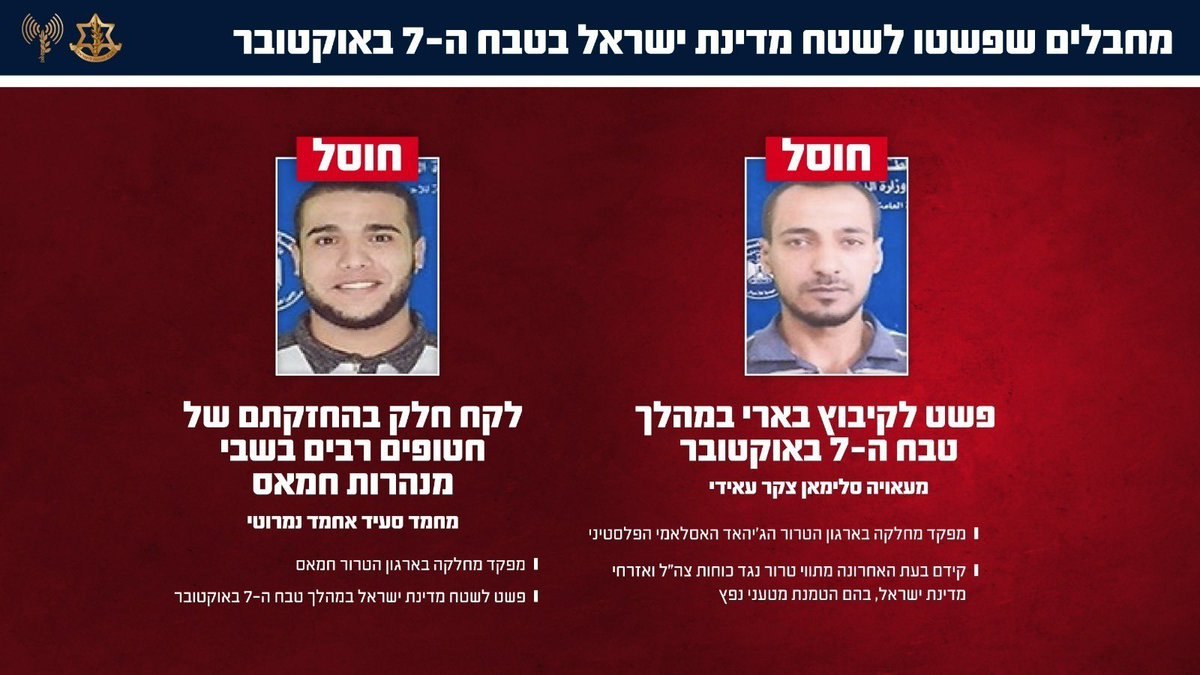
On June 17, 2026, the Israeli military conducted a series of kinetic operations across the Palestinian territories, resulting in the targeted killing of senior militants and the expansion of Israeli control over contested sites. The most consequential event was an Israeli Air Force strike in the central Gaza Strip that eliminated Muawia Aidi, a platoon commander of the Palestinian Islamic Jihad (PIJ) who had participated in the October 7 Kibbutz Be'eri massacre.
"Israeli Air Force killed Muawia Aidi, a PIJ platoon commander in central Gaza who participated in the October 7 Kibbutz Be'eri massacre," monitor_the_situation reported.
The strike, recorded at 11:26:31 UTC, was carried out without the use of additional weaponry beyond the aircraft’s ordnance, and no civilian casualties were reported in the immediate aftermath. The operation underscores Israel’s continued focus on decapitating the leadership of militant groups that were directly involved in the October 7 attacks.
Secondary Airstrike Targets Hamas Operatives in Central Gaza
At 16:19:14 UTC, the Israeli Air Force conducted a second strike in central Gaza, killing two Hamas operatives—Ahmed Abu Hin and Mahmoud Walid Gaber Abu Hin—both identified as participants in the October 7 assault. The operation, documented by monitor_the_situation, involved a precision airstrike that resulted in the deaths of the two militants without reported collateral damage.
"Israel Kills Two Hamas Operatives in Central Gaza Strike," monitor_the_situation noted.
These targeted killings reflect a pattern of high‑value strikes aimed at individuals directly linked to the initial large‑scale attacks on Israeli civilians.
Assassination of Hamas Commander in Southern Gaza
Earlier in the day, at 11:25:48 UTC, an Israeli Air Force strike in the southern Gaza Strip eliminated Muhammad Sa'id Ahmad Nimruti, a Hamas platoon commander also tied to the October 7 operations. The strike, classified as an airstrike in the source report, further demonstrates Israel’s use of aerial assets to neutralize senior militant figures across multiple Gaza sectors.
"Israeli Air Force struck southern Gaza, killing Muhammad Sa'id Ahmad Nimruti, a Hamas platoon commander who participated in the October 7 attack," monitor_the_situation reported.
No civilian injuries were reported, and the operation was captured on video by the monitoring channel.
Ground Movement: Israeli Forces Seize Ibrahimi Mosque in Hebron
In the West Bank, Israeli forces took control of the Ibrahimi Mosque in Hebron at 11:41:47 UTC, ending the Palestinian Authority’s administrative oversight of the site. The mosque, a focal point of religious and political significance, had been under Palestinian planning and construction authority since the 1997 Hebron Agreement. The seizure, reported by Al Jazeera, marks a notable escalation in Israeli ground operations within the occupied territories.
"Israel takes control of Hebron’s Ibrahimi Mosque: What this means," AlJazeera explained.
The move has implications for the fragile status quo governing holy sites and may affect future negotiations concerning the administration of religious properties in the West Bank.
Settler Violence: Arson Attacks on West Bank Mosques
At 09:31:24 UTC, Israeli settlers set fire to several mosques across the occupied West Bank, as documented by monitor_the_situation. The arson attacks represent a continuation of settler‑related violence targeting religious infrastructure, contributing to heightened tensions between Israeli settlers and Palestinian communities.
"Israeli settlers set fire to multiple mosques in the occupied West Bank, escalating attacks on religious sites amid ongoing violence against Palestinians," monitor_the_situation reported.
While no fatalities were reported, the destruction of worship spaces intensifies grievances and may provoke retaliatory actions.
Analytical Overview
The coordinated airstrikes on June 17 demonstrate Israel’s strategic emphasis on eliminating senior operatives linked to the October 7 attacks, employing precision aerial capabilities across both central and southern Gaza. The simultaneous ground operation in Hebron and the settler‑initiated arson attacks in the West Bank illustrate a multi‑theater approach that combines state‑directed military actions with civilian settler aggression.
From a conflict‑monitoring perspective, the events reveal three intersecting dynamics: (1) a sustained Israeli campaign to degrade the command structures of PIJ and Hamas; (2) an expansion of Israeli control over contested religious sites in the West Bank, potentially altering the administrative balance established by past agreements; and (3) an escalation of settler‑related violence that complicates the security environment for Palestinian civilians.
These developments are likely to influence both the operational calculus of militant groups and the diplomatic discourse surrounding the Israeli‑Palestinian conflict. Continued monitoring of casualty figures, civilian impact, and the response of Palestinian authorities will be essential for assessing the trajectory of the conflict in the coming weeks.