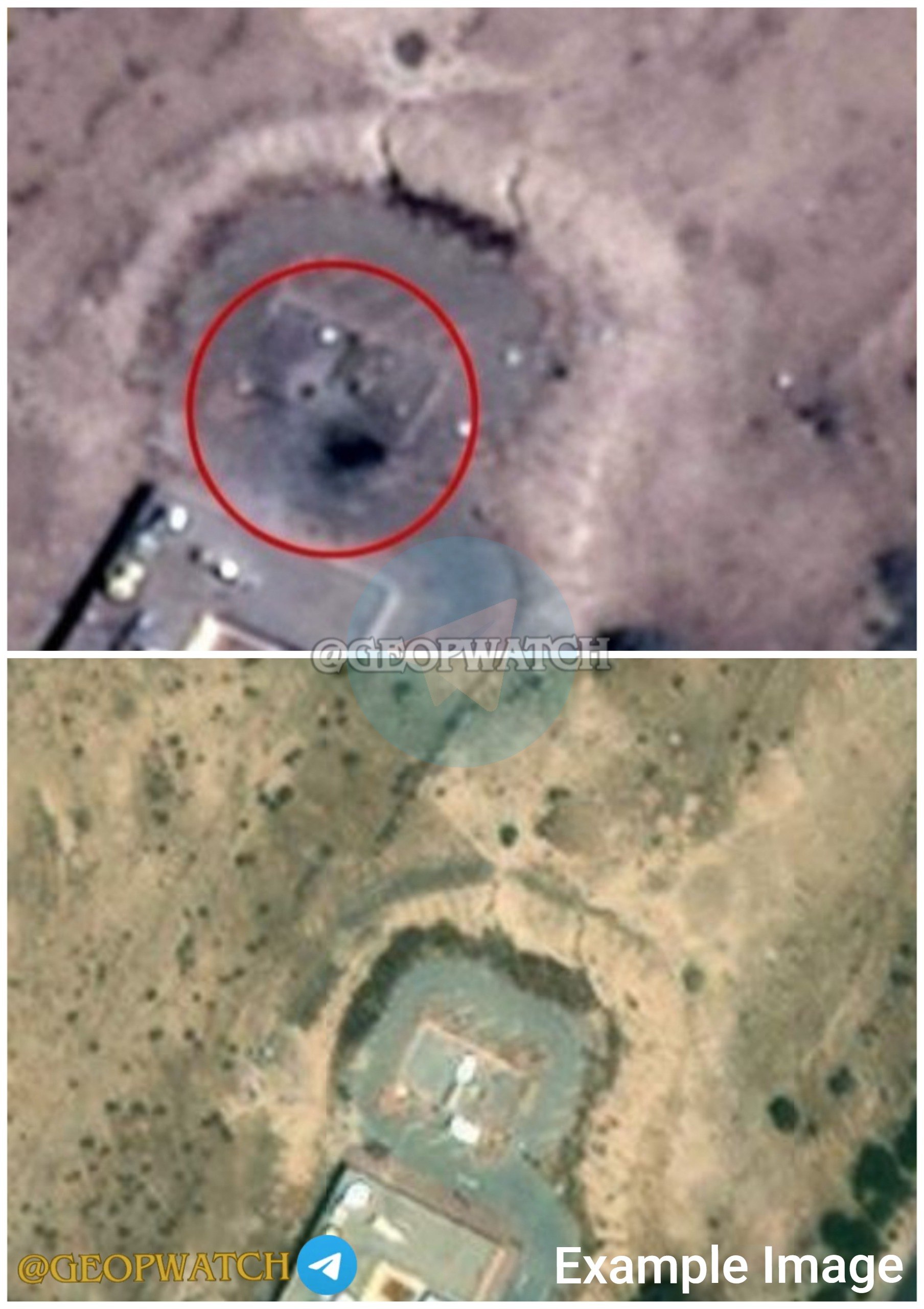
Iranian forces used a drone and missile to destroy an ASR-1000 L‑Band Tactical Air Surveillance Radar at Ali Al Salem Air Base in Kuwait, marking the first confirmed strike on a foreign military installation since the start of 2026. The attack was documented by GeoPWatch, which released satellite imagery showing the radar completely demolished shortly after 01:50 UTC on 14 June. No casualties were reported, but the loss of the radar degrades Kuwait’s early‑warning capability and signals a willingness by Tehran to project power beyond its borders.
"Iran released satellite imagery showing its drone/missile destroyed an ASR‑1000 radar at Ali Al Salem Air Base in Kuwait," GeoPWatch, 14 June 2026, https://t.me/GeoPWatch/36314
Technical Details of the Kuwaiti Strike
The ASR‑1000 is a high‑resolution, L‑Band radar used for airspace surveillance and target tracking. According to the imagery, the strike produced a crater consistent with a kinetic impact followed by a secondary explosion, suggesting a combined drone‑borne missile payload. GeoPWatch did not identify the specific drone model, but the precision of the impact aligns with Iran’s reported development of loitering munitions capable of striking fixed installations at ranges exceeding 500 km. The operation demonstrates an escalation in Iran’s use of unmanned systems for strategic targeting.
Israeli Airstrike on Kermanshah Underground Missile Facility
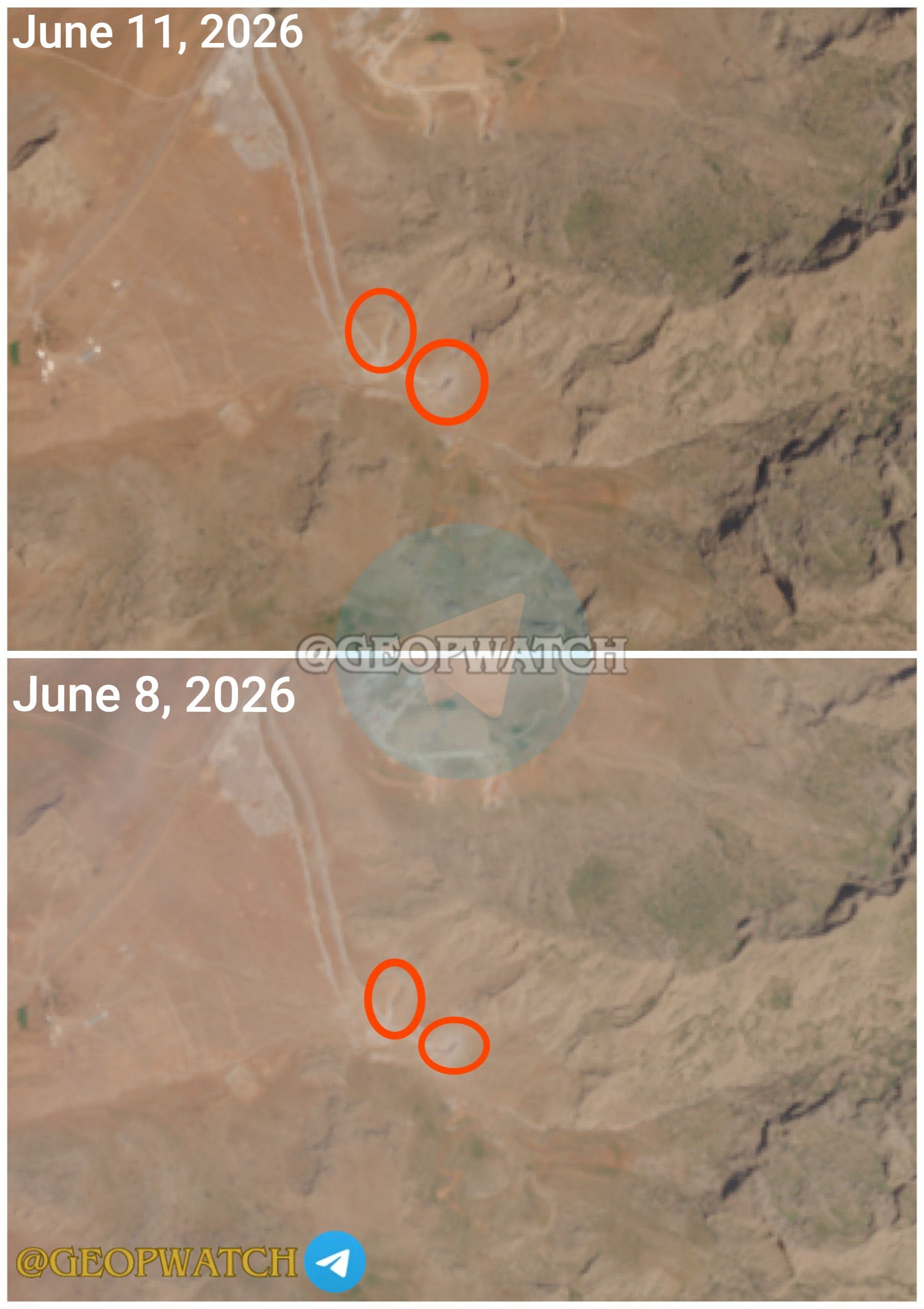
In a separate development, the Israeli Air Force conducted an airstrike on the Kermanshah Underground Missile Facility (UGF) in Iran’s Kermanshah Province. Satellite imagery released by GeoPWatch shows that two entrances to the underground complex were damaged on 8 June, with repairs completed within three days. The strike, attributed to Israel, targeted structural access points rather than the missile storage areas themselves, suggesting an intent to temporarily disrupt launch preparation cycles without provoking a full‑scale retaliation.
"Israeli airstrikes damaged two entrances of the Kermanshah Underground Missile Facility in Iran, which were repaired within three days," GeoPWatch, 14 June 2026, https://t.me/GeoPWatch/36311
No casualties were reported in the Kermanshah operation, and Iranian authorities have not publicly confirmed the incident. However, the rapid repair timeline indicates a high level of logistical capability within Iran’s engineering corps and underscores the strategic importance of maintaining underground missile infrastructure.
Explosions Heard in the Strait of Hormuz
At approximately 00:17 UTC on 14 June, multiple explosions were reported in the Strait of Hormuz near the Iranian port city of Sirik. GeoPWatch noted the audible blasts but provided no further details on the source, scale, or any material damage. The Strait remains a critical chokepoint for global oil shipments, and any disruption—whether accidental, mechanical, or hostile—carries immediate economic implications.
"Explosions were heard in the Strait of Hormuz near Sirik, Iran," GeoPWatch, 14 June 2026, https://t.me/GeoPWatch/36304
Strategic Implications
The convergence of these events illustrates a multi‑front pressure environment in the Gulf region. Iran’s willingness to target a Kuwaiti air‑base demonstrates an expansion of its deterrence posture, potentially aimed at signaling to Gulf Cooperation Council (GCC) states that alignment with Israel or the United States carries direct risk. Conversely, Israel’s precision strike on the Kermanshah UGF reflects a continued policy of pre‑emptive action against perceived Iranian missile threats, even when the target lies deep within Iranian territory.
Both actors appear to be calibrating their use of kinetic force to achieve specific strategic objectives while avoiding large‑scale escalation. The absence of reported casualties in all three incidents suggests a deliberate restraint, focusing on infrastructure degradation rather than mass casualties. Nonetheless, the destruction of a key radar in Kuwait and the temporary incapacitation of an underground missile entrance could have cascading effects on regional air‑defence postures and missile readiness cycles.
Finally, the unexplained explosions in the Strait of Hormuz add an element of uncertainty to maritime security. While the source remains unidentified, the incident underscores the vulnerability of critical shipping lanes to both state and non‑state actors. Monitoring agencies are advised to increase aerial and maritime surveillance in the area to mitigate the risk of accidental escalation.