A comprehensive media investigation released on 13 June 2026 estimates that more than 225,000 Russian soldiers have been killed in Ukraine since the invasion began. The analysis, compiled from open‑source data, official statements and battlefield reports, was posted by the Telegram channel monitor_the_situation and is available at https://t.me/monitor_the_situation/21189. The figure, if accurate, represents the highest cumulative Russian military loss reported in a single open‑source assessment to date.
A media investigation has identified over 225,000 Russian soldiers killed in Ukraine since the start of the full‑scale invasion.
Ukrainian Counter‑Offensive Operations
On the same day, Ukrainian forces conducted coordinated strikes against Russian‑held positions in the south and east. Video evidence shared by monitor_the_situation shows artillery and missile fire targeting the city of Melitopol in Zaporizhzhia Oblast, a strategic logistics hub that has been under Russian control since early 2022. Simultaneously, Ukrainian units hit targets in Luhansk Oblast, further stretching Russian defensive lines.
In a separate operation, Ukrainian forces attacked the Taman Oil Terminal on the Black Sea coast of Russia’s Krasnodar Krai. The terminal, a key export point for Russian crude, suffered damage to its loading infrastructure, according to satellite imagery released by the same source. No casualty figures were disclosed for the Taman strike, but the incident underscores Kyiv’s expanding reach into Russian territory.
Russia Launches Massive Drone and Loitering‑Munition Wave
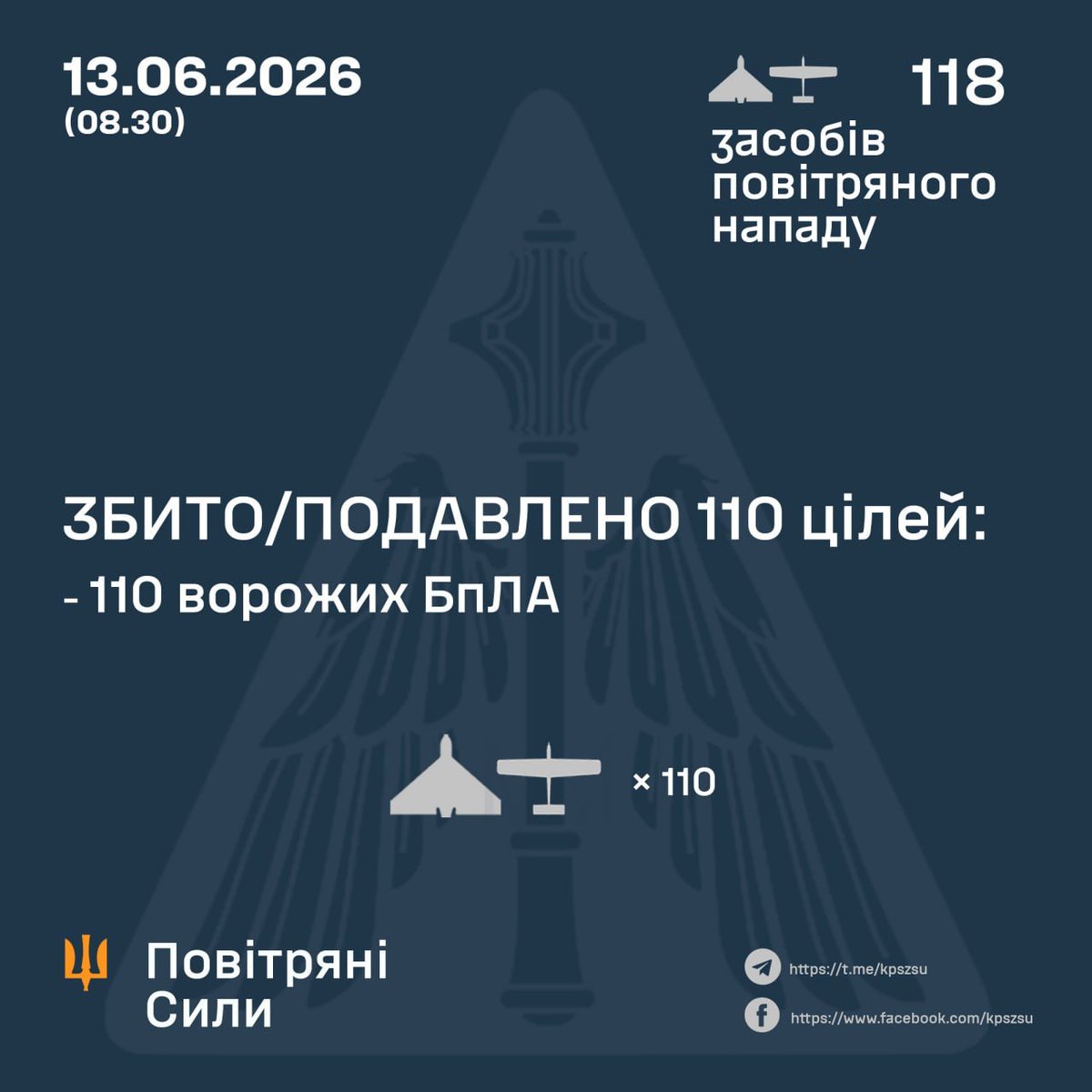
During the early hours of 13 June, Russian forces unleashed a coordinated swarm of 118 drones and loitering munitions across Ukrainian airspace. The payload included Shahed suicide drones, Gerbera loitering munitions and several unnamed types. Ukrainian air‑defence units reported intercepting or suppressing 110 of the incoming threats, with three weapons ultimately reaching the ground.
Debris from the three impacts fell in six separate locations, ranging from the Kyiv region to the southern front near Mykolaiv. Photographic evidence posted by monitor_the_situation shows fragments of drone bodies and scorch marks on civilian structures. No confirmed fatalities were reported, but local authorities noted property damage and temporary power outages in the affected zones.
Ukrainian Drone Offensive Over Crimea
At approximately 02:05 UTC, Ukrainian drones launched a large‑scale attack on multiple targets across the Crimean Peninsula, as documented by the monitoring outlet GeoPWatch. The strike package focused on fuel depots, energy infrastructure and a suspected airbase at Saky. Specific locations hit included Sevastopol, Cape Fiolent, Dzhankoi, Simferopol and the military settlement of Hvardiiske.
Russian air‑defence systems responded intensively throughout the night, engaging the incoming UAVs and reportedly downing a significant portion of the swarm. Concurrently, Ukrainian intelligence warned of a potential Neptune cruise‑missile launch, adding a further layer of complexity to the already congested battlespace. Video clips of the attacks are available via https://t.me/GeoPWatch/36202.
Operational Impact and Strategic Assessment
The convergence of high‑intensity Ukrainian offensives and a massive Russian drone barrage illustrates a shift toward multi‑domain warfare. Kyiv’s ability to strike deep into Russian‑controlled territory—both in occupied Ukraine and within the Russian Federation itself—demonstrates an expanding operational envelope, likely facilitated by improved intelligence, surveillance and reconnaissance (ISR) assets.
Conversely, the scale of the Russian drone deployment signals an attempt to overwhelm Ukrainian air‑defence networks, a tactic that has shown mixed results. While the interception rate of over 90 % reflects a resilient Ukrainian air‑defence posture, the three successful impacts indicate that saturation attacks remain a viable threat to critical infrastructure.
The casualty figure released by the media investigation, if corroborated, would place cumulative Russian losses at a level comparable to major conventional wars of the 20th century. Such a toll, combined with the ongoing attrition of equipment and the logistical strain of sustaining large‑scale drone operations, may influence Russian strategic calculations in the coming weeks.
For analysts monitoring the conflict, the key variables to watch include the frequency of Ukrainian strikes on Russian logistical nodes, the evolution of Russian drone swarm tactics, and the response of Russian air‑defence systems to increasingly sophisticated UAV threats. Continued open‑source verification will be essential to assess the accuracy of casualty claims and to gauge the broader impact on the war’s trajectory.