On June 13, 2026, the Lebanon‑Israel frontier witnessed a surge of kinetic events that underscore the deepening intensity of the conflict. The most consequential development was the downing of an Israeli Heron‑1 unmanned aerial vehicle (UAV) over Nabatieh by Hezbollah using a surface‑to‑air missile, an action that marks a clear escalation in the militia’s anti‑air capabilities.
Drone Interceptions Over Nabatieh and the Bekaa
At 17:53:53 local time, Hezbollah forces launched a surface‑to‑air missile that successfully intercepted an Israeli Heron‑1 UAV operating in the airspace above Nabatieh, a city in southern Lebanon. The incident was reported by the Telegram channel monitor_the_situation and confirmed by video footage released by the group. The missile type was not disclosed, but the successful engagement demonstrates Hezbollah’s growing proficiency with short‑range air‑defense systems.
"Hezbollah shot down an Israeli Heron 1 drone over Nabatieh, Lebanon using a surface‑to‑air missile." – monitor_the_situation, https://t.me/monitor_the_situation/21294
Earlier that afternoon, at 17:45:33, Hezbollah also claimed the downing of an Israeli IAI Heron I UAV over the town of Nahla in the Bekaa Valley. This time the militia employed an Iranian‑made Ghaem‑118 SHORAD (short‑range air‑defence) surface‑to‑air missile, marking the first recorded kill of this specific drone variant by Hezbollah. The footage, posted by GeoPWatch, highlighted the missile’s launch and the UAV’s subsequent crash.
"Hezbollah published footage of the targeting of an IAF 'IAI Heron I' UCAV using an Iranian 'Ghaem‑118' SHORAD SAM in southern Lebanon's 'Bekaa' town of 'Nahla'." – GeoPWatch, https://t.me/GeoPWatch/36266
These twin interceptions illustrate a coordinated effort by Hezbollah to deny Israel aerial surveillance and strike capabilities, leveraging both locally sourced and Iranian‑supplied missile technology.
Israeli Airstrikes and Incendiary Munitions
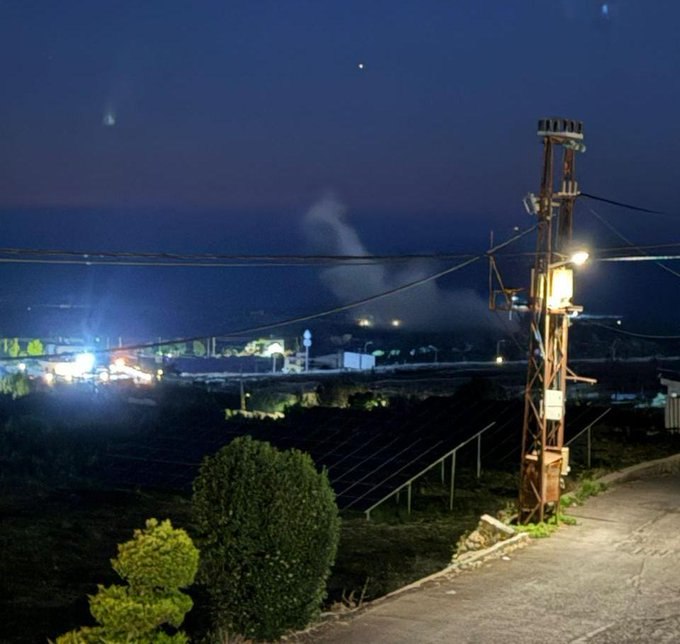
Concurrent with the drone engagements, Israeli forces conducted a series of airstrikes across southern Lebanon. At 17:49:55, Israeli aircraft dropped incendiary munitions on the village of Blat in the Marjayoun District, igniting fires that spread to the nearby Shraiqah area of Khiam. The use of incendiary weapons, reported by BellumActaNews, raises concerns about civilian infrastructure damage and the potential for secondary fires in densely populated locales.
"Incendiary munitions were dropped by Israel on Blat in Marjayoun District, southern Lebanon, with fires also reported in the Shraiqah area of Khiam." – BellumActaNews, https://t.me/BellumActaNews/174148
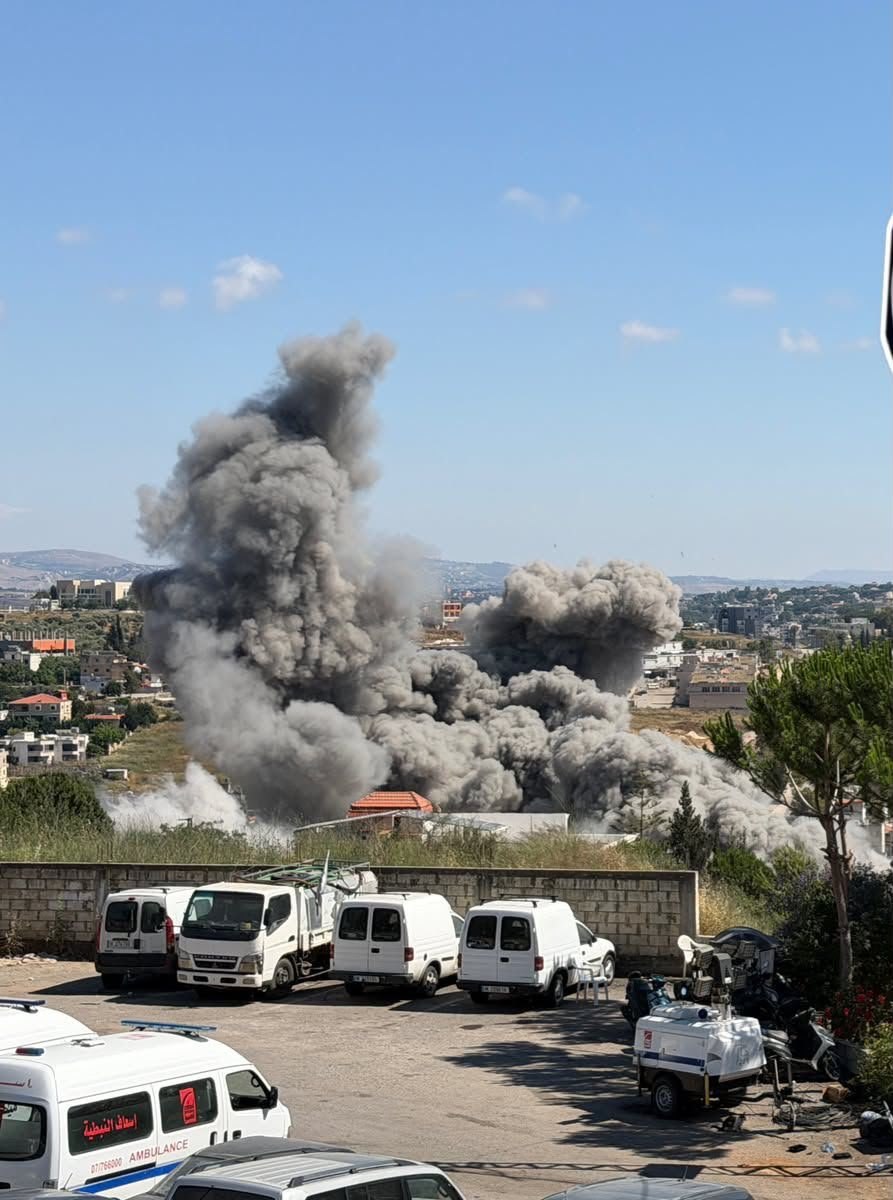
Earlier in the day, at 15:25:26, Israeli forces struck the Kfar Rumman roundabout in Nabatieh. While the report did not specify casualties or weapon systems, the targeting of a major traffic node suggests an intent to disrupt movement and logistics within the city.
At 14:54:18, the Israeli Air Force announced the killing of seven Hezbollah militants in the South Governorate, employing a combination of airstrikes, artillery fire, and drone attacks against underground tunnel cells. The statement, disseminated via the IAF’s official X account, underscores Israel’s multi‑domain approach to degrading Hezbollah’s operational depth.
"The Israeli Air Force said it killed seven Hezbollah militants in southern Lebanon using airstrikes, artillery and drones." – monitor_the_situation, https://t.me/monitor_the_situation/21279
Later, at 12:09:46, Israel launched a large‑scale operation that targeted more than 70 Hezbollah‑linked sites across southern Lebanon. Although casualty figures were not released, the breadth of the strike indicates a systematic effort to dismantle the militia’s command, control, and logistics infrastructure.
"Israel conducted a large‑scale airstrike hitting over 70 Hezbollah‑linked sites in southern Lebanon." – monitor_the_situation, https://t.me/monitor_the_situation/21250
Rocket Attack Near a Civilian Landmark
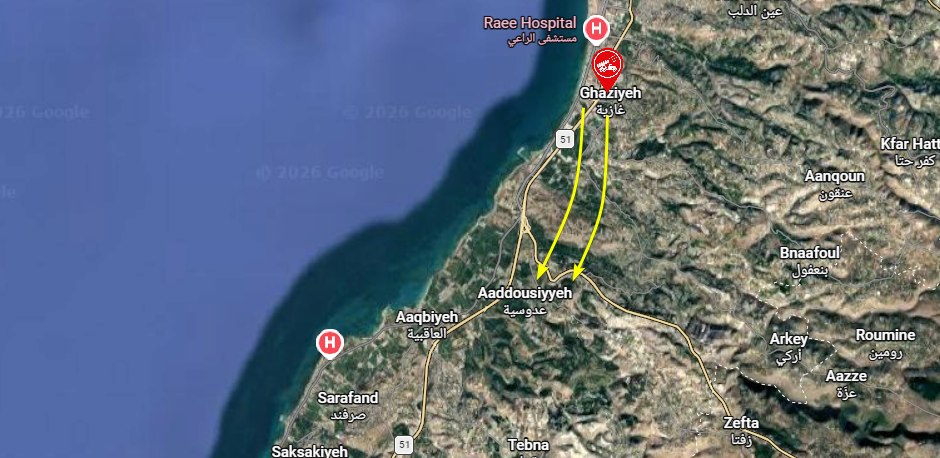
At 16:26:56, a Hezbollah‑fired rocket landed near a church in the village of Aaddousiyyeh, Sidon District. The projectile, likely launched from the nearby town of Ghazieh, produced shrapnel that struck a public road, causing panic among residents but no reported injuries. The incident, documented by BellumActaNews, highlights the risk of civilian exposure to indirect fire in densely populated areas.
"A Hezbollah‑fired rocket fell near a church in Aaddousiyyeh (Sidon District), with shrapnel reaching the public road and causing panic among residents." – BellumActaNews, https://t.me/BellumActaNews/174141
Ground Movements and Direct Engagements
Ground‑level dynamics shifted throughout the day. At 14:35:38, the Lebanese Army withdrew armored assets—including HMMWVs and M113 APCs—from Kfar Tebnit after an Israeli Defense Forces (IDF) ground assault commenced the previous night. The pull‑back, reported by GeoPWatch, reflects the Lebanese military’s caution in confronting a better‑equipped Israeli force.
"Lebanese Army pulled its armored vehicles from Kfar Tebnit in southern Lebanon after an IDF ground assault began." – GeoPWatch, https://t.me/GeoPWatch/36253
Earlier, at 11:00:41, the IDF struck a Lebanese Army soldier near the Al‑Najda Hospital junction in Nabatieh, wounding him seriously after a second strike near a roundabout. The incident, captured by intelslava, demonstrates the blurred lines between combatants and the potential for escalation when state forces engage each other directly.
"The Israeli Defense Forces struck a Lebanese Army soldier near Al‑Najda Hospital, wounding him seriously after a second hit near a roundabout." – intelslava, https://t.me/intelslava/88902
In the early morning, the Lebanese army began a strategic withdrawal from Nabatieh city, moving toward interior positions. A similar pull‑back occurred in Kfartebnit, as reported by monitor_the_situation, indicating a broader redeployment of Lebanese forces in response to the heightened cross‑border fighting.
"The Lebanese army has withdrawn from the city of Nabatieh in southern Lebanon toward the center of the country." – intelslava, https://t.me/intelslava/88901
Overall Assessment
The events of June 13, 2026, reveal a multi‑layered escalation across the Lebanon‑Israel border. Hezbollah’s successful drone interceptions demonstrate an evolving anti‑air capability, likely supported by Iranian technology. Simultaneously, Israel’s extensive use of airpower—ranging from incendiary munitions to coordinated strikes on over 70 sites—signals a determination to degrade Hezbollah’s operational network.
Ground movements by the Lebanese Army, characterized by withdrawals from forward positions, suggest a strategic recalibration aimed at avoiding direct confrontation with Israeli forces while preserving national forces for internal security. The rocket landing near a church and the civilian‑impacting incendiary strikes underscore the growing risk of non‑combatant casualties as the conflict intensifies.
Collectively, these kinetic actions point to a trajectory of sustained, high‑intensity hostilities that could further destabilize southern Lebanon and increase the likelihood of broader regional involvement.