On June 13, 2026, the most consequential development in Iran’s security landscape emerged from a verbal escalation rather than a physical strike: former President Donald Trump publicly threatened to turn Iran into "nuclear dust" and to destroy it outright. The statement, delivered in a televised interview and disseminated via the monitor_the_situation channel, referenced the ongoing U.S.-Iran nuclear negotiations and signaled a potential shift toward overt nuclear posturing. While no weapons were deployed, the rhetoric alone carries strategic weight, as it may influence both diplomatic calculations and military readiness on both sides of the Persian Gulf. Source: monitor_the_situation
US Nuclear Threat
At 17:00 UTC, Trump declared, "We will take nuclear dust in Iran and destroy it," a phrase that echoes Cold‑War era deterrence language. The threat was accompanied by a short video clip posted to the same channel, showing the former president gesturing emphatically. No official U.S. defense agency confirmed the statement, and the Pentagon’s public affairs office has not released a response. Nonetheless, the declaration raises concerns about escalation pathways, especially given the United States’ recent naval blockade of Iranian ports and the presence of U.S. warships in the Arabian Sea.
"We will take nuclear dust in Iran and destroy it," – Donald Trump, June 13, 2026 interview (monitor_the_situation)
Reported Assassination of Ayatollah Ali Khamenei
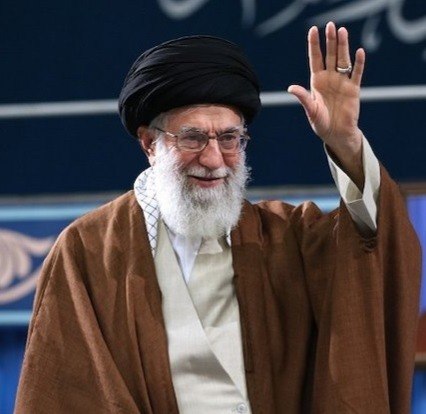
Earlier that day, at 12:28 UTC, the GeoPWatch channel circulated a photo‑laden report claiming that Ayatollah Seyyed Ali Khamenei, Iran’s former Supreme Leader, had been killed in a joint U.S.-Israeli strike in Tehran. The post detailed a funeral schedule spanning Tehran, Qom, and Mashhad, with public farewell ceremonies slated for July 4–5 at the Imam Khomeini Grand Mosalla. While the source provided no casualty figures beyond the alleged death of Khamenei, the claim, if accurate, would represent a profound disruption of Iran’s political hierarchy. No Iranian official has confirmed the report, and Iranian state media have remained silent, citing “national security considerations.” Source: GeoPWatch
Naval Blockade and Vessel Interdictions
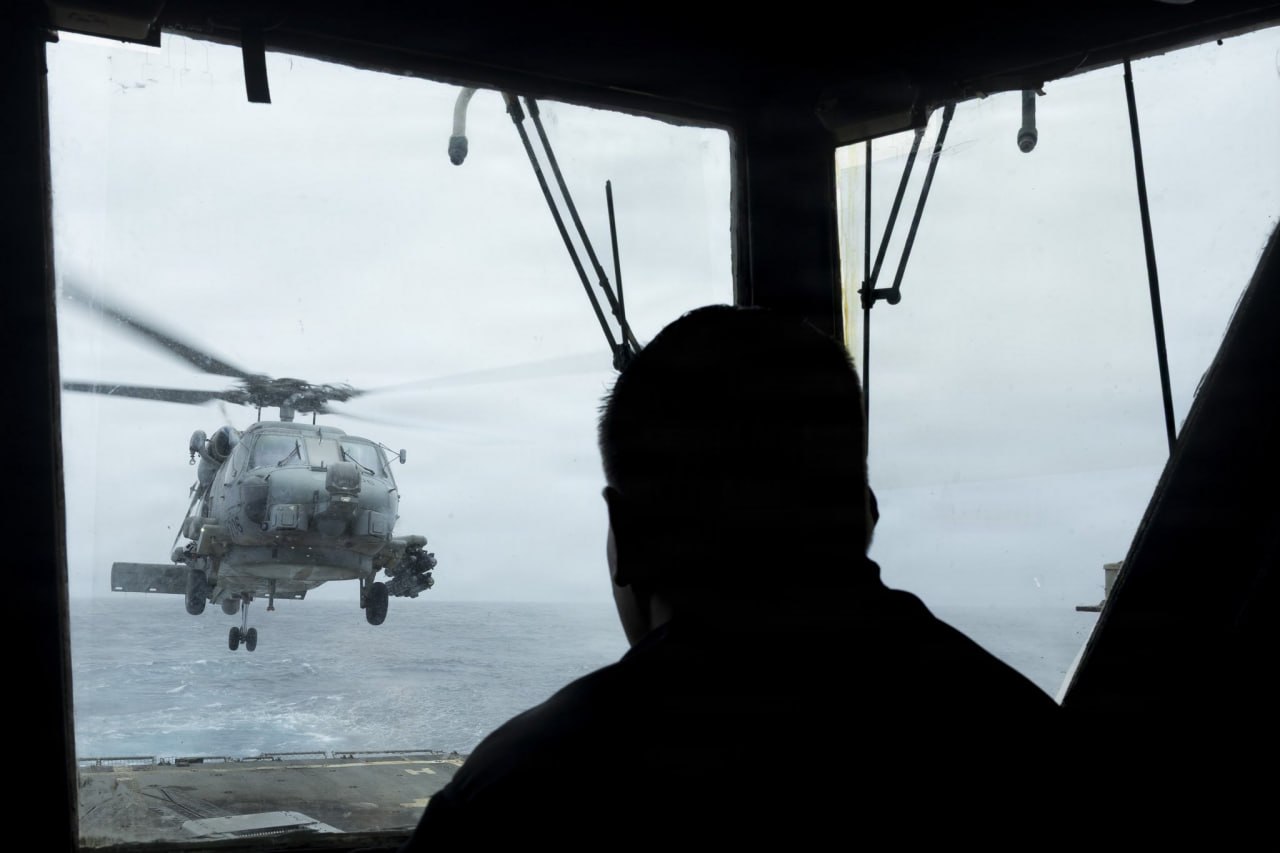
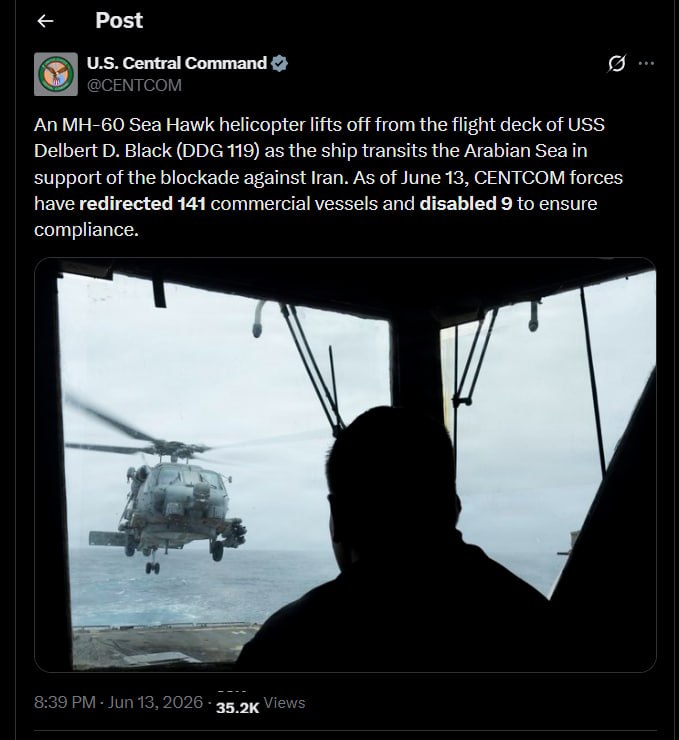
In the maritime domain, the United States Central Command (CENTCOM) announced that its naval blockade, operational since early 2026, has redirected 141 commercial vessels attempting to enter Iranian ports and has disabled nine ships to enforce compliance. The statement, released by BellumActaNews at 17:34 UTC, cited the USS Delbert D. Black as a primary asset in the enforcement actions. No kinetic weapons were reported in the interdictions; instead, the U.S. employed electronic jamming and non‑lethal disabling measures to compel vessels to alter course. Source: BellumActaNews
Projectile Incident in the Strait of Hormuz
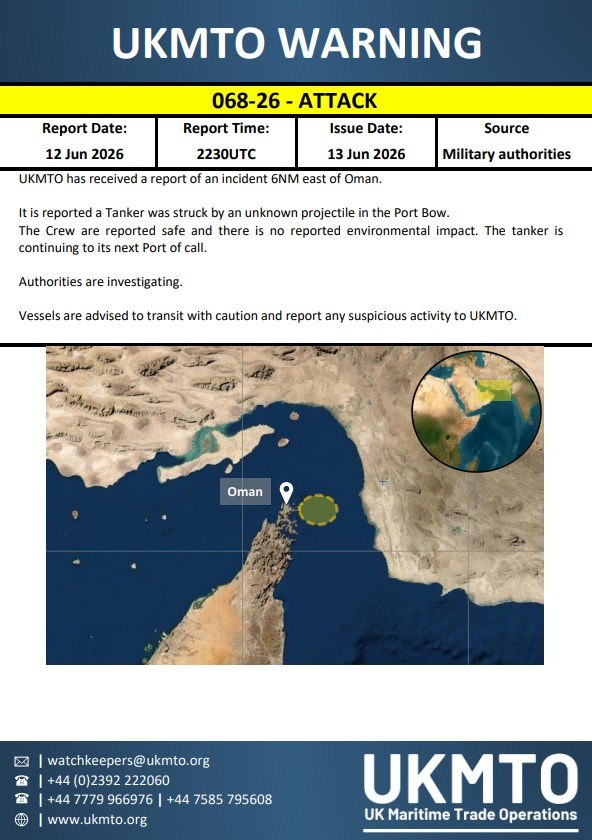
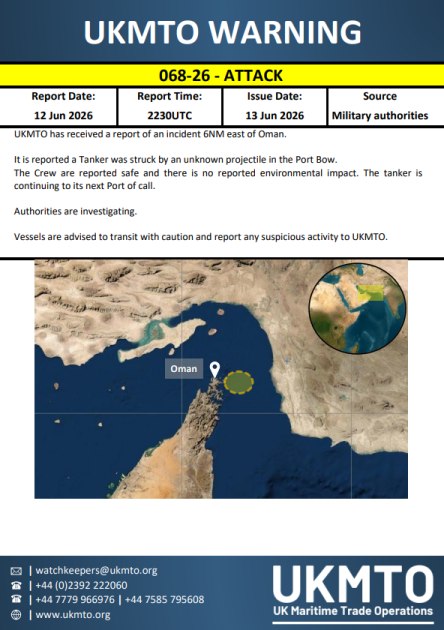
At 14:52 UTC, the CIG_telegram channel reported that an unidentified projectile struck a tanker transiting the Strait of Hormuz. The vessel’s crew reported no injuries, and the tanker continued to its destination under its own power. The United Kingdom Maritime Trade Operations (UKMTO) confirmed the incident but could not identify the weapon system or the perpetrator. The incident underscores the vulnerability of commercial shipping in a chokepoint already strained by heightened military activity.
Additional Projectile Strike Near Oman
Earlier, at 11:16 UTC, GeoPWatch relayed a separate report of a vessel hit by an unknown projectile on its port bow, six nautical miles east of Oman in the Strait of Hormuz. The UKMTO logged the event, noting that the vessel sustained minor damage but remained seaworthy. No casualties were reported, and the origin of the projectile remains unverified. Source: GeoPWatch
Analytical Assessment
The convergence of high‑level nuclear rhetoric, alleged political assassination, and maritime enforcement actions on June 13 reflects a multi‑dimensional pressure strategy aimed at constraining Iran’s regional influence. While the nuclear threat remains verbal, its potential to alter strategic postures cannot be dismissed, especially in a context where the United States has already demonstrated willingness to employ naval force. The unverified claim of Khamenei’s death, if true, would create a power vacuum that could trigger internal factional struggles, further destabilizing the country’s governance structures.
Maritime incidents, though limited in casualties, illustrate the increasing risk to commercial navigation in the Persian Gulf and the Strait of Hormuz. The use of unknown projectiles suggests the presence of non‑state actors or covert operations seeking to exploit the heightened tension. The U.S. blockade’s success in redirecting over a hundred vessels indicates effective operational control but also raises legal questions under international maritime law.
Overall, the events of June 13 demonstrate a coordinated escalation across diplomatic, kinetic, and informational domains. Stakeholders should monitor subsequent statements from the U.S. Department of Defense, Iranian Revolutionary Guard Corps, and regional intelligence services for confirmation of the reported assassination and any shifts in naval engagement rules.