The most consequential kinetic event of June 11 was the United States military’s launch of 49 Tomahawk cruise missiles against undisclosed targets in Iran, as reported by the open‑source intelligence channel rnintel. The strike, executed in the early hours of the morning, marks the largest single‑day missile deployment by U.S. forces against Iranian infrastructure since the 2023 Red Sea incident.
U.S. Tomahawk Strike and Follow‑up Air Operations
According to rnintel, the missiles were launched from naval platforms operating in the Arabian Sea and from U.S. Air Force assets positioned in the region. The targets were described as “critical Iranian military surveillance, communications and air‑defence installations.”
"U.S. Central Command (CENTCOM) forces completed additional self‑defence strikes against multiple targets in Iran, June 10, at the Commander in Chief's direction," the channel quoted a CENTCOM statement.
The operation employed precision‑guided munitions delivered by U.S. Marine Corps, Air Force and Navy units. No immediate casualty figures were released, and the Iranian government has not yet confirmed damage assessments.
Iranian Retaliatory Actions
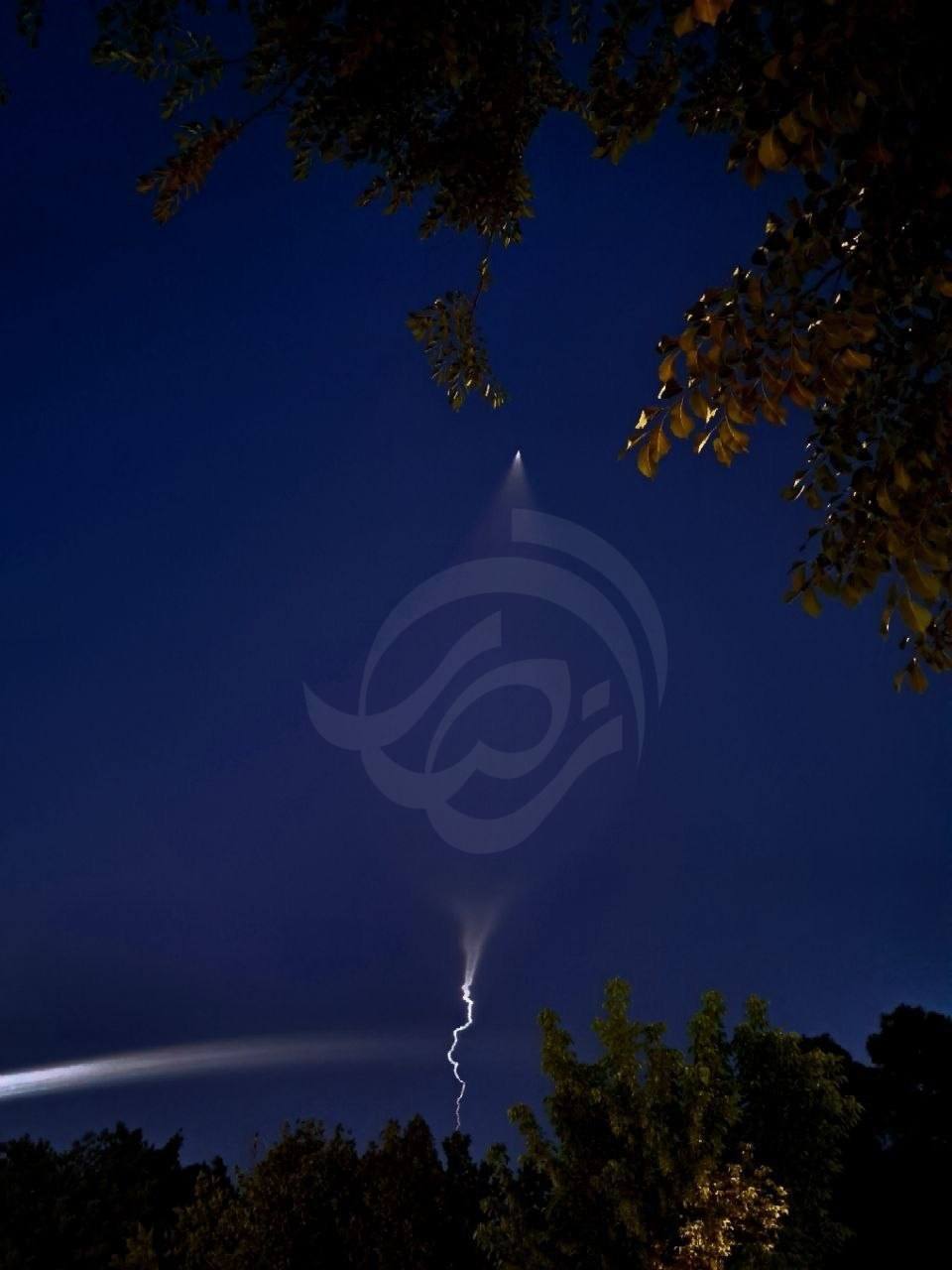
Within two hours of the U.S. missile barrage, Iran’s Islamic Revolutionary Guard Corps (IRGC) announced the launch of a “first phase” missile and drone offensive, emphasizing dispersed launch sites and a broad target list. The announcement, relayed by GeoPWatch and sourced to Mehr News, indicated the deployment of both ballistic missiles and unmanned aerial systems (UAS) aimed at regional adversaries, notably the United States and its allies.
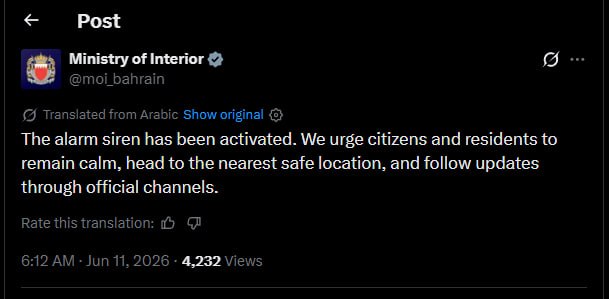
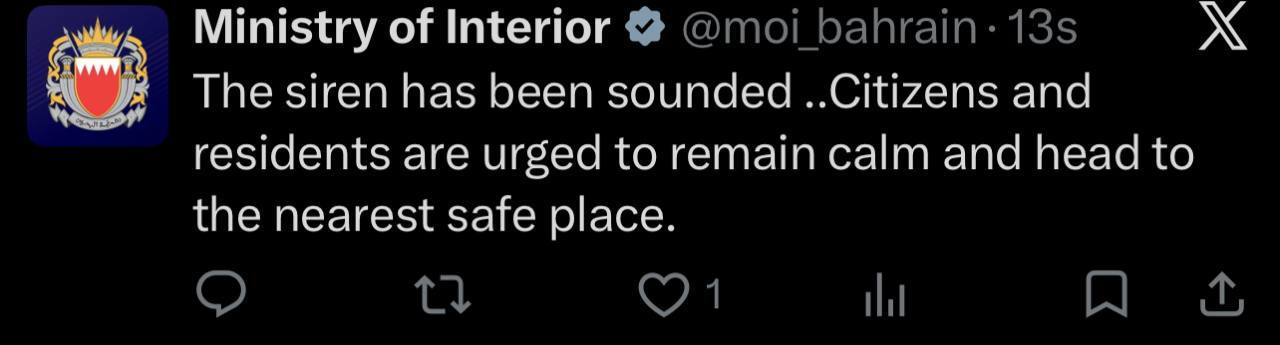
At 01:11 UTC, BellumActaNews reported that the IRGC had fired a ballistic missile, though the specific type and trajectory were not disclosed. A subsequent report at 01:15 UTC noted the activation of air‑raid sirens in Bahrain following IRGC‑launched rockets, suggesting that at least one projectile reached Bahraini airspace.
Further evidence of Iranian kinetic activity includes a report at 00:00 UTC from GeoPWatch that the IRGC Aerospace Force had executed the first phase of its missile‑drone offensive, highlighting the use of multiple launch origins to complicate defensive tracking.
UAV Incidents and Interceptions
Multiple hostile UAV alerts were recorded throughout the day. GeoPWatch documented a drone impact in Bahrain at 02:54 UTC, describing the event as a possible interception aftermath. IntelRepublic later reported that Iran had launched an attack against Bahrain at 00:31 UTC, though details on the UAV type or payload were absent.
At 00:59 UTC, GeoPWatch reported early sirens over Bahrain and confirmed that air‑defence systems intercepted incoming threats, indicating a functional, albeit strained, defensive posture.
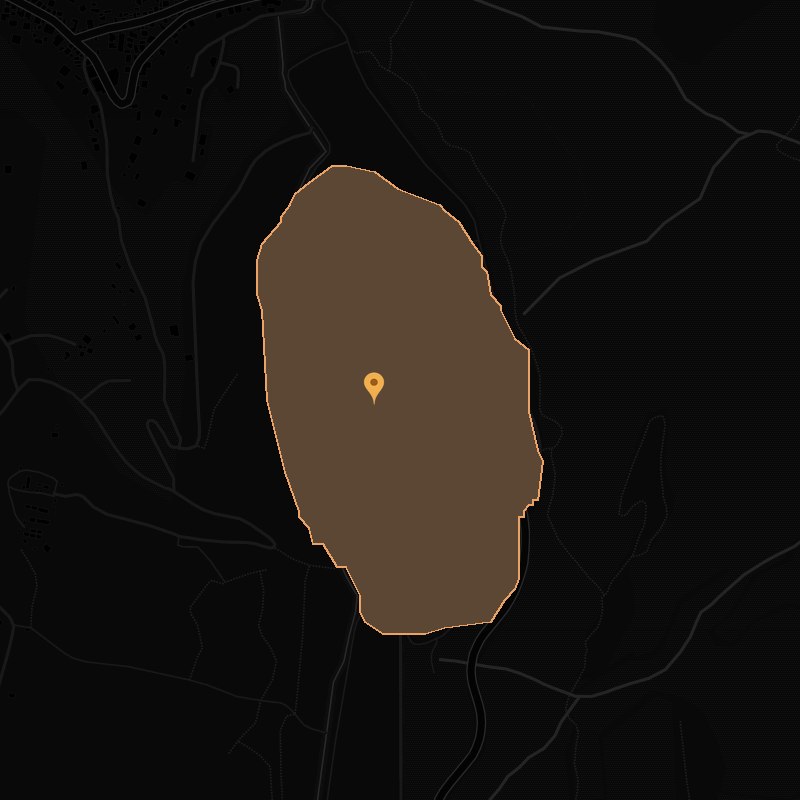
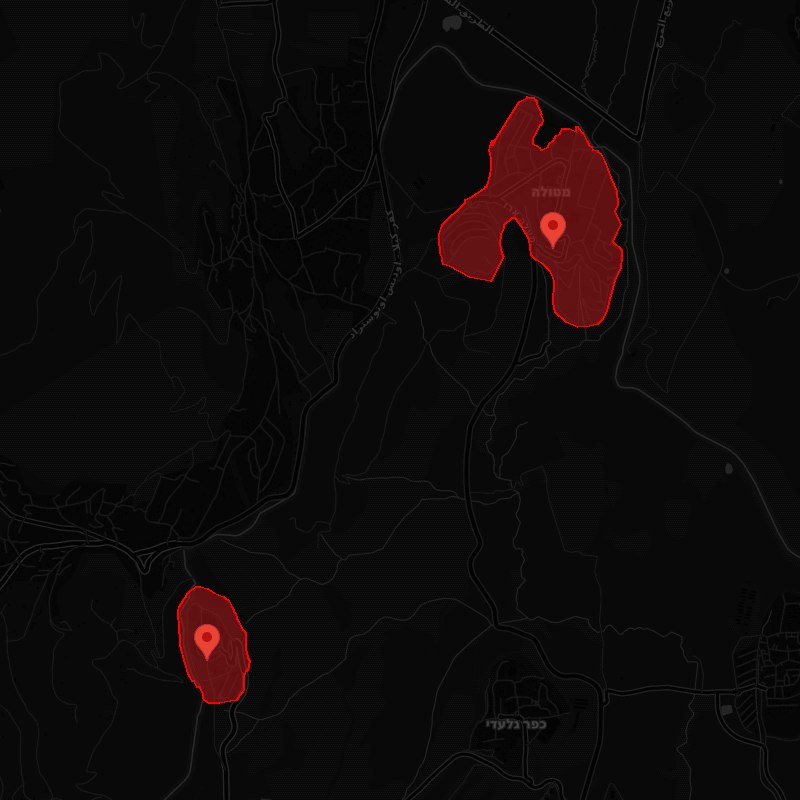
In the Israeli‑occupied northern frontier, RocketAlert posted hostile UAV alerts at 05:50 UTC and rocket alerts at 02:32 UTC, both referencing the Misgav Am–Metulla confrontation line. While no casualties were reported, the alerts underscore the heightened alert status along the Israel‑Lebanon border.
Additional Regional Missile Activity
GeoPWatch recorded at 01:56 UTC that at least four missiles were launched towards Jordan, though the launch origin was not identified. The report suggested involvement of Iranian or proxy forces, given the broader pattern of Iranian‑backed missile deployments.
Explosions were also reported in Bahrain at 01:03 UTC by rnintel, and a separate report at 01:05 UTC detailed U.S. self‑defence airstrikes against Iranian surveillance and air‑defence sites, reinforcing the reciprocal kinetic exchange between the two powers.
Analysis of the Escalation
The coordinated timing of U.S. Tomahawk strikes and Iranian missile‑drone launches suggests a rapid escalation loop, where each side perceives the other's actions as justification for further kinetic response. The use of Tomahawk cruise missiles—capable of low‑observable flight profiles and long‑range precision—indicates a strategic intent to degrade Iran’s command‑and‑control nodes while minimizing U.S. personnel exposure.
Iran’s emphasis on dispersed launch sites for its missile‑drone offensive reflects an adaptation to U.S. precision‑strike capabilities. By spreading launch origins, Tehran aims to complicate target acquisition and reduce the effectiveness of pre‑emptive strikes.
Regional actors, particularly Bahrain and Jordan, appear to be caught in the crossfire. Bahrain’s repeated siren activations and reported interceptions point to a vulnerable air‑defence environment, while Jordan’s missile alerts raise concerns about the potential spread of hostilities beyond the immediate U.S.–Iran axis.
Israel’s alerts, though not directly linked to the U.S.–Iran exchange, illustrate the broader volatility along the Levantine front, where any miscalculation could trigger a wider conflagration.
Implications for Future Operations
Given the scale of the U.S. missile deployment and Iran’s rapid retaliatory measures, the risk of inadvertent escalation remains high. Continued monitoring of missile trajectories, UAV flight paths, and air‑defence engagements will be essential for early warning and de‑escalation efforts.
Stakeholders should note the following:
- U.S. precision‑strike assets remain operationally dominant, but their use may provoke proportional Iranian responses.
- Iran’s adoption of dispersed launch tactics suggests a shift toward a more resilient strike capability.
- Regional air‑defence systems, particularly in Bahrain, are under strain, highlighting the need for reinforced detection and interception capacities.