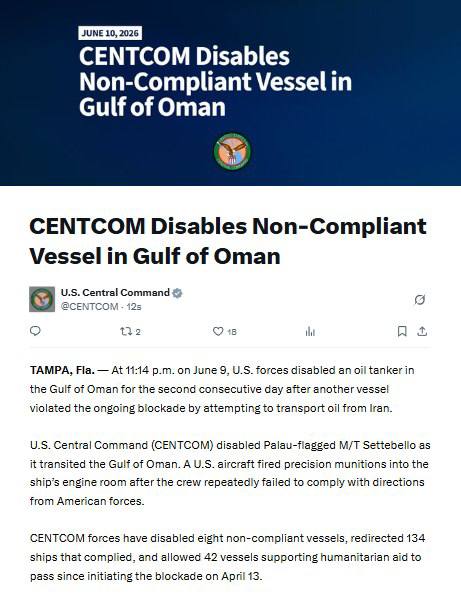
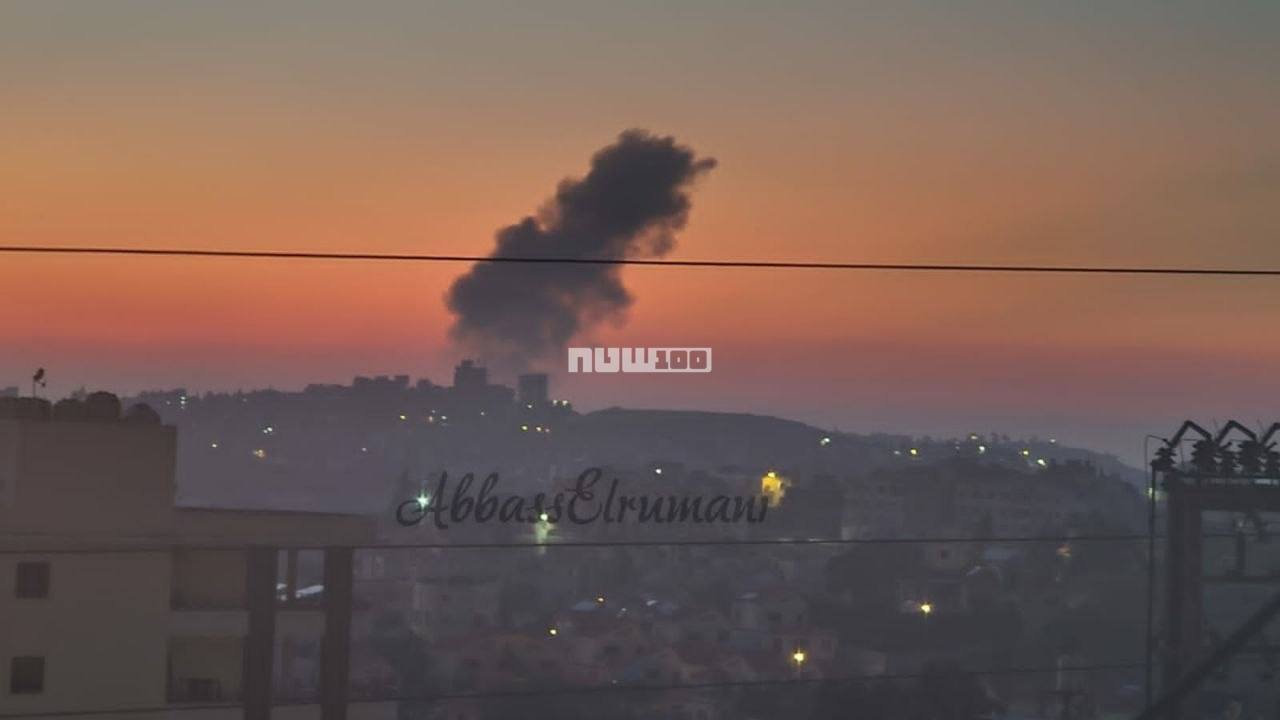
On 10 June 2026, a U.S. missile strike struck the Indian‑flagged oil tanker SETTEBELLO in the Arabian Sea off the coast of Oman, resulting in crew casualties and sparking a diplomatic protest from New Delhi. The incident, reported by BellumActaNews, marks the most severe kinetic event recorded on the day and underscores the heightened risk to commercial shipping in a region already saturated with military activity.
Naval Engagements in the Arabian Sea
The SETTEBELLO, identified by Ambrey as an Indian‑owned vessel, was reportedly hit by a U.S. missile while transiting the Arabian Sea. Ambrey’s analysis suggests the strike was deliberate, though CENTCOM did not issue a public statement. The vessel’s Automatic Identification System (AIS) had been switched off for the preceding 10‑12 days, complicating verification. Casualty figures have not been fully disclosed, but initial reports confirm at least one crew member injured.
"India condemns the attack on the Oil Tanker 'SETTEBELLO' off the coast of Oman, which led to casualties," BellumActaNews, 10 June 2026, https://t.me/BellumActaNews/173977
Earlier that morning, at 09:30 UTC, the UK Maritime Trade Operations (UKMTO) received a separate report of a fire in the engine room of a vessel 20 nautical miles northeast of Sohar, Oman. The incident resulted in one death and two crew members missing, with no environmental impact reported. The vessel’s flag was not disclosed, but the incident highlights the vulnerability of merchant ships operating near contested waters.
In a related development, a Palau‑flagged tanker reported an explosion and fire in its engine room after a presumed U.S. missile strike in the Gulf of Oman. Ambrey linked the attack to ongoing U.S. blockade operations, though no official U.S. confirmation was provided.
Escalation Between the United States and Iran
President Donald Trump, in a televised statement, claimed that the United States had “hit Iran hard” the previous day and warned of further strikes. The assertion aligns with a series of Iranian retaliatory actions, including the downing of a U.S. AH‑64 Apache helicopter over the Strait of Hormuz using a surface‑to‑air missile, and the subsequent launch of ballistic missiles and drones at U.S. bases in Bahrain, Jordan, and Kuwait.
"We hit them [Iran] hard yesterday, we're gonna hit them again hard today," President Trump, 10 June 2026, https://t.me/rnintel/62386
Iran’s Islamic Revolutionary Guard Corps (IRGC) released footage of long‑range solid‑fuel missile launches targeting U.S. assets, citing the earlier U.S. strikes on Iranian water facilities. The IRGC also claimed to have struck four targets at Muwaffaq al‑Sali Air Base in Jordan, including aircraft shelters housing U.S. F‑35 fighters and a U.S. command centre.
In response, the United States conducted airstrikes on multiple water infrastructure sites in Iran, describing the attacks as retaliation for the downed helicopter. The strikes employed precision‑guided munitions, though casualty figures remain unverified.
Humanitarian Impact in the Israeli‑Palestinian Conflict
Separate from the U.S.–Iran confrontation, the day saw a sharp rise in civilian casualties in the Israeli‑Palestinian theater. Al Jazeera reported that an Israeli Defense Forces (IDF) soldier fired at a Palestinian family’s vehicle in Hebron, West Bank, killing a seven‑month‑old infant. The incident, captured on video, has intensified calls for investigations into rules of engagement.
"7‑month‑old baby shot by Israeli soldier in Hebron," Al Jazeera, 10 June 2026, https://www.aljazeera.com/video/newsfeed/2026/6/10/7-month-old-baby-shot-by-israeli-soldier-in-hebron
Palestinian sources, cited by monitor_the_situation, announced that the death toll in the Gaza Strip has risen to at least 72,991 as a result of ongoing Israeli air and artillery strikes. The figure reflects cumulative casualties since the escalation began earlier in the year and underscores the humanitarian crisis in the enclave.
"Israeli Attacks on Gaza Kill at Least 72,991," monitor_the_situation, 10 June 2026, https://t.me/monitor_the_situation/20674
The United Nations chief warned that populations across the Middle East are paying a “brutal price” for the protracted conflict, highlighting shortages of food, water, and medical supplies.
Regional Rocket and Drone Activity
Rocket and drone attacks proliferated across the region. A missile fragment struck Israel’s Ramat David Air Base, causing minor damage but no injuries. The IDF confirmed the incident, attributing the fragment to Iranian missile activity during the broader escalation.
"Missile fragment hit Ramat David Airbase, causing minor damage," JPost, 10 June 2026, https://www.jpost.com/israel-news/defense-news/article-899000
In Bahrain’s capital, Manama, an Iranian missile strike triggered an explosion near U.S. bases, as reported by Al Jazeera. The attack illustrates the expanding geographic scope of Iranian missile operations.
Iran also launched a salvo of ballistic missiles, including Qadir, Emad, and Kheibar variants, toward U.S. assets in the region. Video released by GeoPWatch shows the launches, which were framed as a direct response to U.S. strikes on Iranian infrastructure.
Other Notable Kinetic Events
Beyond the primary flashpoints, several other kinetic incidents occurred:
- Lebanon: Israeli strikes on Deir al‑Zahrani killed at least 30 civilians and injured 92, raising the cumulative death toll in Lebanon to 3,696 since March 2.
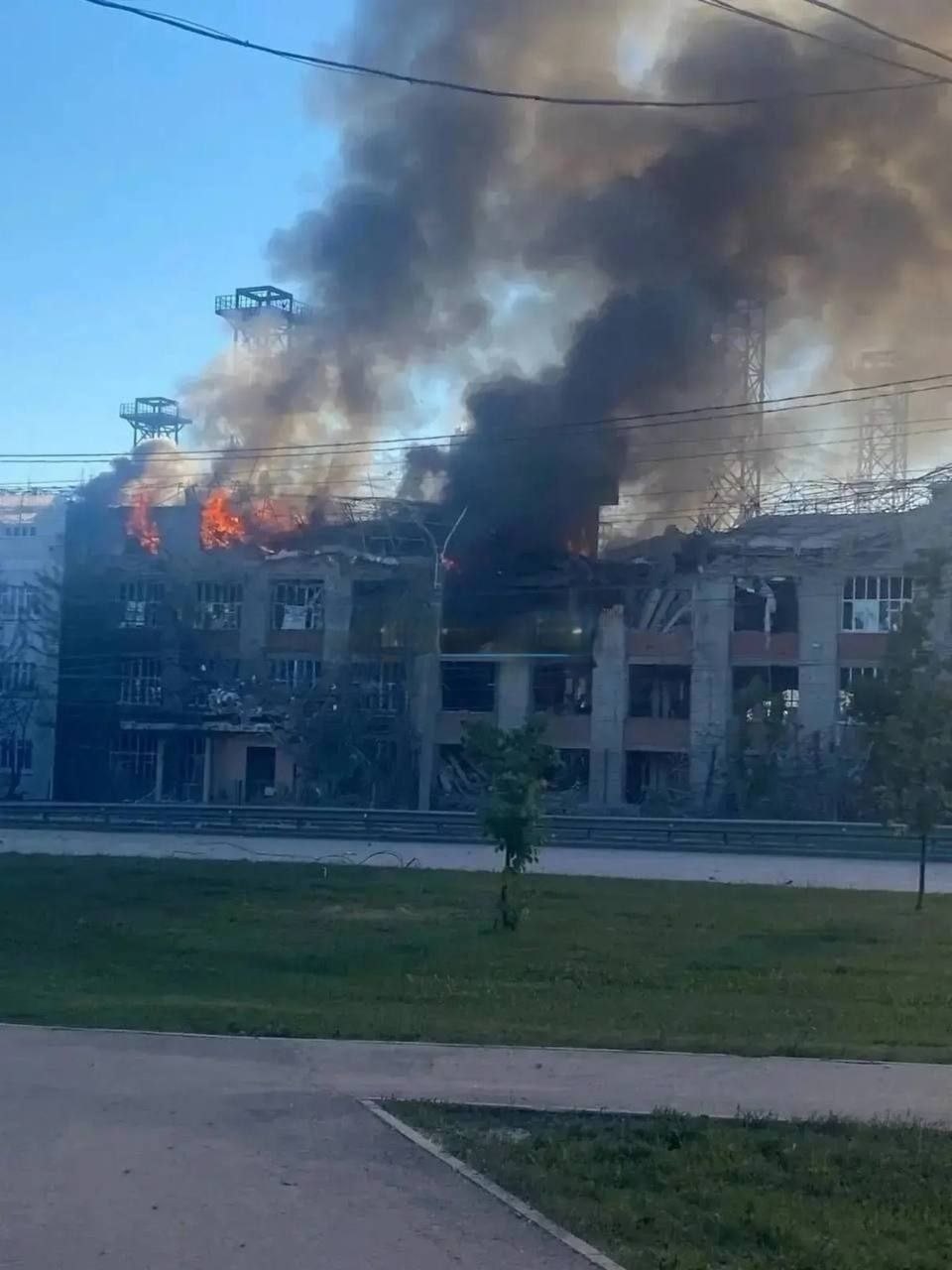
- Ukraine: Ukrainian forces struck the Kuibyshev Oil Refinery in Samara, Russia, with cruise missiles, igniting a fire at one of the country’s largest processing facilities.
- Pakistan: A Pakistani army MI‑17 helicopter crashed due to technical failure, killing all 21 aboard.
- Russia: A Russian Su‑35 fired an R‑37/77 air‑to‑air missile at a Ukrainian F‑16 near Sumy, marking a rare direct aerial engagement between the two sides.
- Somalia: An armed small boat engaged a cargo vessel near Puntland, resulting in an exchange of fire before the attackers withdrew.
These events, while varied in scale, collectively illustrate a volatile security environment where state and non‑state actors employ a broad spectrum of kinetic tools, from missiles and drones to conventional small‑arms fire.