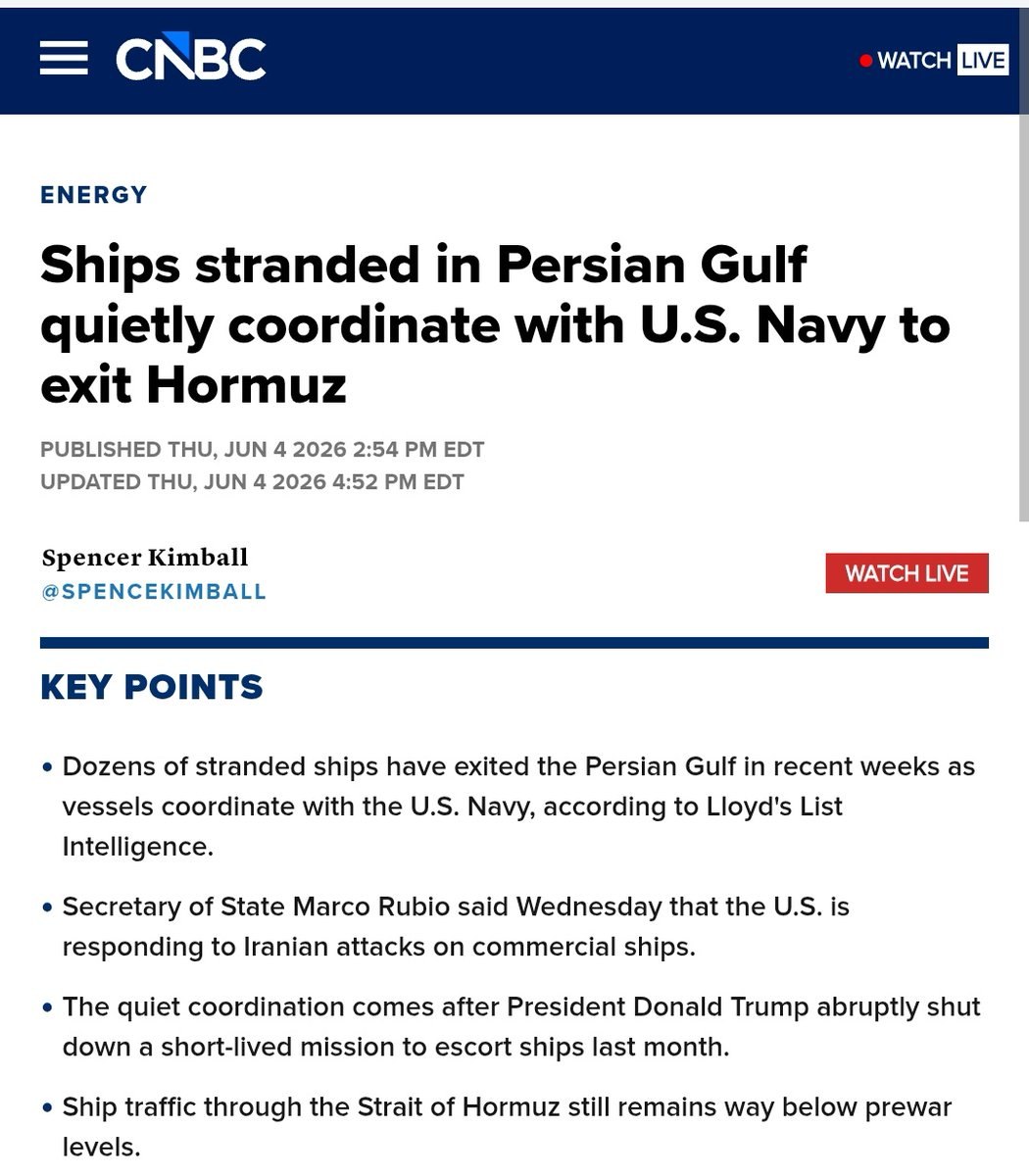
The most consequential development on 10 June 2026 was President Donald Trump’s public declaration that the United States would launch additional airstrikes targeting Iranian air‑defense, early‑warning, and radar installations in the Strait of Hormuz. The announcement, made at 16:28 UTC, was transmitted via the Telegram channel monitor_the_situation and referenced a forthcoming operation that could further destabilise an already volatile maritime corridor (source).
Strategic Context of the Announcement
Trump framed the planned strikes as a direct response to what he described as Iranian aggression against U.S. interests in the Gulf. By targeting the region’s detection and command infrastructure, Washington aims to degrade Tehran’s ability to monitor and contest naval traffic, thereby securing the flow of oil through the strait. No casualty figures were provided in the statement, and the announcement did not specify the weapons or platforms to be employed.
Recent Kinetic Actions in the Gulf
In the hours preceding the announcement, a series of high‑intensity kinetic events were documented across the Strait of Hormuz and Iran’s southern provinces. These incidents illustrate a rapid escalation of hostilities on both sides of the conflict.
U.S. Airstrikes on Civilian Water Infrastructure
At 14:57 UTC, U.S. air operations struck the town of Kuhestak in Hormozgan Province, destroying two concrete water reservoirs (500 m³ and 2,000 m³) and associated mechanical installations. The damage, confirmed by the CEO of the Hormozgan Province Water and Wastewater Company, cut off drinking water for approximately 20,000 residents across Kuhestak and ten villages in the Beman district (CIG_telegram, GeoPWatch). A second strike, captured by GeoPWatch at 14:56 UTC, hit two concrete reservoirs near Sirik, further evidencing a pattern of targeting civilian water assets (source).
Impact assessment: While no fatalities were reported, the loss of potable water for tens of thousands of civilians constitutes a significant humanitarian concern and may be classified under international humanitarian law as an attack on civilian infrastructure.
Naval Operations and Claims of Oil Interdiction
At 16:09 UTC, the Telegram channel rnintel relayed a statement from President Trump asserting that U.S. forces had removed “millions of barrels of oil” from the Strait and had “taken out 22 ships” the previous night (source). The exact nature of these interdictions—whether they involved kinetic engagement, boarding actions, or navigation restrictions—was not detailed. No independent verification of the claimed ship losses has been published to date.
Earlier, at 06:20 UTC, monitor_the_situation reported a naval standoff in which U.S. warships escorted commercial tankers while Iranian forces targeted the escorted vessels. Photographic evidence accompanying the report showed U.S. destroyers operating in close proximity to Iranian coastal batteries (source).
Drone Interceptions Over Bushehr Province
Iran’s Islamic Revolutionary Guard Corps (IRGC) demonstrated growing anti‑air capability by shooting down a U.S. MQ‑9 Reaper drone over Jam, Bushehr Province, at 13:41 UTC (CIG_telegram). The interception marked the fifth U.S. drone loss in a two‑week period, adding to previous downings of two MQ‑9s in Kuwait, one over Iraq, one over Iran, and a MQ‑1C over the Persian Gulf. The IRGC released video footage of the engagement, which was later corroborated by GeoPWatch at 11:21 UTC (source).
"We have successfully neutralised the American MQ‑9 over Jam City," the IRGC statement read.
The loss of high‑altitude reconnaissance assets hampers U.S. situational awareness and may influence future rules of engagement in the region.
Potential Follow‑On Strikes on Power and Bridge Infrastructure
At 12:38 UTC, President Trump told Fox News correspondent Trey Yingst that the United States was “close to ordering new strikes on Iranian power plants and bridges” in retaliation for what he termed “tapping the United States along” in negotiations (BellumActaNews). He also referenced an overnight operation that targeted roughly 20 IRGC‑linked sites after a U.S. Apache helicopter was downed near the Strait. The weapons cited included Apache attack helicopters and unmanned aerial vehicles, though specific target coordinates were not disclosed.
"We are getting close to ordering new strikes against Iranian power plants and bridges," Trump said.
These statements suggest a shift from targeting air‑defense assets to broader critical infrastructure, raising the risk of civilian casualties and further disruption of Iran’s energy distribution network.
Assessment of Escalation Trajectory
The sequence of events on 10 June demonstrates a multi‑domain escalation: strategic air‑defense strikes, attacks on civilian water facilities, naval confrontations, and the downing of high‑value U.S. drones. While the United States has not yet confirmed the execution of the announced airstrikes, the public nature of the threats and the documented kinetic actions indicate a high probability of continued operations in the coming days.
Key variables influencing the conflict’s trajectory include:
- U.S. willingness to expand target sets to include power and bridge infrastructure.
- Iranian capacity to intercept aerial platforms, as evidenced by multiple MQ‑9 losses.
- International diplomatic responses, particularly from Oman, the United Kingdom, and the European Union, which have called for restraint in the Strait.
Monitoring of open‑source channels, satellite imagery of target sites, and maritime traffic data will be essential for assessing compliance with international law and the potential for broader regional spillover.