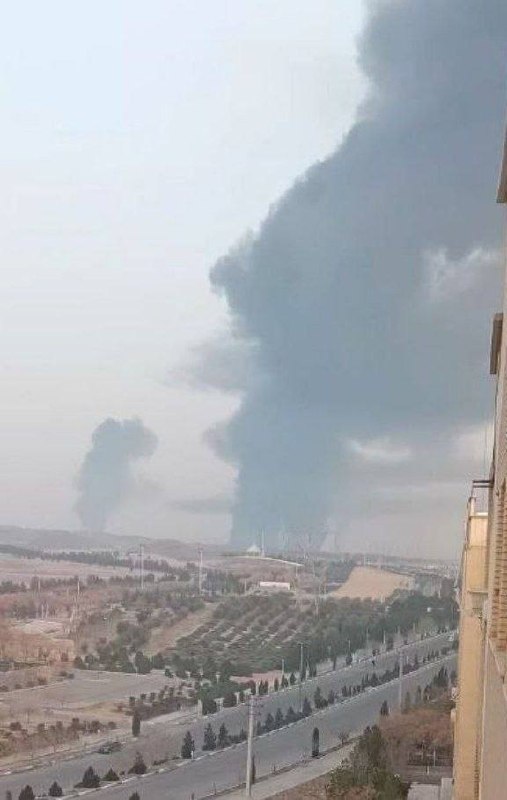
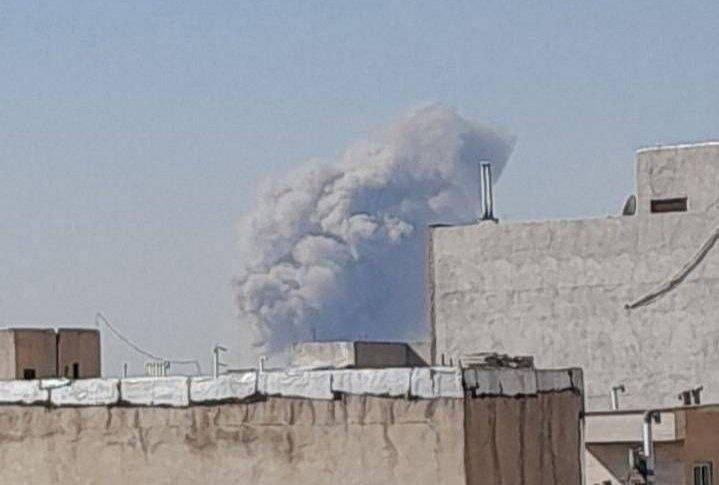
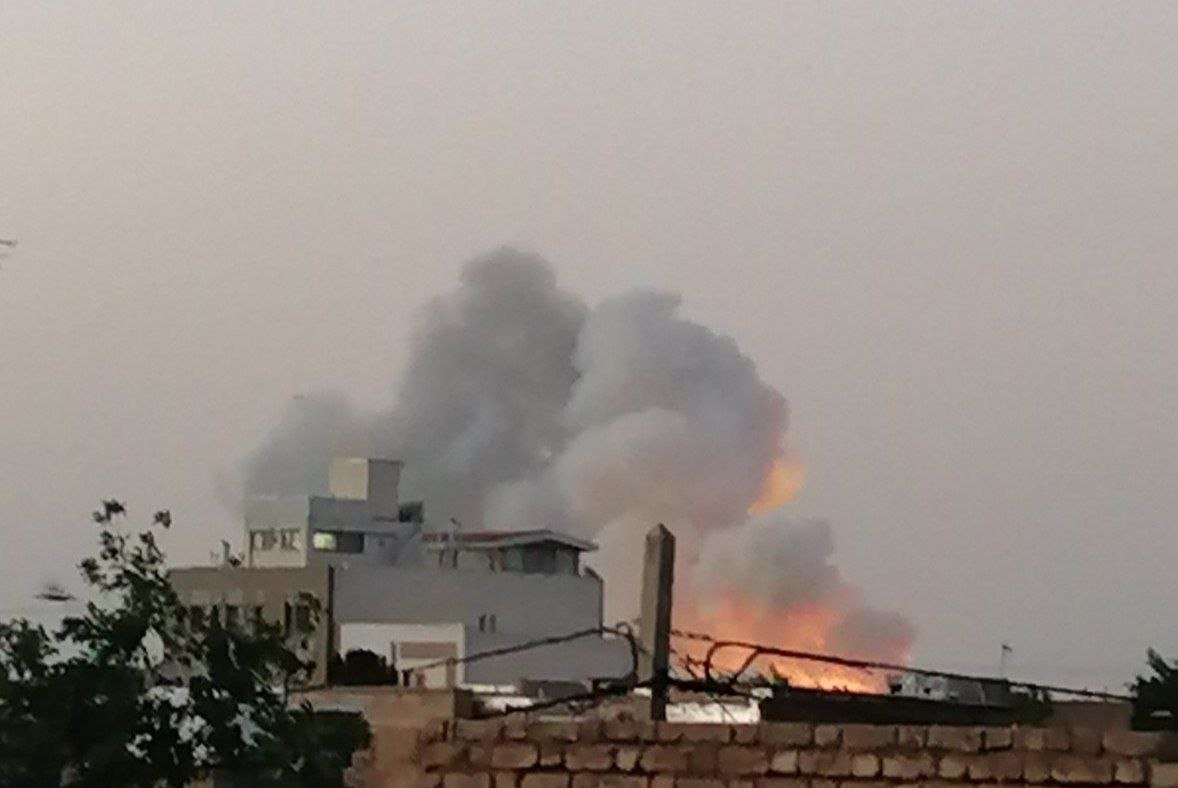
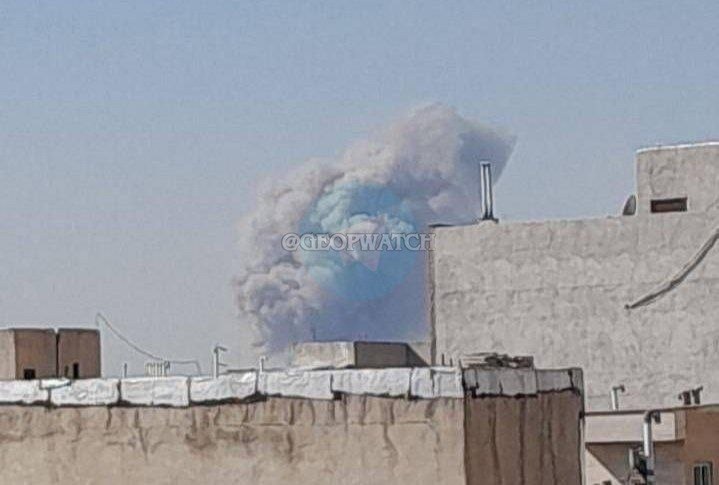
On 8 June 2026, Israeli forces executed a coordinated kinetic campaign against multiple Iranian targets, marking the most extensive escalation of hostilities between the two states to date. The first confirmed strike hit a surface‑to‑air missile (SAM) launcher near Kahrizak, south of Tehran, at 02:28 UTC. The attack was reported by the monitor_the_situation channel, which posted a video of the blast and identified the target as a SAM installation critical to Iran’s air‑defence network.
🔴 **Israel Strikes Surface-to-Air Missile Launcher Near Kahrizak, South of Tehran** – monitor_the_situation, 2026‑06‑08T02:28:17, https://t.me/monitor_the_situation/20166
Israeli Airstrikes Across Iran
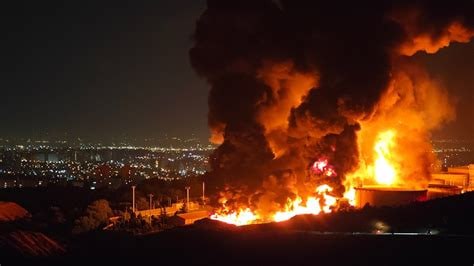
Following the Kahrizak strike, Israeli aircraft conducted a series of air operations targeting strategic infrastructure in the south and west of Iran. At 05:45 UTC, the Israeli Defense Forces (IDF) bombed a petrochemical complex in southern Iran, a facility identified by OSINTdefender as essential for the production of materials used in missile and weapons manufacturing. No casualty figures were released, but the complex suffered significant structural damage.
Israeli Defense Forces struck a petrochemical complex in southern Iran in retaliation for Iranian missile attacks – OSINTdefender, 2026‑06‑08T05:45:20, https://t.me/OSINTdefender/19150
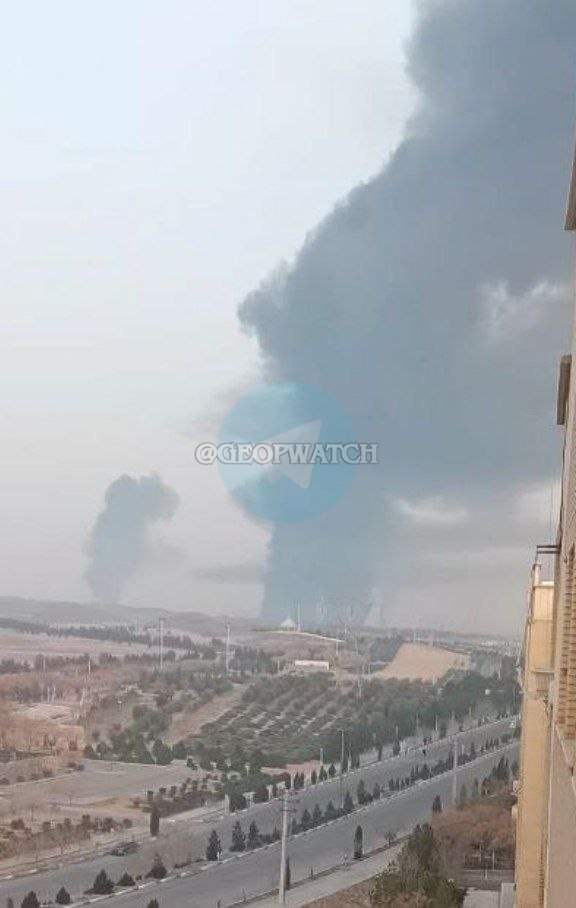
Simultaneously, the Israeli Air Force (IAF) targeted the Karun Mahshahr Petrochemical Complex in Bandar‑e‑Mashahr, Khuzestan Province, as reported by GeoPWatch at 04:38 UTC. The strike was part of a broader effort to degrade Iran’s capacity to sustain its missile programme.
IAF airstrikes against the Karun Mahshahr Petrochemical Complex – GeoPWatch, 2026‑06‑08T04:38:08, https://t.me/GeoPWatch/35443
Additional airstrikes were recorded in central and western Iran, including attacks on the cities of Najafabad (Isfahan Province) and Eslamabad‑e‑Gharb (Kermanshah Province). These operations, confirmed by multiple Telegram channels, involved precision munitions but resulted in no publicly confirmed fatalities.
Israel carried out airstrikes on multiple sites in western and central Iran – monitor_the_situation, 2026‑06‑08T01:47:50, https://t.me/monitor_the_situation/20158
Iranian Missile Launches Toward Israel
In parallel with Israeli strikes, Iran launched a series of ballistic missiles and rockets aimed at Israeli territory. At 05:08 UTC, a ballistic missile was observed launching from west of Tehran, heading toward Israel, as reported by BellumActaNews. Subsequent launches originated from Urmia (north‑west), Kermanshah, and Malard, with missile types ranging from short‑range rockets to longer‑range ballistic missiles.
Iranian ballistic missile launching towards Israel moments ago – BellumActaNews, 2026‑06‑08T05:08:01, https://t.me/BellumActaNews/173807
Iran’s Islamic Revolutionary Guard Corps (IRGC) publicly announced retaliation plans targeting Israel’s Nevatim and Tel Nof air bases, citing recent Israeli strikes on Iranian radar sites. The statement, posted by GeoPWatch at 05:14 UTC, underscores the reciprocal nature of the kinetic exchange.
IRGC says it will target Israel's Nevatim and Tel Nof air bases – GeoPWatch, 2026‑06‑08T05:14:37, https://t.me/GeoPWatch/35456
Naval and Aerial Engagements
Israeli naval forces participated in the multi‑domain operation, with monitor_the_situation reporting at 02:32 UTC that the Israeli Navy took part in an attack on Iran in the Strait of Hormuz. While specific weapon systems were not disclosed, the involvement of surface vessels indicates an expansion of the conflict into maritime domains.
Israeli Navy Participated in Attack on Iran – monitor_the_situation, 2026‑06‑08T02:32:47, https://t.me/monitor_the_situation/20168
Iranian air‑defence units responded to Israeli projectiles over Kermanshah at 05:25 UTC, engaging incoming IAF munitions. GeoPWatch confirmed the interception, noting that Iranian surface‑to‑air systems fired at the approaching projectiles.
Iranian air defenses engaged Israeli Air Force projectiles over Kermanshah – GeoPWatch, 2026‑06‑08T05:25:49, https://t.me/GeoPWatch/35460
Regional Spillover and Secondary Effects
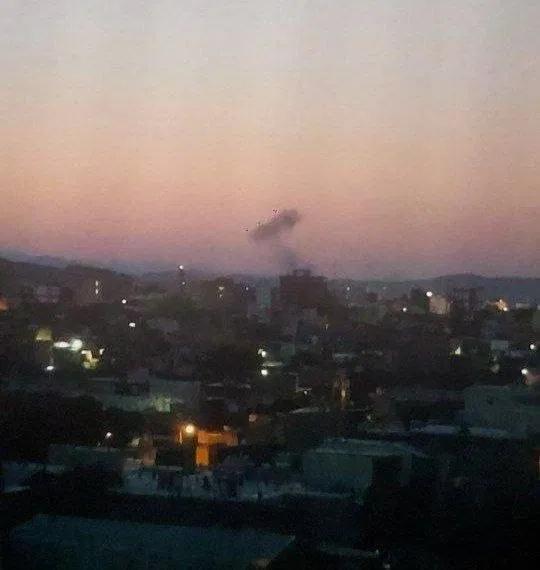
The kinetic exchange produced secondary impacts beyond Iran’s borders. Explosions were reported in Amman, Jordan, at 04:47 UTC, likely caused by missile debris from Iranian attacks on Israel. In addition, multiple explosions were observed in Beirut, Lebanon, and in Iraqi cities such as Baghdad and Al‑Kharj, where Iranian projectiles were intercepted or where Israeli aircraft conducted over‑flight operations.
Massive explosions rock Amman, Jordan – monitor_the_situation, 2026‑06‑08T04:47:20, https://t.me/monitor_the_situation/20203
Satellite imagery released by Al Jazeera on 8 June showed extensive damage to Iranian naval ports and U.S. Gulf bases, suggesting that coordinated U.S.–Israeli strikes contributed to the observed destruction.
Satellite images show destruction of the US‑Israel war on Iran – Al Jazeera, 2026‑06‑08, https://www.aljazeera.com/features/2026/6/8/satellite-images-show-destruction-of-the-us-israel-war-on-iran
Analysis
The June 8 kinetic episode demonstrates a marked shift from limited retaliation to a broader, multi‑domain campaign. Israeli forces employed air, naval and long‑range ballistic assets to degrade Iran’s air‑defence infrastructure, missile production facilities and petrochemical assets that support the war‑economy. Iran’s response, characterized by a rapid salvo of ballistic missiles and the activation of air‑defence systems, indicates a readiness to sustain a high‑intensity exchange.
Key observations include the targeting of dual‑use facilities (petrochemical complexes), the integration of naval assets in the Strait of Hormuz, and the escalation of missile launches from multiple Iranian regions, suggesting a decentralized launch capability. The reported involvement of U.S. forces, while not directly confirmed by official statements, aligns with intelligence indicating joint operational planning.
Casualty reports remain limited, with most strikes focusing on infrastructure. However, the cumulative effect on regional stability is significant, as neighboring states experience secondary explosions and air‑space disruptions. The continued use of Telegram channels for real‑time reporting underscores the importance of open‑source intelligence in tracking fast‑moving kinetic events.
Future monitoring will focus on the durability of Iran’s missile launch capacity, the potential for further naval engagements in the Gulf, and the diplomatic ramifications of the disclosed coordination between Israel and the United States, as highlighted by an Israeli official’s claim of joint planning.