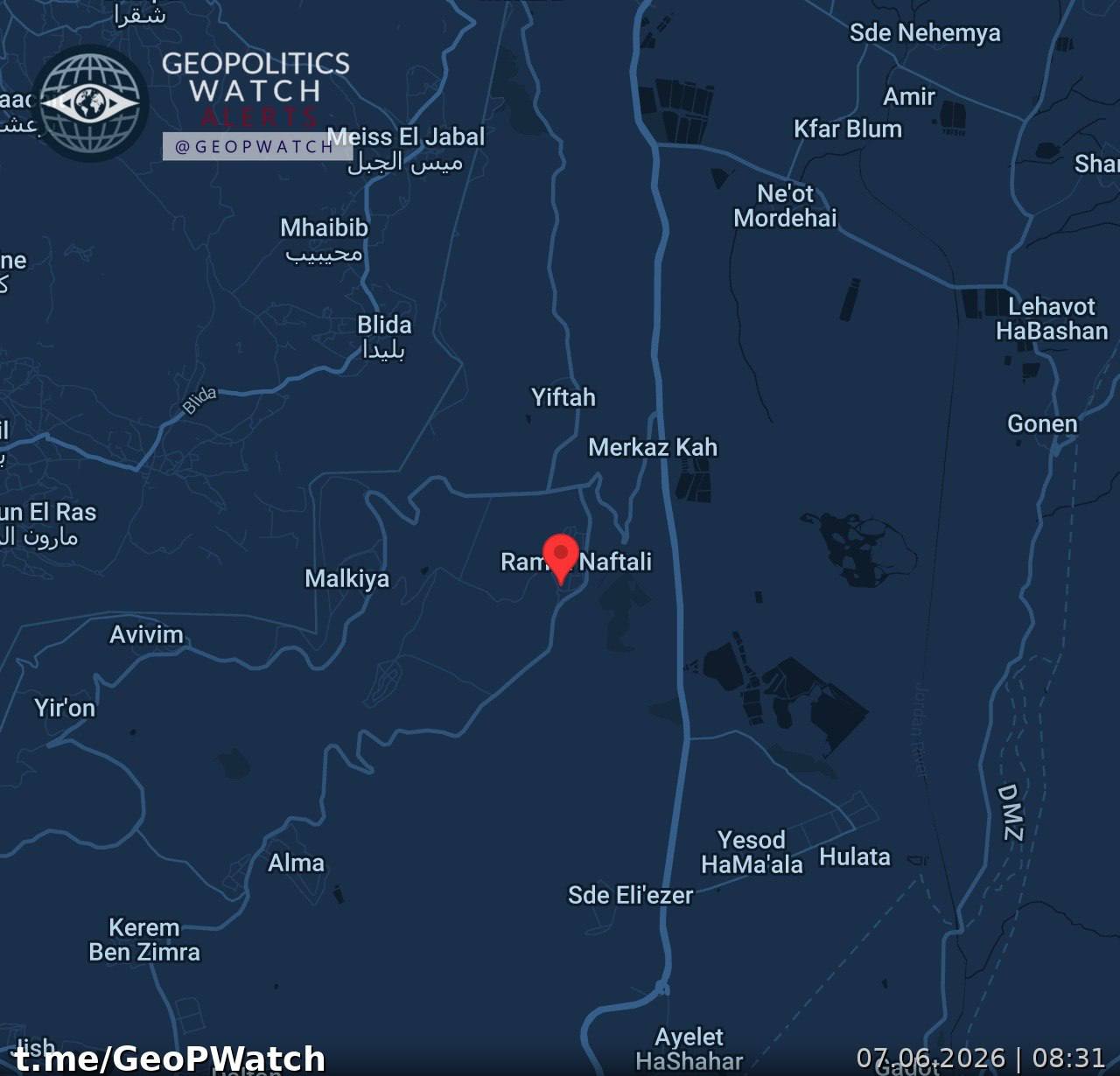
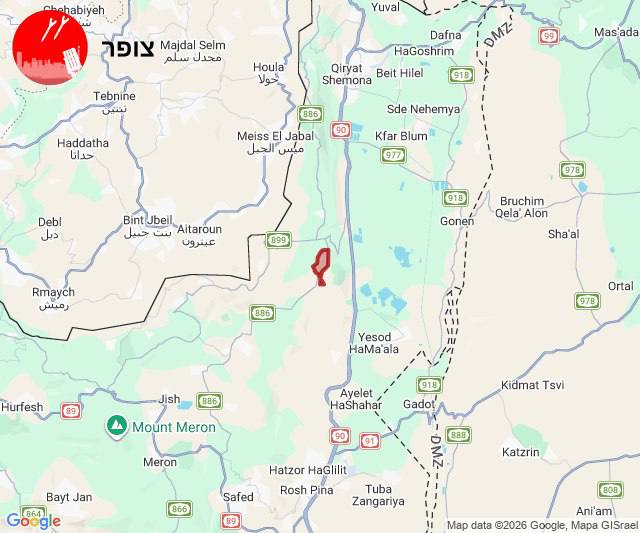
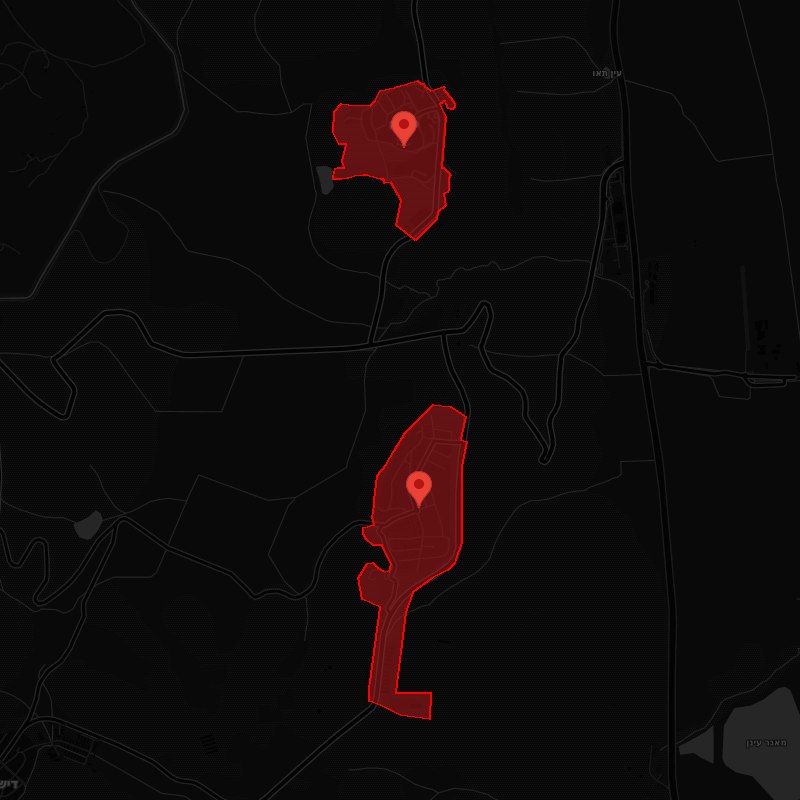
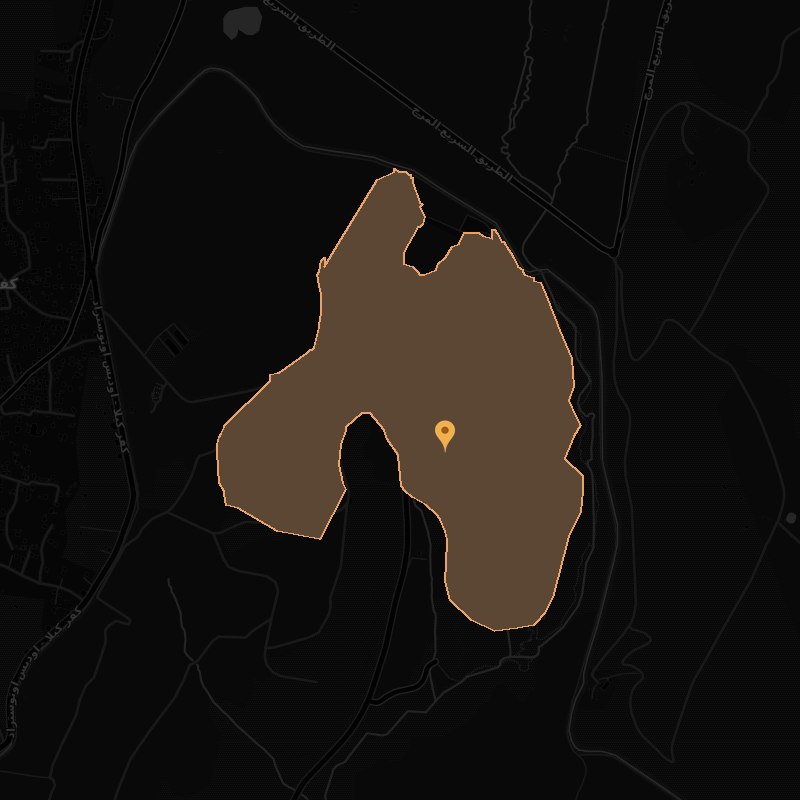
At 05:32:36 UTC on 7 June 2026, Israeli civil defense issued a red alert for the town of Ramat Naftali in the Upper Galilee after a reported rocket trajectory was detected. The alert, posted by the monitoring channel GeoPWatch (source), marked the most immediate threat of the day and prompted residents to seek shelter while authorities mobilised air‑defence assets.
Rocket Launches and Alerts
Just minutes earlier, at 05:31:54 UTC, GeoPWatch documented a Hezbollah‑fired rocket aimed toward northeastern Israel (source). The launch was part of a coordinated barrage that also triggered a separate alert on RocketAlert.live, which listed “Ramot Naftali, Iftach” as the confrontation line (source). No casualties were reported from these rockets, but the rapid succession of alerts underscored a heightened operational tempo from Hezbollah.
"Rocket/Missile alert 2026-06-07 08:31:41: Confrontation Line: Ramot Naftali, Iftach"
Both alerts were classified as high severity by the reporting platforms, reflecting the proximity of the launch sites to civilian population centres and the potential for escalation.
Interceptions and Defensive Responses
Within the same hour, Israeli air‑defence systems intercepted several projectiles over northeastern Israel. The channel monitor_the_situation reported successful interceptions at 05:42:12 UTC, noting “no immediate reports of casualties or damage” (source). A separate video from GeoPWatch recorded five interceptions in the Upper Galilee at 05:40:31 UTC, illustrating the density of defensive activity along the border (source).
Drone Operations
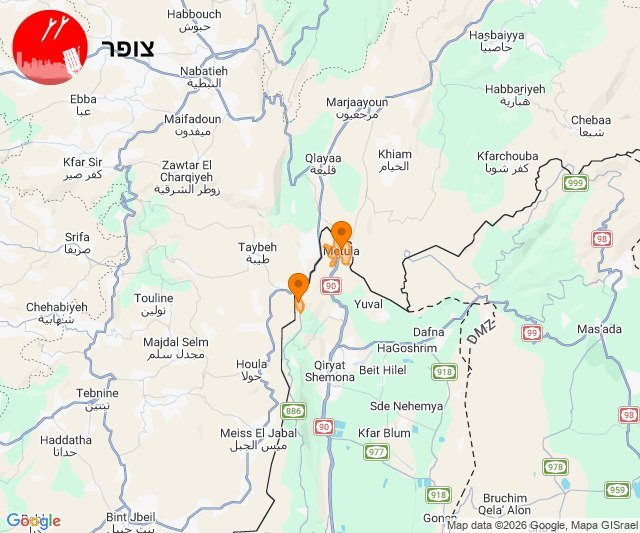
Hezbollah’s aerial campaign intensified with the deployment of unmanned aerial vehicles (UAVs). At 04:57:27 UTC, monitor_the_situation confirmed that at least four Hezbollah‑operated drones struck northern Israel and Israeli Defence Forces (IDF) positions near the southern Lebanon border. One impact was verified, though the IDF reported no casualties (source). A parallel alert on RocketAlert.live identified a hostile UAV near Metulla at 04:52:24 UTC, reinforcing the geographic spread of the drone threat (source).
In southern Lebanon, Hezbollah employed a first‑person‑view (FPV) drone to target Israeli reserve soldiers, wounding four individuals, as reported by the IDF via the Israel Broadcasting Authority (source). The same channel later documented a broader set of UAV engagements: Hezbollah claimed to have shot down three Israeli ISR drones (one IAI Heron and two Hermes‑450) with surface‑to‑air missiles and to have damaged three Merkava tanks and a Humvee using an Ababil FPV drone (source).
Ground Infiltrations and Additional Hostilities
Beyond aerial attacks, Hezbollah announced an operation against Israeli forces near Haddatha and Yahmar al‑Shaqif in southern Lebanon at 02:06:02 UTC (source). Video evidence posted by monitor_the_situation showed small‑arms fire and explosive devices, though casualty figures were not disclosed.
Casualties and Material Damage
The only confirmed injuries on the Israeli side for 7 June were the four reserve soldiers wounded by the FPV drone strike in southern Lebanon. No fatalities were reported from the rocket or drone attacks within Israeli territory. Hezbollah, however, reported the destruction of three Israeli UAVs and damage to heavy armour, suggesting a material impact on IDF operational capabilities.
Strategic Implications
The concentration of rocket launches, UAV incursions, and ground infiltrations within a two‑hour window indicates a deliberate escalation by Hezbollah. The use of diverse weapon systems—conventional rockets, surface‑to‑air missiles, FPV drones, and potentially loitering munitions—demonstrates an expanding tactical repertoire. Israeli defensive measures, including multiple interceptions and the activation of red alerts, reflect a heightened state of readiness but also reveal the strain on air‑defence resources.
Analysts note that the simultaneous targeting of northern Israeli towns and IDF positions in southern Lebanon serves a dual purpose: to pressure Israeli border communities while complicating the IDF’s forward operating posture in Lebanon. The reported damage to Merkava tanks and a Humvee, if verified, could affect the IDF’s mechanised units operating in the contested zone.
Outlook
Given the intensity of the 7 June incidents, security officials on both sides are likely to maintain elevated alert levels. Continued monitoring of Hezbollah’s UAV capabilities, especially the Ababil and FPV platforms, will be critical for anticipating future cross‑border engagements. The pattern of rapid rocket launches followed by immediate interceptions suggests that Israel’s layered air‑defence network remains effective, yet the persistent drone threat may require additional counter‑UAV assets.
Overall, the events of 7 June 2026 illustrate a marked escalation in Hezbollah’s cross‑border operations, combining kinetic and non‑kinetic tactics to challenge Israeli security along the northern frontier.