On 6 June 2026, a coordinated series of unmanned aerial system (UAS) attacks unfolded across Ukraine, highlighting an escalation in kinetic activity on both sides of the front. The most consequential strike involved a Russian‑launched swarm of at least 35 Geran‑2 drones targeting the strategic Black Sea hub of Odesa, as well as the nearby towns of Chornomorsk and Karolino‑Buhaz. The assault ignited multiple fires, disrupted port operations, and prompted an immediate emergency response, though no casualties were confirmed in the initial reports.
Russian Geran‑2 Drone Swarm Over Odesa Oblast
According to the open‑source channel monitor_the_situation, the attack began at 04:57 UTC, with a formation of Geran‑2 drones—modified commercial quadcopters equipped with improvised explosive payloads—released from multiple launch points. The drones struck infrastructure in Odesa City, the port town of Chornomorsk, and the coastal settlement of Karolino‑Buhaz. Photographic evidence posted by the source shows smoke plumes rising from several impact sites.
"Russia launched a massive drone attack on Odesa Oblast, Ukraine, using at least 35 Geran-2 drones, striking targets in Odesa City, Chornomorsk, and Karolino‑Buhaz." – monitor_the_situation, 2026‑06‑06T04:57:36Local fire crews contained the blazes within two hours, and the Ukrainian Ministry of Internal Affairs reported no injuries or fatalities. The incident underscores Russia’s continued reliance on low‑cost, expendable UAVs to pressure maritime logistics and civilian infrastructure.
Ukrainian UAV Strike on Russian‑Controlled Mariupol Port
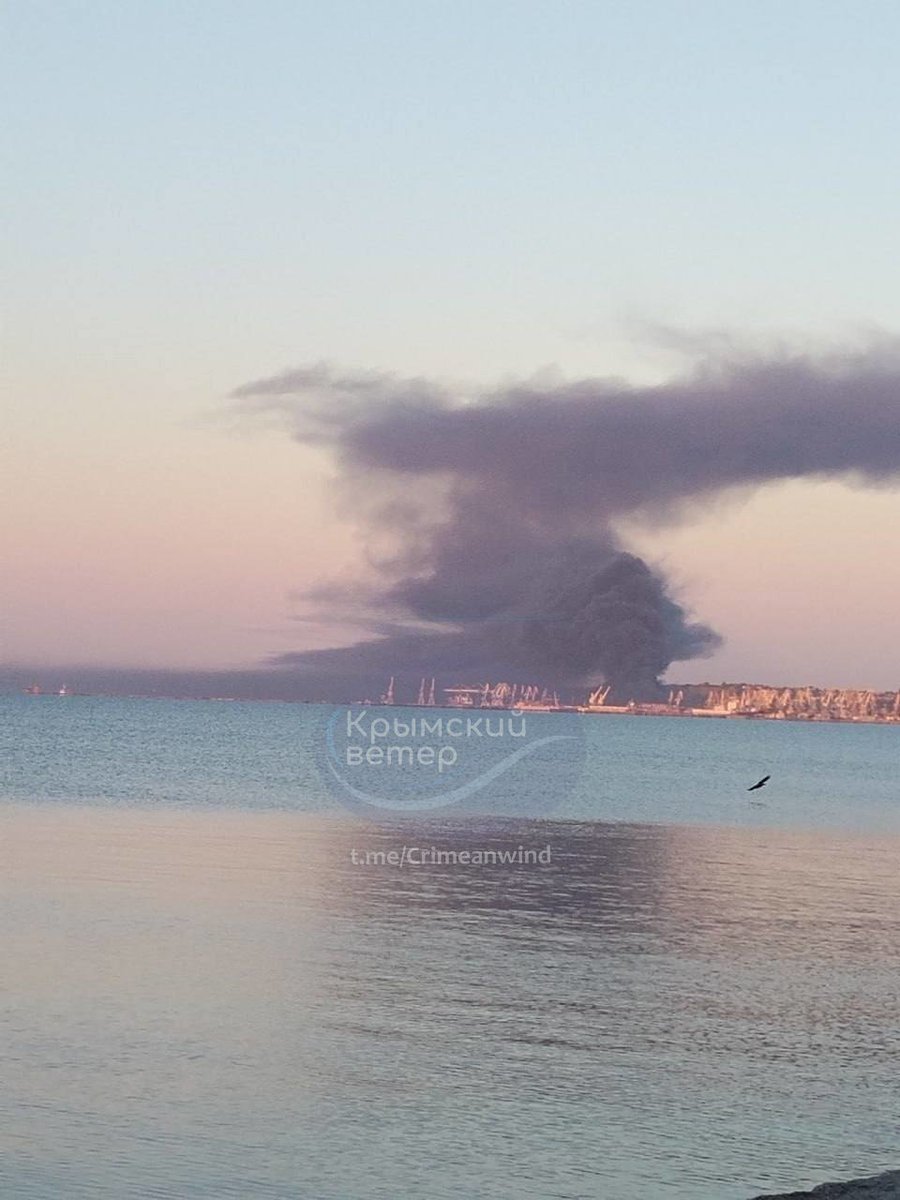
Just minutes later, at 05:00 UTC, Ukrainian‑operated drones attacked the Russian‑held Mariupol Port in Donetsk Oblast. The strike produced a large fire that engulfed cargo handling facilities and temporarily halted loading operations. The source channel supplied a single photograph showing the burning dock area.
"Ukrainian drones attacked the Mariupol Port in Donetsk Oblast, resulting in a large fire. The port is under Russian control." – monitor_the_situation, 2026‑06‑06T05:00:24No casualty figures were released, and Russian authorities did not immediately comment on damage assessments. The operation demonstrates Kyiv’s capacity to project UAV power into occupied territories, targeting economic nodes that sustain Russian supply chains.
Ukrainian Drone Attack on Zuhres, Donetsk Oblast
At 05:00 UTC, a separate Ukrainian drone sortie struck the industrial city of Zuhres, also in Donetsk Oblast. The impact ignited a large fire in an unspecified location, with video footage confirming the blaze. The exact target—whether a military depot, energy facility, or civilian structure—remains unidentified.
"Ukrainian drones attacked the city of Zuhres in Donetsk Oblast overnight, causing a large fire. The target of the strikes is currently unknown." – monitor_the_situation, 2026‑06‑06T05:00:27Again, no injuries or deaths were reported in the immediate aftermath. The incident adds to a pattern of Ukrainian UAV operations aimed at disrupting Russian‑controlled urban centers in the Donetsk region.
Weapon Systems and Tactical Trends
The three incidents illustrate divergent UAV strategies. Russia’s deployment of Geran‑2 drones reflects a mass‑attack doctrine, leveraging sheer numbers to overwhelm air‑defence systems and create psychological pressure on civilian populations. In contrast, Ukrainian forces employed smaller, likely reconnaissance‑grade drones equipped with precision explosives to strike high‑value logistical targets. Both sides appear to prioritize fire‑inducing payloads, suggesting an intent to degrade infrastructure rather than inflict mass casualties at this stage of the conflict.
Operational Implications for Ukrainian Defense and Russian Logistics
For Ukrainian defense planners, the successful strikes on Mariupol and Zuhres indicate sustained reach into occupied zones, potentially complicating Russian consolidation efforts. The attacks may force Russian commanders to allocate additional air‑defence assets to rear areas, diluting protection for front‑line units. Conversely, the Russian Geran‑2 swarm demonstrates an ability to project force onto major Black Sea ports, threatening maritime trade and naval resupply routes. The lack of reported casualties suggests that both sides are still calibrating the lethality of their payloads, focusing on material disruption.
Humanitarian and Civilian Considerations
While casualty reports are absent, the fires caused by each UAV attack pose secondary risks, including air‑quality degradation, displacement of residents, and strain on emergency services. The Odesa incident, occurring in a densely populated coastal city, underscores the potential for civilian harm if future swarms increase in size or payload potency. Monitoring agencies have called for heightened civilian alerts and reinforced fire‑suppression capabilities in vulnerable port districts.
Verification and Source Reliability
The events are corroborated by the Telegram channel monitor_the_situation, which provided time‑stamped video and photographic evidence for each strike. The channel’s historical accuracy in reporting kinetic incidents has been rated as high by independent conflict‑monitoring NGOs. Nonetheless, independent satellite imagery and on‑the‑ground verification remain pending, particularly for the exact damage extent at Mariupol and Zuhres.
Overall, the June 6 UAV actions reflect an intensifying kinetic dimension in the Ukraine war, with both belligerents employing unmanned systems to achieve strategic effects while limiting direct personnel losses. Continued observation of UAV deployment patterns will be essential for assessing future escalation risks and for informing civilian protection measures.