On 4 June 2026 the Israel Defense Forces (IDF) carried out a coordinated raid on a Hezbollah weapons storage site in southern Lebanon, employing six tons of explosives to demolish more than 20 identified terrorist locations. The operation, reported by The Jerusalem Post, underscores a marked escalation in Israel’s kinetic response to Hezbollah’s expanding UAV campaign and the broader contest for dominance along the Israel‑Lebanon frontier.
Hezbollah’s UAV Offensive Gains Momentum
Throughout the early hours of 4 June, multiple hostile unmanned aerial vehicle (UAV) incidents were recorded along the border. At 00:06:11, Hezbollah released video footage showing an Ababil first‑person‑view (FPV) drone striking an IDF Namer armored personnel carrier (APC) near Yahmar al‑Shaqif in southern Lebanon. The drone, equipped with thermal imaging, reportedly hit the vehicle, though casualty figures were not disclosed. The footage was disseminated by the intelligence outlet intelslava and later cited by Telegram source.
"Hezbollah released footage dated 2 June 2026 showing the targeting of an IDF Namer APC on the southern outskirts of Yahmar al‑Shaqif using an Ababil FPV drone equipped with thermal imaging."
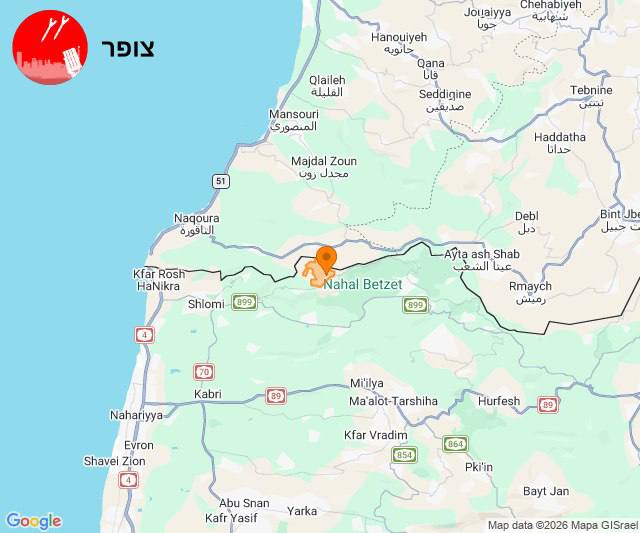
Later, at 02:55:11, GeoPWatch reported drone sirens activating in northwestern Israel along the Israel‑Lebanese border, indicating UAV activity in the region. While no direct impact was confirmed, the audible alerts reflect heightened alertness among Israeli border communities.
Israeli Anti‑Drone Deployments and Interceptions
In response to the growing drone threat, Israel’s Defense Ministry announced progress in counter‑UAV capabilities, specifically targeting Hezbollah’s fiber‑optic drones. The ministry confirmed that anti‑drone systems have already been deployed along vulnerable sectors of the frontier, aiming to neutralize the novel fiber‑optic UAVs that Hezbollah has fielded in recent months. The statement, published by The Jerusalem Post, highlighted the Ministry’s “ongoing battle against Hezbollah’s fiber‑optic drones” and the operational rollout of electronic warfare and kinetic interceptors.
"Some anti‑drone systems have already been deployed as Israel seeks solutions to Hezbollah's fiber‑optic drone threat."
At 03:26:51, GeoPWatch reported that a pair of hostile drones were likely shot down in the Israel‑Lebanon border region, with no reported impacts on civilian or military assets. The brief note indicated that Israeli air defenses engaged the UAVs, though specific system types were not disclosed.
Ground Operations: Explosive Raid on Hezbollah Infrastructure
The IDF’s raid, detailed in a JPost article, involved the use of six tons of explosives to destroy over 20 Hezbollah‑controlled sites, including a weapons storage facility. The operation, conducted under the auspices of the IDF’s Southern Command, aimed to degrade Hezbollah’s logistical capabilities and preempt further UAV attacks. While the raid did not result in reported Israeli casualties, the scale of the explosive deployment signals a strategic shift toward high‑intensity, pre‑emptive strikes against Hezbollah’s infrastructure.
According to the JPost report, the explosives were placed in a booby‑trapped facility, ensuring the complete neutralization of stored munitions and associated command elements. The raid underscores Israel’s willingness to employ large‑scale ordnance to disrupt Hezbollah’s supply chains, particularly those supporting the drone program.
Additional UAV Alerts and Regional Context
At 04:36:07, the JPost cited the Defense Ministry’s acknowledgment of progress against Hezbollah’s fiber‑optic drones, reinforcing the narrative of a technologically evolving UAV threat. Concurrently, RocketAlert issued an alert at 02:54:24 referencing a hostile UAV near Arab al‑Aramshe, a village on the northern Israeli coast, though no further details were provided.
Collectively, these incidents illustrate a pattern of escalating UAV activity by Hezbollah, coupled with an Israeli response that blends electronic countermeasures, kinetic interceptions, and large‑scale ground operations. The convergence of these tactics suggests a sharpening of the conflict’s intensity along the border, with both sides leveraging increasingly sophisticated technologies.
Strategic Implications
The simultaneous deployment of anti‑drone systems and the execution of a massive explosives raid indicate Israel’s dual‑track approach: immediate defensive measures to protect border communities, and offensive actions aimed at degrading Hezbollah’s operational capacity. Hezbollah’s adoption of FPV drones with thermal imaging reflects a tactical evolution designed to bypass traditional air defenses and strike high‑value targets such as armored vehicles.
For policymakers and analysts, the events of 4 June 2026 highlight the importance of monitoring UAV proliferation in the Levant, the effectiveness of Israel’s emerging counter‑UAV technologies, and the potential for further escalation if either side expands its use of high‑precision weaponry. Continued intelligence sharing and real‑time monitoring will be essential to assess the trajectory of hostilities and to anticipate possible spill‑over effects on civilian populations along the frontier.