On 3 June 2026 Iran launched a coordinated missile and drone barrage against Kuwait and Bahrain, striking Kuwait International Airport’s Terminal 1 and causing one fatality and 63 injuries. The attacks, confirmed by the Kuwaiti Ministry of Defense and reported by multiple open‑source channels, represent the most lethal kinetic event of the day and have prompted immediate condemnation from Gulf Cooperation Council (GCC) members and Arab states.
Kuwait Airport Attack and Immediate Aftermath
At approximately 14:15 local time, Iranian‑launched drones and missiles impacted Terminal 1 of Kuwait International Airport. Kuwait’s Ministry of Health reported one death and 63 injuries, while the Kuwaiti military confirmed extensive structural damage to the passenger building.
"Terminal 1 sustained significant damage following overnight drone and missile attacks from Iran. The strike also resulted in one fatality and 63 injuries," – Kuwait Ministry of Health, 2026‑06‑03T11:12:07, sourceVideo footage shared by BellumActaNews and GeoPWatch shows collapsed sections of the terminal and smoke plumes, corroborating official statements.
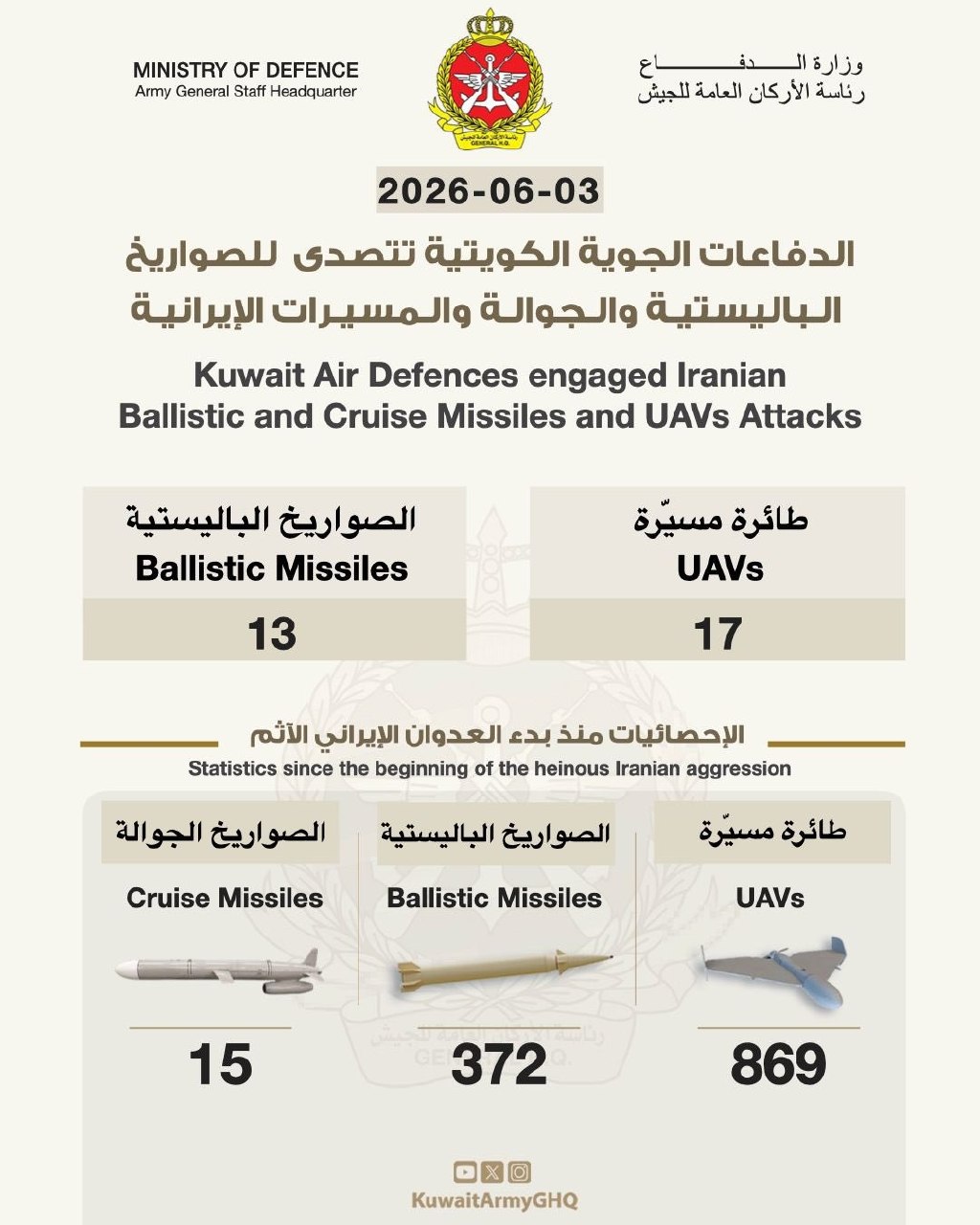
In response, Kuwait’s Ministry of Defense announced that its air‑defence forces intercepted 13 ballistic missiles and 17 attack drones launched by Iran since the previous night.
"Kuwaiti Air Defense Forces have intercepted a total of 13 ballistic missiles and 17 one‑way attack drones launched at the country by Iran," – CIG_telegram, 2026‑06‑03T12:30:42, sourceDespite the interceptions, several projectiles reached the airport, underscoring the intensity of the barrage.
Expansion of the Barrage to Bahrain and Maritime Targets
Simultaneously, Iranian forces targeted Bahrain, employing both missiles and drones. The attacks prompted swift statements from GCC officials warning of a dangerous escalation and calling for a unified Gulf stance against Iranian aggression.
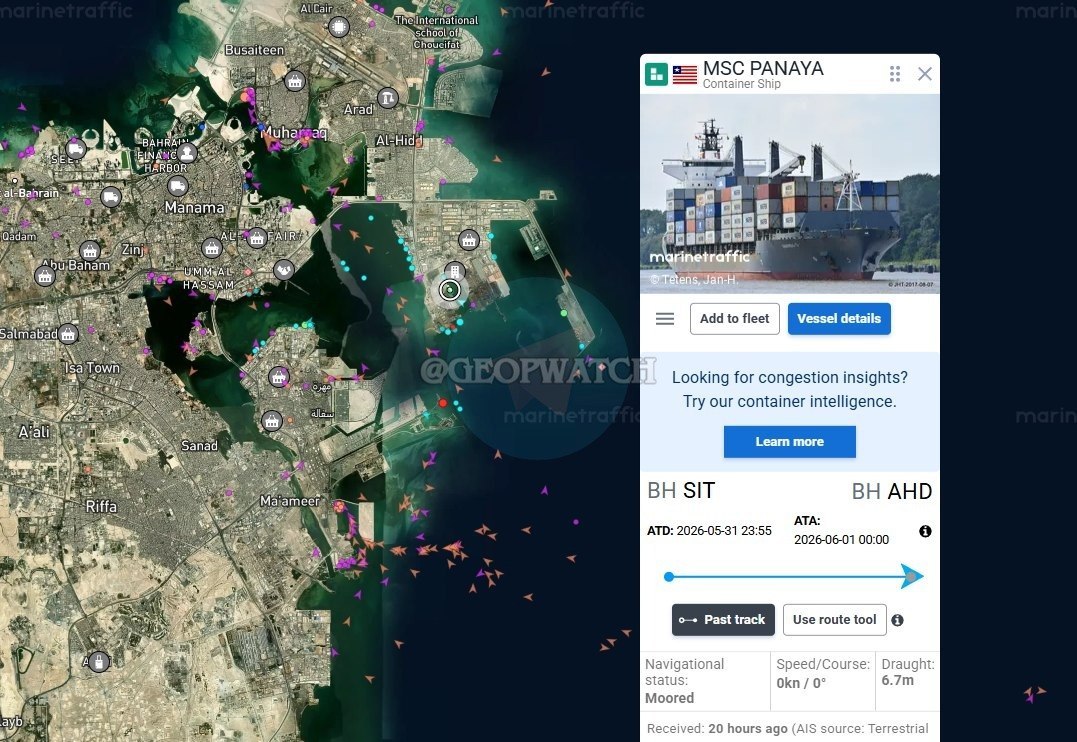
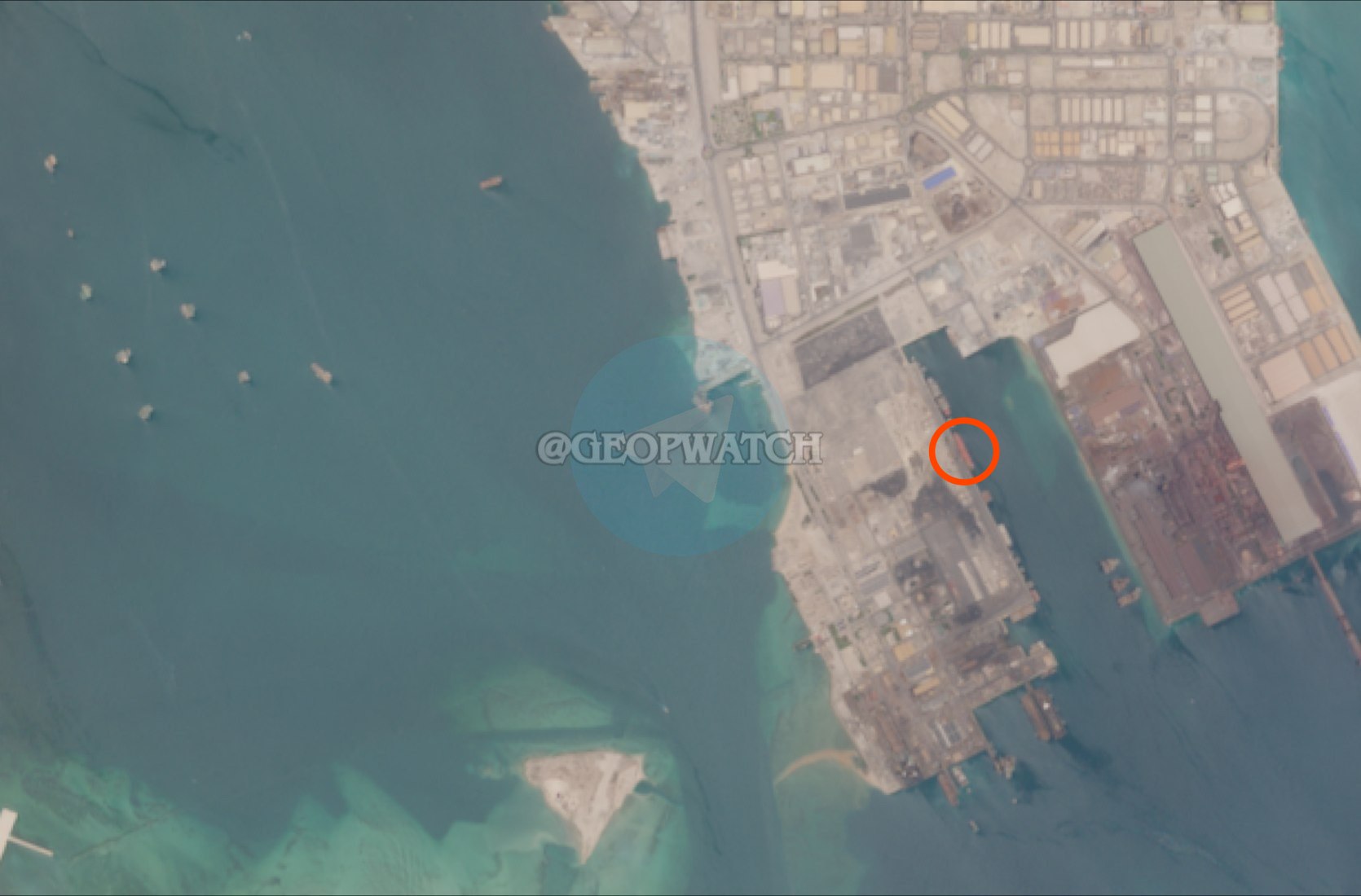
"GCC and Arab states condemn Iran’s missile and drone attacks on Kuwait and Bahrain, warning of a dangerous escalation," – monitor_the_situation, 2026‑06‑03T14:14:31, sourceFurther maritime aggression was documented when the Islamic Revolutionary Guard Corps (IRGC) launched an anti‑ship missile at the Malaysian‑flagged vessel MSC PANAYA near Bahrain’s Khalifa Bin Salman Port, as reported by GeoPWatch.
"IRGC fired anti‑ship missiles at the Malaysian‑flagged vessel MSC PANAYA near Bahrain’s Khalifa Bin Salman Port," – GeoPWatch, 2026‑06‑03T17:21:29, source
Regional Air‑Defense Alerts and Counter‑Measures
Israel experienced multiple rocket alerts across its northern border, with RocketAlert.live documenting launches near Misgav Am, Kiryat Shmona, and Margaliot. The Israeli Air Force intercepted two rockets originating from Lebanon, while air‑defence sirens sounded in northern Israel following a suspicious aerial target interception.
"Israeli Air Force intercepted two rocket launches coming from Lebanon into Israel," – idkunim_il, 2026‑06‑03T12:03:41, source
Hezbollah also deployed a drone over Kiryat Shmona, triggering air‑defence alerts and interception attempts, as reported by monitor_the_situation.
"Hezbollah Drone Triggers Alerts in Kiryat Shmona, Israel," – monitor_the_situation, 2026‑06‑03T08:31:07, source
U.S. Naval Blockade and Strategic Movements
The United States intensified its maritime pressure on Iran, redirecting over 120 commercial vessels in the Strait of Hormuz and disabling six ships to enforce a naval blockade, according to CENTCOM releases.
"US Navy has begun enforcing a blockade against Iran in the Arabian Sea, redirecting 125 commercial vessels and disabling six to ensure compliance," – monitor_the_situation, 2026‑06‑03T15:15:43, sourceSatellite imagery also revealed the deployment of 66 U.S. tankers in central Israel, indicating a significant logistics buildup amid rising Iran tensions.
Parallel Kinetic Events in Europe and Ukraine
In a separate theater, a Ukrainian drone struck energy facilities near St Petersburg hours before the St Petersburg Forum began, highlighting the conflict’s reach into Russian territory.
"A Ukrainian drone struck energy facilities near St Petersburg hours before the St Petersburg forum began," – AlJazeera, 2026‑06‑03T16:20:32, sourceAdditional Ukrainian UAV operations were reported over the Gulf of Finland, where a low‑flying FP‑1/2 kamikaze drone challenged detection capabilities.
Russia continued its cross‑border drone campaign, striking an industrial plant in Belgorod Oblast and damaging the Volgograd refinery with UAVs, as documented by monitor_the_situation and other open‑source feeds.
Humanitarian Impact and Nuclear Concerns
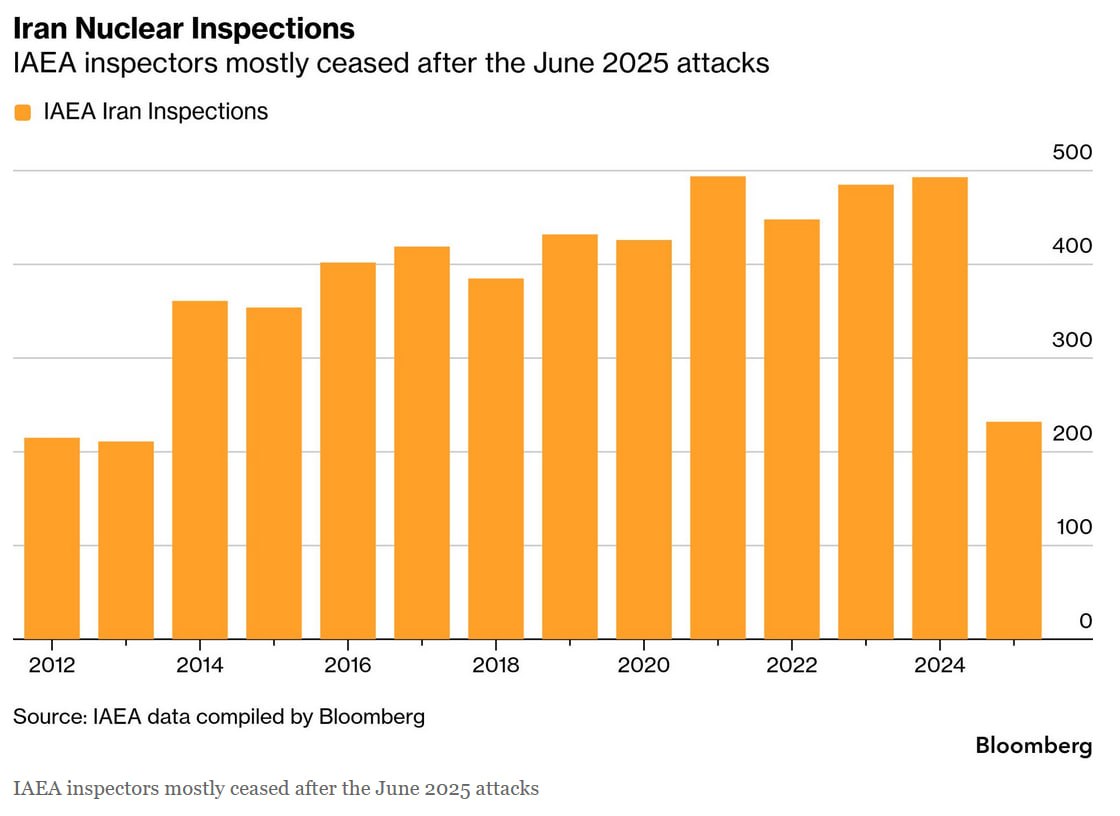
Casualty figures from the Kuwait attacks underscore the humanitarian toll of the day, while the International Atomic Energy Agency (IAEA) warned that Iran’s nuclear risk has risen following recent U.S. and Israeli strikes, citing unverified high‑enriched uranium stockpiles.
"Iran's covert nuclear weapons risk has risen since the US‑Israeli attacks," – CIG_telegram, 2026‑06‑03T16:21:25, sourceBloomberg also reported that Iran’s enriched uranium is now nearly weapons‑grade, further heightening regional security concerns.
Overall, the events of 3 June 2026 illustrate a rapid escalation of kinetic operations across the Middle East and Eastern Europe, with Iran’s missile and drone barrage marking the most lethal single incident of the day.