On June 3, 2026, a series of kinetic events involving unmanned aerial systems (UAS) unfolded across Lebanon, reflecting an escalation in both Hezbollah‑initiated drone attacks against Israeli forces and Israeli UAV strikes on Lebanese targets. The most consequential incident was a Hezbollah‑released video showing an Ababil FPV drone striking an Israeli Defense Forces (IDF) infantry unit in Zawtar, southern Lebanon, on June 2, wounding one soldier. The footage, posted by GeoPWatch at 16:34 UTC, confirms the use of a thermal‑equipped Ababil drone to engage a ground formation, marking a clear shift toward precision‑guided, low‑observable platforms in the cross‑border conflict.
Hezbollah FPV Drone Operations Against IDF Positions
Hezbollah’s drone campaign on June 3 comprised multiple documented strikes:
"⚡️🇱🇧🇱🇧❌🇮🇱 - Hezbollah published footage of the targeting of an IDF Infantry force, impacting 1 soldier directly using a thermal‑equipped Fiber‑Optic 'Ababil' FPV drone in southern Lebanon's 'Zawtar' on the 2nd of June." – GeoPWatch
The Zawtar strike (16:34 UTC) involved a single soldier injured by a direct hit to the torso. Earlier, at 16:26 UTC, Hezbollah released video of an Ababil drone engaging a 3‑4‑man IDF infantry squad in Yohmor, also in southern Lebanon, on June 1. The Yohmor footage, also from GeoPWatch, emphasizes the drone’s capability to locate and engage small ground units during daylight operations.
"⚡️🇱🇧🇱🇧❌🇮🇱 - Hezbollah published footage of the targeting of IDF 3‑4 Infantry troops using a thermal‑equipped 'Ababil' FPV drone in southern Lebanon's 'Yohmor' on the 1st of June." – GeoPWatch
Additional FPV strikes were reported by rnintel:
- At 15:30 UTC, a drone hit an IDF soldier in the face in Zawtar al‑Sharqiyah, confirming a direct, high‑precision impact.
- At 14:15 UTC, a night‑time FPV drone strike struck IDF soldiers on the outskirts of Yahmur al‑Shaqif, demonstrating Hezbollah’s ability to conduct nocturnal operations.
- At 09:22 UTC, Hezbollah released footage of drone attacks on Israeli troops stationed at Beaufort Castle, a strategic high‑ground position in northern Lebanon.
All five incidents employed FPV platforms, primarily the Ababil model, which integrates thermal imaging for target acquisition. The repeated use of this system suggests a maturing operational doctrine within Hezbollah, focusing on low‑cost, high‑impact UAVs to offset Israel’s conventional air superiority.
Israeli UAV Strikes on Lebanese Military and Civilian Assets
Israeli forces conducted a parallel series of UAV attacks targeting Lebanese entities:
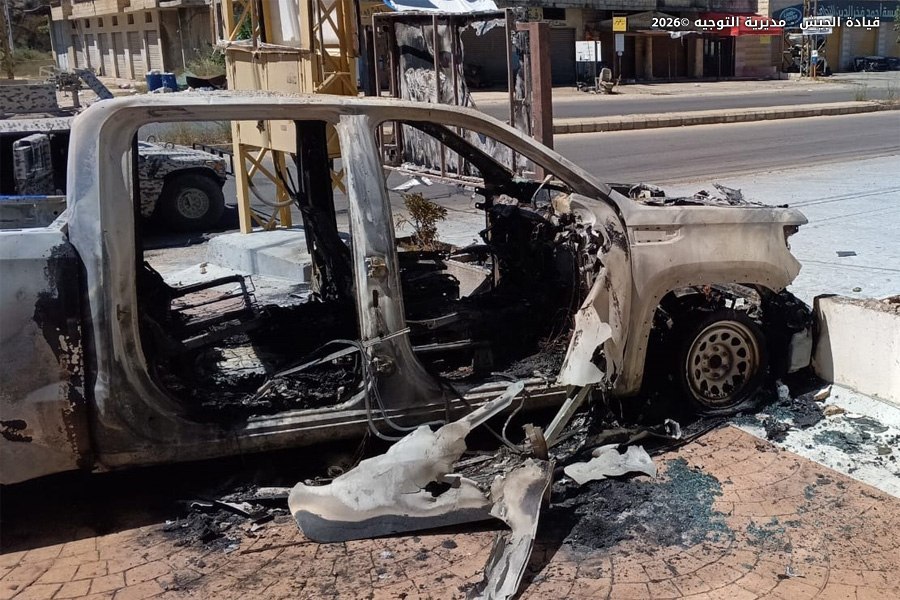
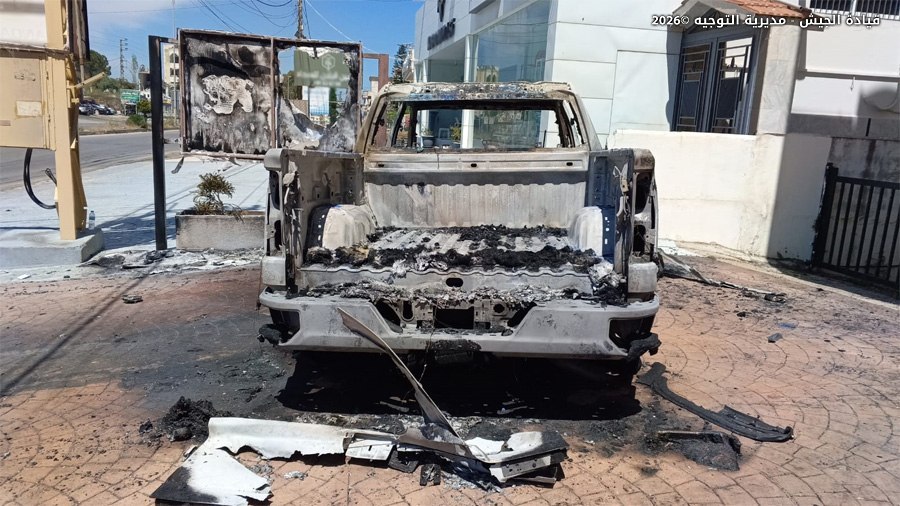
- At 13:02 UTC, an Israeli drone struck a Lebanese Army vehicle on the Deir el‑Zahrani‑Nabatieh road, wounding an officer and a soldier (CIG_telegram).
- Simultaneously, a separate Israeli drone hit a civil‑defense ambulance in Shehour, killing two paramedics and injuring a third (CIG_telegram).
- At 14:01 UTC, a drone attack on Khaldeh Road targeted a civilian vehicle; the footage, shared by BellumActaNews, shows the moment of impact but does not confirm casualties.
- At 07:49 UTC, an Israeli drone struck a car in southern Beirut, reportedly targeting a Hezbollah figure (monitor_the_situation).
These strikes illustrate Israel’s willingness to employ UAVs not only against combatants but also against infrastructure and personnel linked to Hezbollah, extending the kinetic envelope into urban Lebanese territory.
Persistent Israeli Air Force UAV Presence Over Beirut
Israeli Air Force (IAF) drones were observed conducting prolonged surveillance over Beirut and its southern suburbs. At 11:33 UTC, GeoPWatch reported two hours of continuous IAF UAV activity over the capital, while an earlier report at 14:57 UTC confirmed the same pattern. The sustained presence indicates a strategic intelligence‑gathering posture, potentially supporting the targeted strikes described above.
"Israeli Air Force drones have been circling over Beirut for over two hours." – GeoPWatch
Artillery Engagements and Heritage Impact
Hezbollah also claimed responsibility for an artillery barrage against Israeli troops near Adayseh at 13:35 UTC (monitor_the_situation). While casualty figures were not disclosed, the attack underscores the multi‑domain nature of the conflict, combining UAV strikes with conventional indirect fire.
In a related development, a report by Al Jazeera highlighted the collateral damage inflicted on historic sites as Israel’s ground invasion progresses through southern Lebanon. The article notes the destruction of Phoenician temples and Crusader castles, emphasizing the broader cultural cost of kinetic operations (Al Jazeera).
Analytical Assessment
The June 3 events reveal a pronounced intensification of UAV‑centric warfare on both sides of the Lebanon‑Israel frontier. Hezbollah’s adoption of FPV drones equipped with thermal sensors enables rapid, low‑altitude strikes against dispersed infantry, reducing exposure to Israel’s air defenses. Conversely, Israel’s use of armed UAVs against Lebanese military, civil‑defense, and civilian targets demonstrates a flexible, precision‑strike capability that blurs the line between combatant and non‑combatant zones.
Key operational trends include:
- Proliferation of FPV platforms: Both actors rely on commercially available drone frames modified for combat, suggesting a low barrier to entry and potential for further escalation.
- Target diversification: Israeli UAVs engaged both military (Lebanese Army) and humanitarian (ambulance) assets, while Hezbollah focused on IDF infantry and occupied positions.
- Urban penetration: Israeli strikes within Beirut indicate a willingness to extend kinetic actions into densely populated areas, raising the risk of civilian casualties.
These dynamics point to an increasingly contested airspace over Lebanon, where low‑observable UAVs challenge traditional air‑defense paradigms and raise the probability of misidentification or unintended escalation.