On June 2, 2026, the Ukrainian theater experienced a marked escalation in kinetic engagements, highlighted by a lethal cluster‑munitions strike in Dnipro that killed nine civilians, including a three‑year‑old child. The day’s events spanned artillery, missile, drone, and air‑to‑air actions across multiple fronts, reflecting a coordinated intensification of hostilities by both Russian and Ukrainian forces.
Critical Cluster‑Munition Attack on Dnipro
At 08:59 UTC, Russian forces deployed cluster munitions against civilian areas of Dnipro, Dnipropetrovsk Oblast. According to Mayor Borys Filatov, the strike resulted in nine fatalities, among them a three‑year‑old child, and caused extensive material damage. The use of cluster munitions, a weapon class prohibited under the Convention on Cluster Munitions, raises serious humanitarian concerns.
"The explosion of the cluster shells tore through a residential block, killing innocent civilians and leaving families shattered," Mayor Filatov told local media, as reported by monitor_the_situation (https://t.me/monitor_the_situation/18976).
The attack underscores Russia’s willingness to employ indiscriminate weapons in densely populated zones, contravening international humanitarian law. The incident also illustrates the persistent vulnerability of Ukrainian urban centers to high‑explosive ordnance despite ongoing air‑defence efforts.
Four‑Missile Barrage Over Kyiv
Later in the day, at 17:34 UTC, four Russian missiles struck the capital Kyiv within a one‑minute window. Video evidence shared by BellumActaNews (https://t.me/BellumActaNews/173549) shows the missiles impacting residential and commercial districts without any reported interceptions by Ukrainian air‑defence systems. No casualty figures were released at the time of reporting, but the rapid succession of impacts suggests a saturation attack designed to overwhelm defensive assets.
The absence of successful interceptions highlights potential gaps in the integrated air‑defence network, prompting analysts to reassess the efficacy of current surface‑to‑air missile deployments and the need for additional layered protection.
Ukrainian Drone Strikes on Russian Air‑Defence Assets in Crimea and Donetsk
At 14:10 UTC, Ukrainian unmanned aerial systems (UAS) targeted Russian military infrastructure across occupied Crimea and Donetsk Oblast. The operation, documented by monitor_the_situation (https://t.me/monitor_the_situation/19015), destroyed two Pantsir‑S1 air‑defence systems, a Neva radar installation, and a command post. The drones, likely of the Bayraktar TB2 or similar class, demonstrated precision strike capability against high‑value, hardened targets.
These attacks degrade Russian early‑warning and surface‑to‑air capacities in the annexed peninsula, potentially creating openings for future Ukrainian aerial operations. The successful neutralisation of a Neva radar, a key component of Russia’s integrated air‑defence network, represents a notable tactical gain for Kyiv.
Russian Geran‑2 Drone Attack on Fuel Depot Near Nova Lyubomyrka
At 08:15 UTC, Russian Geran‑2 loitering munitions struck a fuel depot near Nova Lyubomyrka in Rivne Oblast. The impact ignited a fire that threatened the storage of several thousand litres of diesel and gasoline. Video footage released by monitor_the_situation (https://t.me/monitor_the_situation/18971) shows the explosion and subsequent blaze.
While no immediate casualty reports were issued, the loss of fuel reserves hampers local logistical support for Ukrainian ground forces and underscores Russia’s continued use of expendable drone weapons to target supply nodes.
Russian Ground Advance Captures Zemlyanky Village
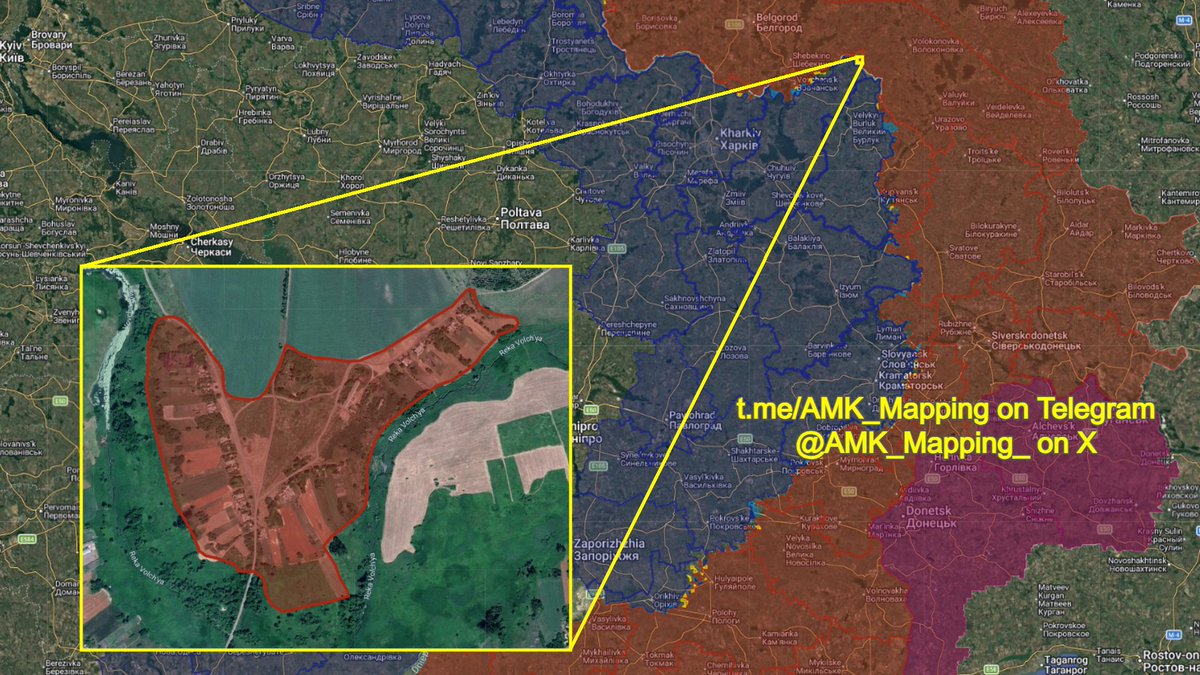
At 08:13 UTC, Russian infantry units seized the village of Zemlyanky in the Velykyi Burluk direction of Kharkiv Oblast. The settlement, with a pre‑war population of roughly 50, was reported captured by Russian forces, as confirmed by monitor_the_situation (https://t.me/monitor_the_situation/18969). No combat casualties were disclosed, but the occupation expands Russia’s foothold in the Kharkiv sector.
The capture reflects ongoing Russian attempts to consolidate control over peripheral settlements, potentially to secure supply routes and create staging areas for further offensives toward larger urban centers.
Ukrainian Drone Assault on Dzhankoi Rail Infrastructure
At 06:50 UTC, Ukrainian drones attacked rail facilities in Dzhankoi, Crimea, igniting a major fire, destroying an administrative building, and reportedly striking a Russian military train. The operation, reported by monitor_the_situation (https://t.me/monitor_the_situation/18961) and corroborated by @NOELreports on X, demonstrates Ukraine’s strategic focus on disrupting Russian logistical corridors in the occupied peninsula.
Rail disruption hampers the movement of troops, equipment, and supplies, potentially affecting Russian operational tempo on the southern front. The incident also illustrates the expanding reach of Ukrainian UAS capabilities into heavily defended territories.
Air‑to‑Air Engagement Near Hlukhiv
At 06:26 UTC, a Russian Su‑35 fighter launched an R‑37/77 long‑range air‑to‑air missile at a Ukrainian F‑16 operating near Hlukhiv, Sumy Oblast. The engagement, documented by monitor_the_situation (https://t.me/monitor_the_situation/18957), represents a rare direct aerial confrontation over Ukrainian airspace. No confirmation of a hit or aircraft loss was provided.
The use of the R‑37/77, a missile designed for high‑altitude, beyond‑visual‑range engagements, indicates Russian intent to challenge the growing presence of Western‑supplied fighter jets in Ukraine’s air domain.
Overall, the June 2 kinetic events reveal a multi‑dimensional escalation, with both sides employing a blend of conventional and asymmetric weapons to achieve tactical objectives. The concentration of high‑impact strikes in urban centers, combined with targeted attacks on command‑and‑control and logistics nodes, suggests a strategic calculus aimed at degrading the opponent’s operational resilience while testing the limits of existing defensive systems.