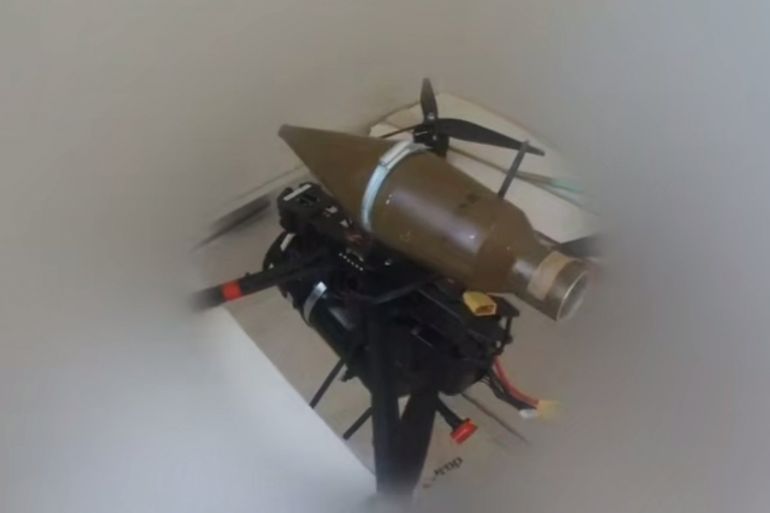
On 1 June 2026 a coordinated series of kinetic attacks originating from Lebanon intensified hostilities along Israel’s northern border. The most consequential incident occurred at 17:38 local time when Hezbollah fired a salvo of rockets toward the city of Kiryat Shmona, prompting Israel’s air‑defence network to engage the projectiles and raising the immediate threat level in the region.
Hezbollah Rocket Salvo on Kiryat Shmona
According to the open‑source monitoring channel GeoPWatch, the rockets were launched from Lebanese territory and aimed directly at Kiryur Shmona, a city of roughly 30,000 residents in Israel’s Upper Galilee. The attack was reported at 17:38:17 UTC and was captured in real‑time on the channel’s Telegram feed (source: GeoPWatch 34578). Israeli air‑defence systems, including the Iron Dome, intercepted several of the incoming rockets, though the exact number of intercepts was not disclosed. No civilian casualties were reported, but the incident triggered a city‑wide siren alert and forced residents to seek shelter.
"Hezbollah launched rockets towards Kiryat Shmona, prompting immediate air‑defence response," GeoPWatch, 17:38 UTC, 1 June 2026.
Key details: weapon type – rockets; perpetrating organization – Hezbollah; launch origin – Lebanon; target – Kiryat Shmona, Israel; casualties – none reported; source – GeoPWatch.
Additional Rocket Fire Along the Northern Border
Earlier in the day, at 12:01 UTC, a separate rocket barrage was detected along the Israel‑Lebanon frontier. The source, idkunim_il, reported that rockets fired from Lebanon landed near the northern border without causing injuries (idkunim_il 59855). A second rocket incident was logged at 13:13 UTC in the city of Carmiel, where air‑raid alarms sounded after fire was reported from Lebanon (idkunim_il 59857). Both events involved unguided rockets, and no official attribution to a specific militant group was provided, though the proximity to Hezbollah‑controlled areas suggests a likely connection.
Summary of rocket incidents: three separate launches (Kiryat Shmona, northern border, Carmiel) between 12:01 and 17:38 UTC; weapons – rockets; actors – unspecified for two events, Hezbollah confirmed for Kiryat Shmona; casualties – none reported.
Hezbollah Drone Operations
Drone activity intensified alongside the rocket attacks. At 15:21 UTC, a Hezbollah‑operated unmanned aerial vehicle (UAV) detonated at an Israel Defense Forces (IDF) site near Rosh Hanikra, a coastal town adjacent to the Lebanese border. The JPost confirmed the explosion but reported no injuries (JPost article‑898018). The UAV’s payload was not disclosed, but the incident demonstrates Hezbollah’s expanding use of aerial platforms for precision strikes.
Earlier, at 11:53 UTC, Hezbollah released video footage of a fiber‑optic‑guided first‑person‑view (FPV) drone striking an Iron Dome launcher at the IDF’s Jal Al‑Alam border site. The footage, posted on the CIG_telegram channel, indicated that this was the eighth Iron Dome battery destroyed by such means (CIG_telegram 76490). The weapon system targeted was a critical component of Israel’s short‑range missile defence, suggesting a deliberate effort to degrade air‑defence coverage along the frontier.
At 11:25 UTC, a separate drone strike near Haifa resulted in several Israeli civilians being wounded and transported to Rambam Hospital. The monitor_the_situation channel supplied a photo of the aftermath and confirmed that Hezbollah claimed responsibility (monitor_the_situation 18832). While casualty numbers were not specified, the incident marks a notable expansion of Hezbollah’s operational reach beyond the immediate border zone into central Israel.
"Hezbollah released footage of a fiber‑optic‑guided FPV drone striking an Iron Dome launcher at Jal Al‑Alam, marking the eighth such loss," CIG_telegram, 11:53 UTC, 1 June 2026.
Drone operation highlights: three distinct UAV attacks (Rosh Hanikra, Jal Al‑Alam, Haifa); weapons – conventional drone, fiber‑optic‑guided FPV drone; perpetrators – Hezbollah; outcomes – one fatality‑free explosion, one Iron Dome battery destroyed, several civilian injuries.
Ground Operations in the West Bank
In a separate theatre, the IDF conducted a targeted raid in Gush Etzion, West Bank, at 11:21 UTC. The operation, reported by JPost, focused on the residence of a suspect linked to a recent car‑ramming attack. Soldiers from the Yehuda Brigade interrogated the suspect’s associates as part of the broader security response (JPost article‑897984). No casualties were reported during the raid, and the action underscores Israel’s simultaneous focus on internal security threats while confronting external kinetic pressure.
Ground raid details: location – Gush Etzion, West Bank; actors – IDF Yehuda Brigade; target – home of car‑ramming suspect; outcome – successful interrogation, no injuries.
Analytical Assessment
The clustering of rocket and drone attacks on 1 June 2026 reflects a coordinated escalation by Hezbollah, leveraging both traditional artillery and emerging UAV technologies. The Kiryat Shmona rocket salvo represents the most severe kinetic event of the day, given its proximity to a densely populated urban centre and the potential for civilian harm. The simultaneous deployment of FPV drones against critical air‑defence assets indicates a strategic intent to erode Israel’s short‑range missile shield, thereby creating a more permissive environment for future rocket strikes.
Hezbollah’s ability to project force as far south as Haifa, resulting in civilian injuries, suggests an operational expansion beyond the immediate border corridor. While the Haifa incident involved a conventional drone rather than the more sophisticated fiber‑optic‑guided platform used at Jal Al‑Alam, it demonstrates a willingness to target high‑value civilian locations to increase psychological pressure.
Israel’s response, characterized by rapid air‑defence interception and immediate civil‑defence alerts, mitigated loss of life but also highlighted the strain on the Iron Dome system, now facing repeated engagements across multiple fronts. The ground raid in Gush Etzion, though unrelated to the northern kinetic events, illustrates the broader security environment in which Israel is operating, balancing external threats with internal counter‑terrorism actions.
Overall, the events of 1 June 2026 underscore a heightened risk of escalation along the Israel‑Lebanon border, driven by Hezbollah’s integration of rockets and advanced UAVs. Continued monitoring of launch sites, drone launch patterns, and IDF defensive postures will be essential for anticipating future kinetic developments.