On 30 May 2026 Israeli ground forces entered the city of Nabatieh in southern Lebanon, advancing beyond the Litani River for the first time since the 2006 war. The movement, reported by Al Jazeera, represents a significant shift in the tactical posture of the Israel Defense Forces (IDF) and raises the risk of broader confrontation between Israel and Hezbollah.
Ground Incursion into Nabatieh
According to an Al Jazeera report, Israeli soldiers reached Nabatieh at approximately 13:50 local time, moving northward from positions established after a series of airstrikes earlier in the day. The report noted that the advance marks the deepest IDF penetration into Lebanese territory since the 2006 conflict, crossing the Litani River, a historic line of separation.
"Israeli soldiers reach Nabatieh, one of southern Lebanon’s biggest cities – Israel’s military has advanced beyond Lebanon's Litani River for the first time since 2006," Al Jazeera, 30 May 2026.
The incursion was not accompanied by immediate reports of heavy combat, but its strategic significance lies in the potential to threaten Hezbollah’s operational depth and to pressure the group’s command structures located in the surrounding districts.
Coordinated Airstrikes Across Southern Lebanon
Simultaneous to the ground movement, the Israeli Air Force conducted a series of high‑intensity airstrikes targeting multiple locations in the south. BellumActaNews documented three separate strikes at 16:04:57 UTC:
- Mahmoudiyeh, Jezzine District – an airstrike with no publicly disclosed weapon type.
- Kfar Hamam, Hasbaya District – accompanied by a photo released by the source.
- Nabatieh city – four distinct strikes attributed to the Israeli Air Force.
Earlier in the day, at 14:18:24, monitor_the_situation reported an Israeli strike that killed one civilian and injured another in an unspecified location in southern Lebanon, explicitly linking the target to Hezbollah activity. At 10:57:48, Al Jazeera confirmed more than ten additional airstrikes across the region, resulting in at least three fatalities.
Rocket Fire from Lebanese Territory
At 15:27:45, BellumActaNews relayed that ten rockets were launched toward Israeli forces near Yahmar al‑Shaqif. The rockets were intercepted by Israeli air defenses, but the launch underscores the continued use of indirect fire by Lebanese militias, likely Hezbollah or affiliated groups, in response to the Israeli offensive.
UAV and Drone Engagements
Hezbollah’s asymmetric capabilities were highlighted by two separate UAV incidents. GeoPWatch released footage dated 27 May showing an Ababil FPV drone striking an Israeli Merkava IV tank in Zawtar, confirming the group’s ability to employ low‑cost, high‑precision loitering munitions against armored targets.
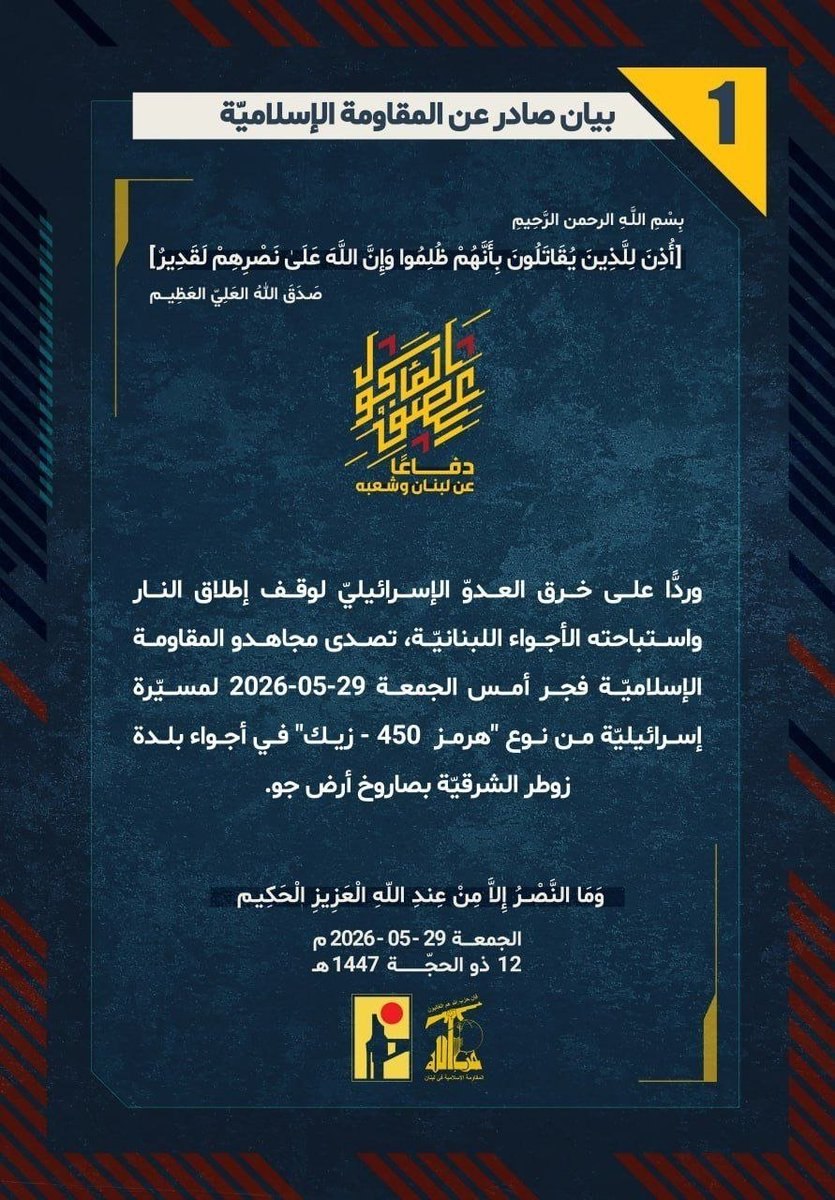
Later, at 07:40:26, monitor_the_situation reported that Hezbollah claimed to have shot down an Israeli Hermes 450 reconnaissance drone over southern Lebanon, releasing photographic evidence of the downed aircraft.
Ground Ambushes and Explosive Attacks
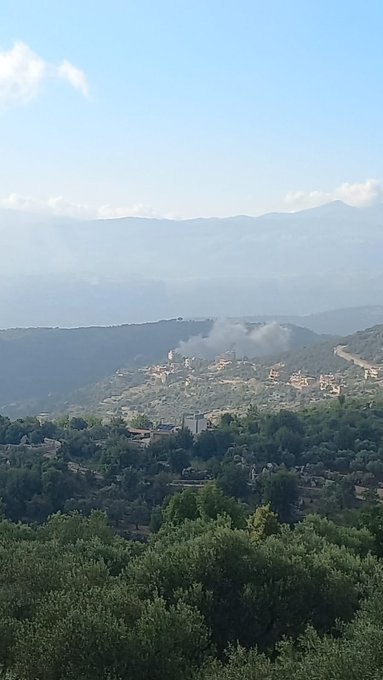
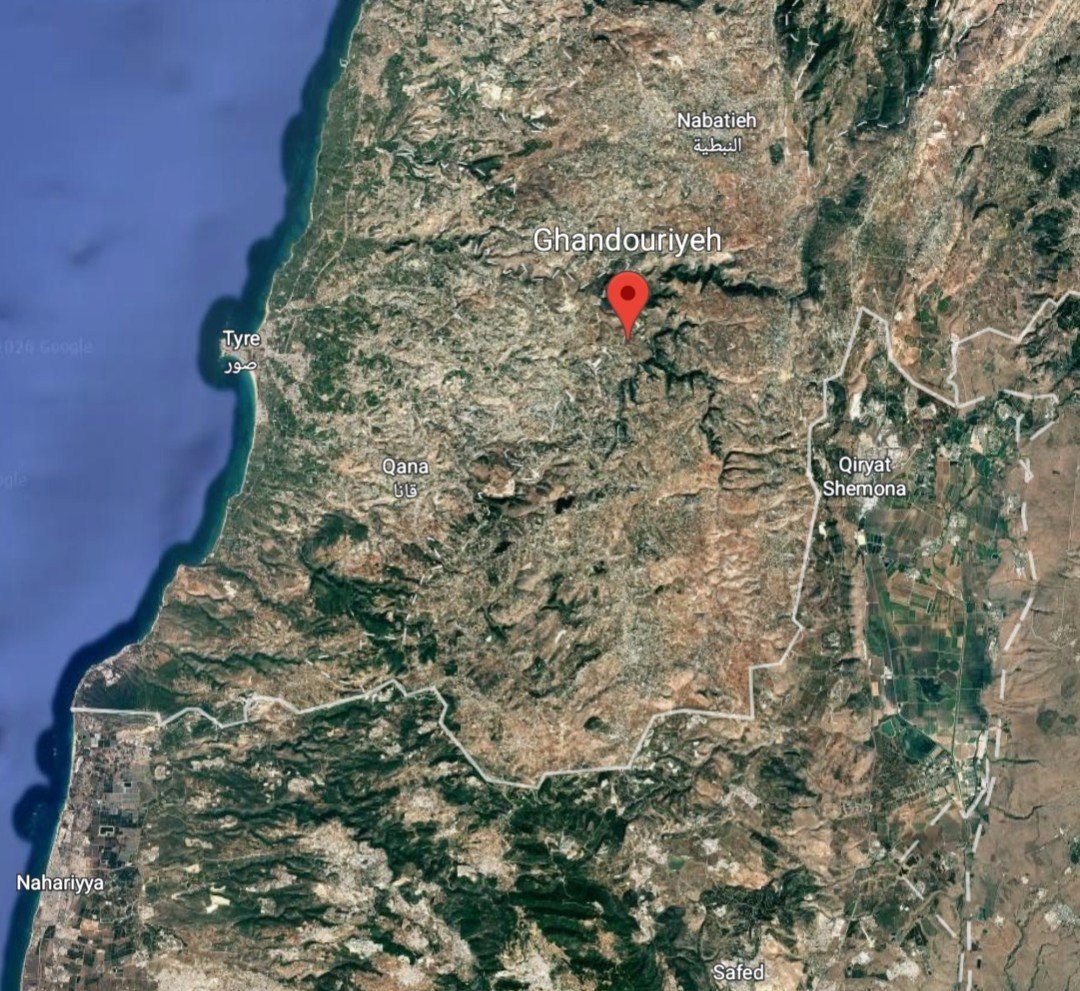
At 08:26:06, monitor_the_situation described a Hezbollah ambush on an Israeli army vehicle near Ghandouriyeh. The attack employed improvised explosive devices and artillery shells, illustrating the group’s continued reliance on conventional explosives to disrupt Israeli advances.
Casualties and Human Impact
The day’s kinetic actions resulted in a minimum of six confirmed Lebanese civilian deaths and multiple injuries. The 14:18:24 strike killed one civilian and wounded another; the 10:57:48 series of strikes accounted for at least three fatalities; and the 16:04:57 airstrikes, while not reporting casualties, likely contributed to the overall humanitarian toll given the densely populated nature of the targeted towns.
Infrastructure damage was extensive, with reports of destroyed residential structures in Mahmoudiyeh and Kfar Hamam, and secondary explosions at the Al‑Shamaali Hezbollah artillery headquarters indicating the loss of stored munitions.
Operational Context and Strategic Implications
The coordinated nature of the air, ground, and drone operations suggests a deliberate escalation by Israel aimed at degrading Hezbollah’s command, control, and logistics networks. The ground incursion beyond the Litani River may serve multiple objectives: testing Lebanese defensive readiness, pressuring Hezbollah’s political leadership, and establishing forward positions for future operations.
Hezbollah’s response, characterized by rocket launches, UAV attacks, and ambushes, reflects a hybrid warfare approach that blends conventional artillery with low‑cost drone technology. The use of the Ababil FPV drone against a Merkava IV tank demonstrates an evolving capability to threaten high‑value armored assets, potentially altering Israeli tactical calculations.
Both sides have refrained from overtly declaring a full‑scale war, yet the density of kinetic events within a single 24‑hour period indicates a rapid escalation trajectory. Continued monitoring of border engagements, casualty figures, and statements from the Israeli Ministry of Defense and Hezbollah’s political bureau will be essential for assessing the risk of broader conflict.