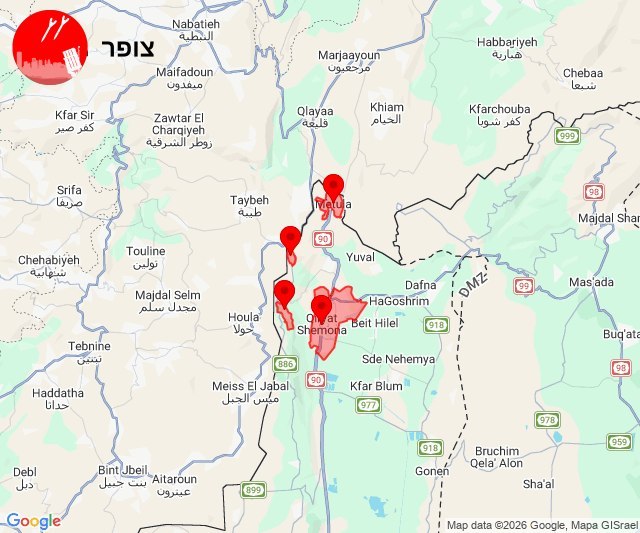
On 30 May 2026 Hezbollah escalated the cross‑border conflict by deploying long‑range Paveh cruise missiles against Israeli Defense Forces (IDF) positions in southern Lebanon. The footage, released by the Telegram channel monitor_the_situation, shows multiple missiles striking fortified outposts, marking the first known use of this precision‑guided system in the current war. The attack follows a series of coordinated rocket and drone operations that have forced the IDF to expand its ground presence deeper into Lebanese territory, including a crossing of the Litani River.
Missile Strikes in Southern Lebanon
At 05:08:26 local time, Hezbollah launched a salvo of Paveh cruise missiles from launch sites in southern Lebanon. The missiles, described by the channel as “long‑range” and capable of precision strikes, hit two IDF positions near the border, causing material damage to command posts and communications equipment. No casualty figures were released, but the impact on operational capability was noted by Israeli military analysts as “significant”. The video, hosted on the same Telegram feed, includes a clear view of the missile trajectory and impact, corroborated by the source URL https://t.me/monitor_the_situation/18574.
Hezbollah released footage of long‑range Paveh cruise missiles targeting Israeli Defense Forces positions in southern Lebanon, marking a significant escalation in the ongoing conflict.
This marks the first documented use of Paveh missiles by Hezbollah, indicating a potential shift in the group’s arsenal toward longer‑range, higher‑precision weapons.
Rocket Barrages Target Northern Israeli Communities
Within the same hour, Hezbollah intensified rocket fire against civilian centers in northern Israel. At 05:05:26, rockets were launched toward Kiryat Shmona and western Safed, as reported by monitor_the_situation (https://t.me/monitor_the_situation/18573). A separate report from GeoPWatch at 04:32:56 documented fifteen rockets aimed at Kiryat Shmona, with one projectile landing inside the town’s limits. Israeli Army Radio confirmed the strike, noting that the impact caused minor structural damage but no fatalities.
Hezbollah launched fifteen rockets towards Kiryat Shmona the past few hours, and one impacted the town.
The coordinated timing of missile and rocket attacks suggests a deliberate strategy to stretch Israeli defensive resources across multiple fronts.
Drone Operations Across the Border
Hezbollah’s aerial campaign expanded with multiple FPV (first‑person view) drone strikes. At 05:13:02, footage from monitor_the_situation showed two drones striking Israeli Merkava tanks in the Lebanese town of Rchaf. The video (https://t.me/monitor_the_situation/18575) captures a drone colliding with the lead tank, while the second drone’s effect remains unclear. Earlier, at 05:04:22, a drone hit an Israeli Humvee near Manara in northern Israel, as documented in another video (https://t.me/monitor_the_situation/18572). Finally, at 05:13:26, the channel reported a combined drone and rocket assault on Israel’s northern district, with the IDF intercepting two rockets but offering no comment on drone interceptions (https://t.me/monitor_the_situation/18576).
These attacks demonstrate Hezbollah’s growing proficiency with low‑cost, high‑impact UAVs capable of targeting both armored vehicles and soft‑target installations.
Israeli Ground Operations Deepen
Concurrently, Israeli forces advanced their ground incursion into Lebanon. Al Jazeera reported at 04:36:17 that IDF units crossed the Litani River, a strategic waterway that historically delineated the southern limit of Israeli operations. The crossing represents a notable escalation, moving Israeli troops further into sovereign Lebanese territory and increasing the risk of broader confrontation.
Israel’s ground invasion of Lebanon has moved deeper into sovereign territory, with troops crossing the Litani river.
The movement follows a pattern of retaliatory strikes, with Israeli units targeting suspected Hezbollah launch sites and supply caches in the vicinity of the river.
Humanitarian Impact in Southern Lebanon
Amid the intensified fighting, Israeli forces demolished residential structures in southern Lebanon at 03:12:49, as captured by monitor_the_situation and reported by Al Jazeera (https://t.me/monitor_the_situation/18571). The demolitions, part of a broader “clear‑and‑hold” strategy, displaced several families and raised concerns among humanitarian agencies about civilian protection under international law.
While casualty numbers remain unverified, the destruction of homes underscores the widening humanitarian toll of the conflict.
Assessment of the Current Escalation
The synchronized use of long‑range missiles, rockets, and FPV drones indicates a coordinated escalation by Hezbollah aimed at imposing a multi‑dimensional threat on Israeli forces. By striking both military installations in southern Lebanon and civilian centers in northern Israel, the group seeks to compel the IDF to allocate resources across a broader front, potentially diluting the effectiveness of Israel’s ground offensive.
Israel’s response—deepening its ground incursion and crossing the Litani River—reflects a strategic decision to pressure Hezbollah’s operational depth and disrupt its supply lines. However, the expansion of hostilities raises the risk of further civilian harm and could draw regional actors into a more pronounced involvement.
Monitoring agencies will continue to track the flow of weapons, the frequency of cross‑border attacks, and the humanitarian situation as the conflict evolves.