The most consequential kinetic event recorded on 28 May 2026 involved the Islamic Revolutionary Guard Corps (IRGC) launching a missile at an American airbase in the vicinity of Bandar Abbas Airport, Hormozgan Province. The strike was presented by the IRGC as a direct retaliation for a U.S. attack earlier that morning on a site near the same airport. The IRGC statement framed the response as a "serious warning" and warned that any repeat aggression would be met with a "more decisive" reaction.
IRGC Rocket Strike on American Airbase
According to the monitoring channel GeoPWatch, the missile was fired at approximately 03:11 UTC from an undisclosed launch point within Iran and impacted the U.S. installation that the IRGC identified as the origin of the earlier American aggression. The weapon system was described simply as a "missile"; no further technical specifications were released. No casualty figures were provided by either side, and independent verification of damage remains pending.
"The strike on the American airbase is a serious warning that aggression will not go unanswered. Any repeat will be met with a more decisive response," IRGC statement, GeoPWatch, 28 May 2026, https://t.me/GeoPWatch/34219
The event marks a notable escalation in the pattern of tit‑for‑tat kinetic exchanges that have characterized Iran‑U.S. relations since the 2023 naval incident in the Strait of Hormuz. By targeting an operational airfield, the IRGC signaled an ability to reach assets that are typically defended by layered air‑defence systems. The absence of reported Iranian casualties suggests a precision strike, though the lack of independent damage assessment leaves the operational impact uncertain.
Missile Launch in Khuzestan Province
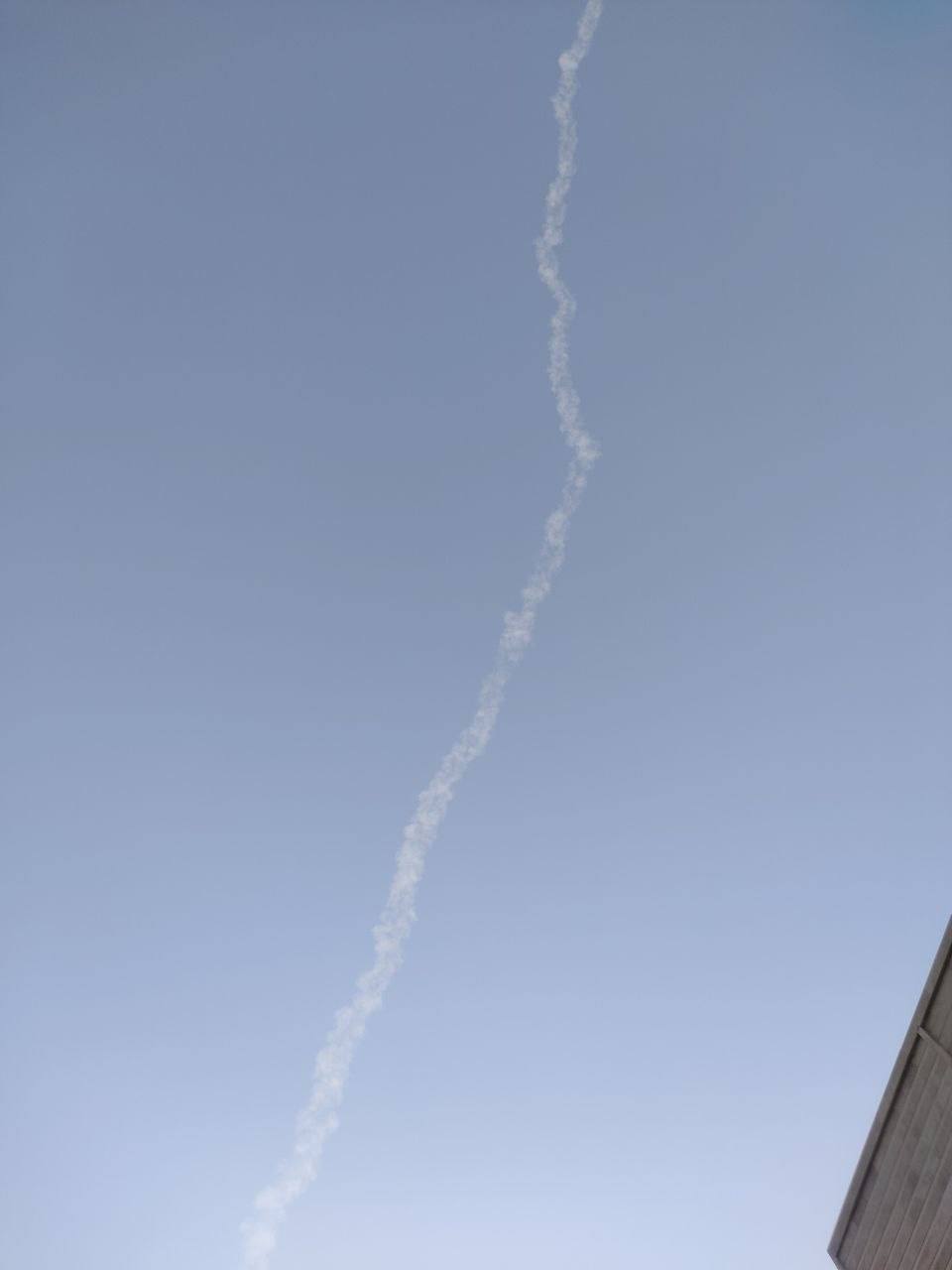
Earlier in the day, at 02:50 UTC, a missile launch was observed in Iran’s oil‑rich Khuzestan Province. The event was reported by IntelRepublic, which supplied a photograph of the launch but did not attribute the launch to any specific organization. The missile’s trajectory, launch platform, and intended target were not disclosed, and no casualties were reported.
PHOTO: Missile launch from Iran’s Khuzestan, IntelRepublic, 28 May 2026, https://t.me/IntelRepublic/51437
While the lack of attribution limits analytical certainty, the timing of the Khuzestan launch—occurring shortly before the IRGC’s retaliatory strike—raises questions about coordinated operational planning within Iran’s military apparatus. Khuzestan’s proximity to critical energy infrastructure may indicate a strategic signaling intent, either to deter external interference or to demonstrate internal readiness.
U.S. Airstrike on Ground Control Station in Bandar Abbas
At 00:44 UTC, a separate kinetic event unfolded when a U.S. strike hit a ground control station in Bandar Abbas that was reportedly preparing to launch a drone. The source, GeoPWatch, cited Reuters as the origin of the information. No weapon type was specified for the U.S. attack, and casualty figures were not released.
"A U.S. strike hit a ground control station in Bandar Abbas that was about to launch a drone," Reuters, cited by GeoPWatch, 28 May 2026, https://t.me/GeoPWatch/34203
The targeting of a drone control facility underscores the United States’ focus on pre‑empting Iranian unmanned aerial capabilities, which have been increasingly employed for surveillance and limited strike missions in the Persian Gulf region. By disabling the launch node, the U.S. aimed to curtail any immediate escalation that could arise from drone deployment.
Collectively, the three events illustrate a rapid escalation cycle within a span of less than three hours. The sequence began with a U.S. pre‑emptive strike on a potential drone launch site, followed by an Iranian missile launch in Khuzestan, and culminated in a direct IRGC missile attack on a U.S. airbase. The proximity of the incidents in both time and geography suggests a heightened state of alert on both sides, with each actor seeking to demonstrate resolve while avoiding full‑scale conflict.
From a strategic perspective, the IRGC’s public warning of “more decisive” future actions serves both a domestic propaganda function and an external deterrence message. The United States, meanwhile, appears to be employing targeted strikes to degrade Iranian command‑and‑control assets before they can be operationalized. The absence of reported casualties may reflect a deliberate effort by both parties to limit civilian harm while maintaining a kinetic posture.
Monitoring agencies will continue to verify damage assessments, casualty reports, and any subsequent diplomatic communications. The events of 28 May 2026 represent a critical data point for analysts tracking the trajectory of Iran‑U.S. military interactions, particularly in the context of broader regional security dynamics involving the Strait of Hormuz and the Persian Gulf.