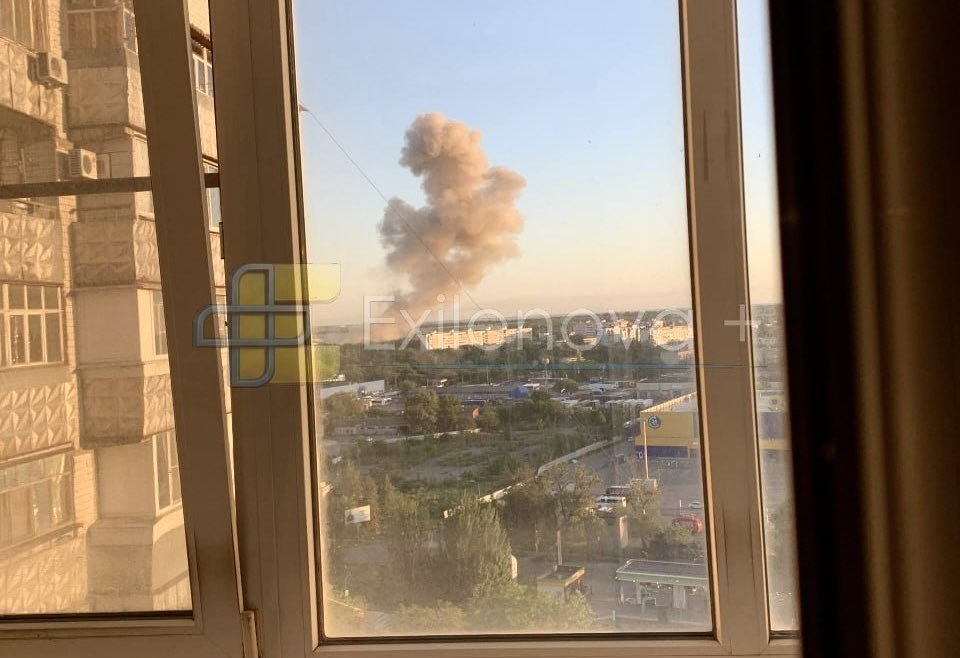
In the early hours of 27 May 2026, Ukrainian Su‑24 aircraft launched a pair of Storm Shadow cruise missiles against the Baltimore Airbase near Voronezh, Russia. The strike, reported by the open‑source channel monitor_the_situation, marked one of the deepest penetrations of Russian air‑defence territory since the conflict began, demonstrating Kyiv’s growing capability to project power beyond its borders.
Ukrainian deep‑strike operations
The Baltimore Airbase, a strategic logistics hub for the Russian Aerospace Forces, was targeted at approximately 03:42 UTC. According to the source, the missiles struck the runway and adjacent fuel storage facilities, producing visible explosions and a plume of smoke that persisted for several minutes. No immediate casualty figures were released, and the source did not confirm damage to aircraft on the ground. The weapons employed—British‑origin Storm Shadow cruise missiles—are long‑range, low‑observable weapons with a reported range of up to 250 km, allowing Ukrainian aircraft to launch from within Ukrainian‑controlled airspace while reaching deep into Russian territory.
"Ukrainian Su‑24s launched Storm Shadow cruise missiles at Baltimore Airbase in Voronezh City, Russia, marking a strike deep inside Russian territory," monitor_the_situation, 27 May 2026.
The use of Storm Shadow missiles underscores a shift in Ukrainian strike doctrine toward precision, stand‑off weapons that reduce exposure of pilots to Russian air‑defences. It also signals a possible widening of the conflict’s geographic scope, as Russian officials have repeatedly warned that attacks on infrastructure within the Russian Federation could invite retaliatory measures.
Russian drone campaign across central Ukraine
Simultaneously, Russian forces intensified a coordinated UAV offensive across three major Ukrainian cities. At 04:27 UTC, at least seven Geran‑2 drones were launched against Poltava, striking a target in the city centre without reported casualties. The following minute, a swarm of fifteen Geran‑2 and Geran‑3 drones bombarded the historic centre of Chernihiv, again with no immediate civilian or military deaths confirmed. Finally, at 04:27 UTC, Geran‑2 drones targeted multiple locations in Kharkiv Oblast, including Kharkiv City, Shevchenkove, Bohodukhiv and Berestyn, igniting fires and causing material damage.
"Russia launched at least seven Geran‑2 drones against Poltava, Ukraine, hitting a target in the city with no initial casualties," monitor_the_situation, 27 May 2026.
"Russia launched at least 15 Geran‑2 and Geran‑3 drones against the city centre of Chernihiv, Ukraine," monitor_the_situation, 27 May 2026.
"Russia launched Geran‑2 drones overnight against targets in Kharkiv City, Shevchenkove, Bohodukhiv and Berestyn in Kharkiv Oblast, Ukraine, causing fires," monitor_the_situation, 27 May 2026.
The Geran‑2 and Geran‑3 platforms are repurposed commercial quad‑copter drones equipped with improvised explosive payloads. Their low cost and ease of deployment enable Russian forces to conduct saturation attacks that overwhelm local air‑defence systems, especially in urban environments where civilian infrastructure can be inadvertently damaged. While casualty reports remain low, the repeated use of these UAVs raises concerns about cumulative civilian harm and the erosion of urban resilience.
Tactical and strategic implications
The juxtaposition of a high‑precision, long‑range missile strike on Russian soil and a massed drone barrage on Ukrainian cities illustrates a widening asymmetry in the conflict’s operational tempo. Ukraine’s ability to strike deep inside Russia with Storm Shadow missiles suggests successful integration of Western‑supplied stand‑off weapons, likely facilitated by intelligence sharing and logistical support from NATO partners. Conversely, Russia’s reliance on inexpensive Geran drones reflects a strategy of attrition, aiming to inflict material damage, generate psychological pressure, and stretch Ukrainian air‑defence resources.
From a strategic perspective, the Baltimore Airbase attack may compel Russian command to reallocate air‑defence assets from the front lines to interior regions, potentially creating gaps that Ukrainian forces could exploit in future operations. At the same time, the drone offensives underscore Moscow’s intent to maintain pressure on Ukrainian population centres, a tactic that could be intended to erode morale and force the diversion of Ukrainian resources toward civil‑defence and emergency response.
Both sides have refrained from publicly claiming casualties, which is consistent with the information‑control environment that characterises the conflict. However, the pattern of attacks—high‑value, deep‑strike missile use by Kyiv and high‑volume, low‑cost UAV swarms by Moscow—suggests a continued escalation in both kinetic intensity and geographic reach.
Source attribution
All event details are drawn from the Telegram channel monitor_the_situation, which posted video and photographic evidence for each incident. The channel’s URLs are as follows: Baltimore Airbase strike – https://t.me/monitor_the_situation/18171; Taganrog airbase strike – https://t.me/monitor_the_situation/18168; Poltava drone attack – https://t.me/monitor_the_situation/18176; Chernihiv drone attack – https://t.me/monitor_the_situation/18175; Kharkiv drone attack – https://t.me/monitor_the_situation/18174.