In the early hours of 26 May 2026, Russian forces launched a coordinated missile and drone barrage that struck the Ukrainian capital, Kyiv, resulting in six civilian deaths and more than one hundred injuries. The attack employed two Iskander‑M short‑range ballistic missiles and a swarm of 122 Shahed‑type unmanned aerial systems, marking the most lethal single‑day kinetic event recorded in Ukraine this year. Monitor_the_situation confirmed the strike, noting that the Kremlin has signaled an intent to intensify pressure on Kyiv following the operation.
🔴 **Russian Missile and Drone Attacks Kill 6, Injure Over 100 in Ukraine**
Source: https://t.me/monitor_the_situation/18051
Overnight Missile and Drone Barrage on Kyiv
The Iskander‑M missiles, launched from undisclosed launch sites in Russian‑occupied territory, struck central Kyiv, causing structural damage to residential blocks and critical infrastructure. Simultaneously, Shahed drones, likely launched from the same occupied regions, penetrated air‑defence corridors, exploiting gaps in the Ukrainian Patriot and SAMP‑T networks. Ukrainian emergency services reported the six fatalities were civilians caught in a residential district, while hospitals treated over 100 individuals with shrapnel wounds, blast trauma, and smoke inhalation. The attack underscores Russia’s continued reliance on combined‑arms strikes to achieve psychological and material effects on the capital.
Russian Use of Underground Pipelines Near Kupiansk
Later that day, intelligence from monitor_the_situation revealed that Russian forces have repurposed a network of Soviet‑era underground pipelines near Kupiansk, Kharkiv Oblast, to transport troops and equipment while evading Ukrainian drone surveillance. The Khartiia Brigade, a Ukrainian volunteer formation, reported that the subterranean routes render the battlefield “nearly uninhabitable for ground troops” due to the difficulty of detecting movement and the risk of ambushes. This logistical adaptation reflects a tactical shift aimed at preserving operational tempo despite increasing Ukrainian aerial reconnaissance capabilities.
Ukrainian Counterstrikes on Occupied Donetsk and Zaporizhzhia
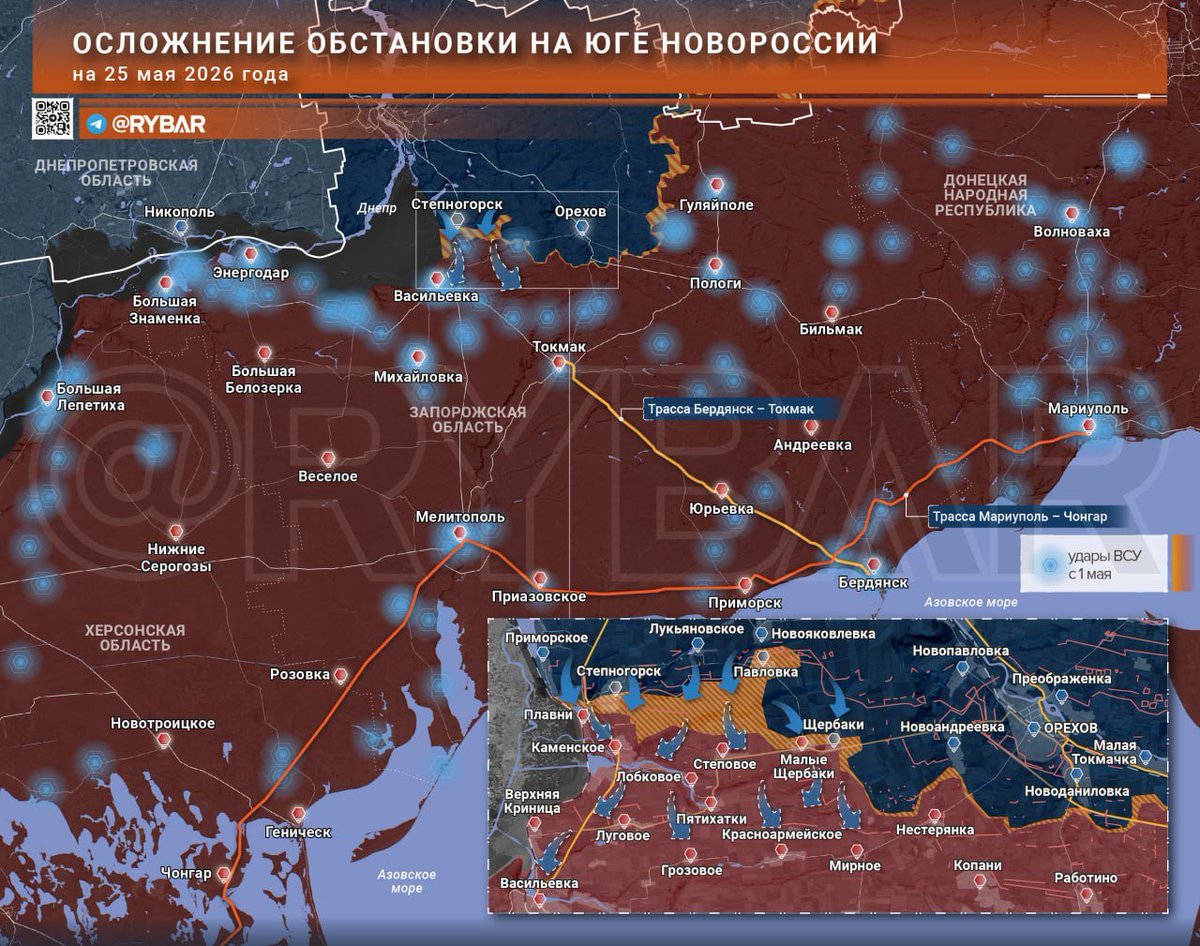
In response to the Kyiv attack, Ukrainian forces conducted a series of precision strikes on Russian‑controlled military and energy installations in the occupied Donetsk and Zaporizhzhia regions. According to monitor_the_situation, the operations targeted command posts, logistics hubs, and ammunition depots, employing a mix of long‑range artillery and air‑launched munitions. While casualty figures for the Russian side were not disclosed, the strikes disrupted supply lines and temporarily degraded the operational capacity of Russian forward units in the east.
Drone Disruption of Russian Air‑Defense Communications in Zaporizhzhia
Ukrainian drones further impacted Russian defensive posture in occupied Zaporizhzhia Oblast. A series of attacks crippled the communications of Russian mobile air‑defence teams, prompting the Russian‑appointed governor, Yevgeny Balitsky, to temporarily lift a Telegram ban imposed in April. The governor’s decision, reported by monitor_the_situation, was framed as a necessity to restore command‑and‑control links after the drone‑induced outage.
🟡 **Russia Unbans Telegram in Occupied Zaporizhzhia After Drone Strikes Disrupt Air Defense**
Source: https://t.me/monitor_the_situation/18082
FPV Drone Attacks on Ukrainian Armored Vehicles
Two separate incidents involving first‑person‑view (FPV) drones demonstrated the growing lethality of low‑cost UAVs against high‑value targets. At 12:13:02, a Russian‑operated FPV drone destroyed a Ukrainian Leopard 1A5 tank near Kostiantynivka, Donetsk Oblast. An additional, independently verified video from intelslava showed a similar FPV drone operation near Konstantinovka, where a camouflaged Leopard 1A5 was immobilised and subsequently destroyed after a coordinated swarm attack. These incidents highlight a tactical evolution where small, agile drones can neutralise main battle tanks without direct artillery or air support.
Ukrainian Air‑Defense Intercepts Russian Cruise Missiles
Ukrainian air‑defence units successfully intercepted a Russian Kh‑59/69 cruise missile near Dnipro at 08:31:46, as reported by monitor_the_situation. The missile, launched from a Su‑57 stealth fighter earlier that morning, represented a rare employment of the advanced platform in a strike role. The interception, achieved by a combination of medium‑range surface‑to‑air missiles and radar‑guided systems, prevented potential damage to critical industrial facilities on the city’s eastern outskirts. A second Kh‑59/69 missile, launched from the same Su‑57, struck Dnipropetrovsk Oblast, confirming the aircraft’s operational readiness for precision strike missions.
Intensified Drone Campaigns Against Russian Supply Routes
Ukrainian drone activity continued to target Russian logistics corridors across multiple fronts. On the M14 highway in Donetsk Oblast, Ukrainian drones attacked a Russian logistics convoy, damaging transport vehicles and disrupting supply flow. A parallel operation on the M14 in Kherson Oblast achieved similar results, with Ukrainian forces reporting the destruction of several fuel trucks and ammunition carriers. Additionally, Ukrainian drones intensified attacks on supply routes leading to the occupied Crimean Peninsula, threatening the flow of materiel to Russian forces stationed there. Photographic evidence accompanying the reports underscores the growing reliance on UAVs for deep‑strike interdiction.
Strategic Implications
The events of 26 May illustrate a widening kinetic contest in Ukraine, where both sides employ a blend of conventional and asymmetric tools. Russia’s use of high‑value ballistic missiles and stealth fighters signals an attempt to regain strategic momentum after setbacks on the ground, while Ukraine’s expanding drone fleet demonstrates adaptability and a focus on attrition of Russian logistics and command structures. The emergence of underground pipeline routes near Kupiansk suggests that Russian forces are seeking to mitigate Ukrainian ISR advantages, potentially complicating future offensive operations. Conversely, Ukraine’s ability to intercept advanced cruise missiles and disrupt air‑defence communications indicates a maturing integrated air‑defence architecture capable of countering novel threats.