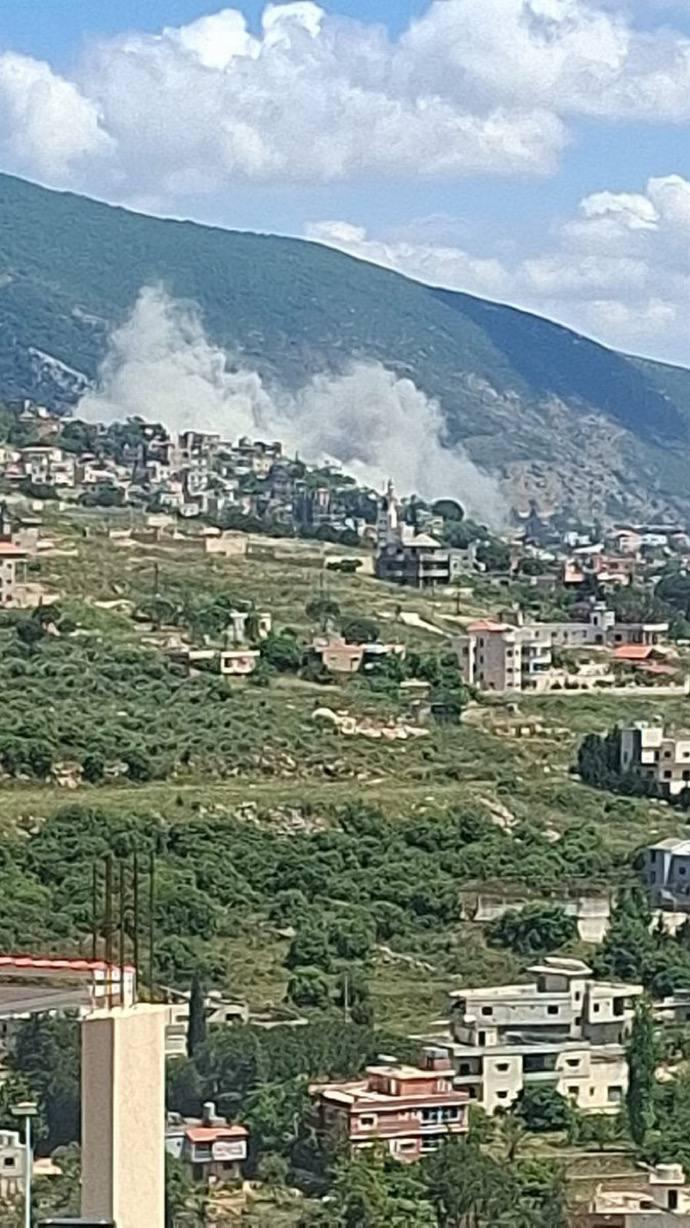
The Lebanese Health Ministry confirmed on 24 May 2026 that Israeli airstrikes have killed 3,151 people across Lebanon since 2 March 2026, marking the deadliest month of the ongoing Israel‑Hezbollah confrontation. The cumulative toll, reported by the monitoring channel monitor_the_situation, underscores a rapid escalation in kinetic operations on both sides of the border.
"Israeli Air Strikes Kill 3,151 in Lebanon Since March 2, Health Ministry Reports" – monitor_the_situation, 24 May 2026.
Recent High‑Intensity Airstrikes in Southern Lebanon
At 15:53 local time, Israeli aircraft conducted a precision strike in southern Lebanon, killing two civilians and wounding a third. The incident, documented in a video released by monitor_the_situation, occurred in an area of frequent cross‑border fire and was attributed to ongoing hostilities with Hezbollah forces.
Earlier, at 12:12, a separate Israeli airstrike in the same region resulted in three additional fatalities, according to the National News Agency (NNA). Civil‑defense teams recovered the bodies, confirming the strike’s lethality. Both attacks were carried out without reported use of specific weapon systems, reflecting the reliance on conventional aerial munitions.
Hezbollah’s Drone Campaign Targets Israeli Assets
Hezbollah released two pieces of footage on 24 May via the Telegram channel GeoPWatch, illustrating the use of locally‑produced Ababil FPV drones against Israeli military equipment. The first video, timestamped 15:28, shows an Ababil drone striking an Israeli Heavy Expanded Mobility Tactical Truck (HEMTT) equipped for signals intelligence (SIGINT) on 19 May. The second clip, posted at 15:17, depicts a similar drone engaging a NAMER armored personnel carrier in Deir Seryan on 18 May, employing a newly‑fielded variant of the Ababil platform.
"Hezbollah published footage of the targeting of an IDF 'HEMTT' SIGINT using an 'Ababil' FPV drone" – GeoPWatch, 24 May 2026.
The deployment of these drones indicates a tactical shift by Hezbollah toward low‑cost, high‑precision unmanned systems capable of striking mobile Israeli assets deep within contested zones.
Israeli Air Force Operations and Ground Infiltration
At 11:21, the Israeli Air Force conducted additional sorties over southern Lebanon, as reported by the Telegram channel idkunim_il. While the specific targets were not disclosed, the operation aligns with a broader pattern of aerial pressure aimed at degrading Hezbollah’s logistical networks.
On the ground, an Israeli raid at 08:54 resulted in one Lebanese fatality and two injuries, according to monitor_the_situation. The incursion, described as a “raid” rather than a full‑scale invasion, involved Israeli ground forces crossing the border to engage presumed Hezbollah positions.
Contextual Analysis
The surge in kinetic events reflects a convergence of strategic objectives. Israel appears to be intensifying aerial campaigns to disrupt Hezbollah’s command‑and‑control infrastructure, while Hezbollah is leveraging asymmetric tools—particularly FPV drones—to impose costs on Israeli mobility and intelligence‑gathering capabilities. The cumulative death toll reported by the Lebanese Health Ministry suggests that civilian populations are bearing the brunt of this escalation.
Both sides continue to operate within a highly fluid environment, where real‑time intelligence, often disseminated through open‑source channels such as Telegram, shapes operational decisions. The reliance on video evidence by both parties serves both propaganda and verification functions, complicating independent assessment but providing a granular view of the conflict’s kinetic dimension.
As of 24 May, no diplomatic de‑escalation measures have been announced, and the pattern of reciprocal strikes and drone attacks is likely to persist unless external mediation intervenes.