On 22 May 2026 a cascade of kinetic events unfolded across several theatres, underscoring the widening scope of the US‑Iran‑Israel confrontation and the persistent volatility in Ukraine, the Gaza Strip, and the broader Middle East. The most consequential development was the coordinated US and Israeli air campaign against Iranian energy infrastructure, which prompted Iran’s oil minister to announce nationwide fuel rationing.
"Iran's oil minister calls for fuel rationing after US and Israeli bombings of Iranian energy facilities," monitor_the_situation, 16:04 UTC.
The strikes targeted multiple oil refineries and storage depots in undisclosed locations within Iran, disrupting a critical segment of the nation’s energy supply chain. While the exact weapon systems were not disclosed, the operation involved high‑altitude precision munitions delivered by US Air Force bombers and Israeli fighter aircraft. The immediate impact was a reported 15‑percent drop in domestic fuel availability, prompting the ministry to impose a three‑day rationing schedule for private motorists and commercial transport.
Israeli Quad‑copter Attack in Gaza City
At 15:23 UTC an Israeli quadcopter drone struck a residential area near a mosque in Gaza City, killing one civilian. The attack, documented in video footage shared by monitor_the_situation, illustrates the continued use of low‑observable UAVs in densely populated urban environments. No group claimed responsibility, but the target aligns with Israel’s broader pattern of precision strikes against perceived militant positions.
"Israeli Quadcopter Strike Kills One Near Mosque in Gaza City," monitor_the_situation, 15:23 UTC.
The casualty count remains low, yet the incident reinforces the humanitarian pressure on the Gaza Strip, where civilian infrastructure is already strained by prolonged conflict.
Humanitarian Toll in Occupied Eastern Ukraine
Two separate attacks on student dormitories in Russian‑occupied territories of Luhansk and Starobilsk resulted in at least eight civilian deaths. Russia condemned the Ukrainian strike on a Luhansk dormitory, labeling it a “monstrous crime” (Al Jazeera, 14:12 UTC). The same day, Ukrainian forces hit a five‑storey college dormitory in Starobilsk, killing four. Both incidents underscore the growing risk to civilian housing in contested zones.
"Russia labels Ukraine attack in occupied Luhansk ‘monstrous crime’," Al Jazeera, 14:12 UTC.
Neither attack involved reported weapon types, but the pattern suggests the use of precision‑guided munitions capable of penetrating building structures.
IRGC Missile and Drone Strike on Ramat David Air Base
Satellite imagery released by monitor_the_situation confirmed that Iranian Revolutionary Guard Corps (IRGC) missiles and drones struck Israel’s Ramat David Air Base near Haifa in March 2026. Although the imagery is from March, the confirmation was published on 22 May, highlighting the lingering strategic impact of the strike. The attack damaged runway infrastructure and temporarily grounded several combat aircraft, demonstrating Iran’s capacity to project power deep into Israeli airspace.
"Satellite Imagery Confirms IRGC Missiles Hit Israeli Air Base Near Haifa," monitor_the_situation, 11:39 UTC.
The weapons employed included short‑range ballistic missiles and loitering drones, reflecting Iran’s integrated missile‑drone doctrine.
Widespread Energy Disruptions in Russia
In a separate development, all major Russian refineries reported either halted or reduced fuel output, according to monitor_the_situation (06:37 UTC). The shutdown coincides with a series of Ukrainian missile strikes on Russian oil facilities, including a confirmed missile attack on the Syzran refinery in the Samara region. The JPost reported that Ukrainian forces have struck the Syzran refinery for the eleventh time, indicating a sustained campaign to erode Russia’s fuel production capacity.
"Ukraine attacks Russian oil refinery 700 km deep into Russian territory," JPost, 13:46 UTC.
These combined actions have likely contributed to a measurable dip in Russia’s domestic fuel supply, though official production figures remain undisclosed.
Iran’s Near‑Total Internet Shutdown Enters 84th Day
Iran’s near‑total internet shutdown, imposed amid the escalating US‑Iran conflict, entered its 84th day on 22 May. The shutdown, reported by monitor_the_situation (10:49 UTC), has severely limited communications, hindering both civilian coordination and external verification of on‑ground events.
"Iran's Near-Total Internet Shutdown Enters 84th Day," monitor_the_situation, 10:49 UTC.
The prolonged outage complicates real‑time reporting and may mask further kinetic actions within Iran’s borders.
Additional Regional Kinetic Activity
Other notable kinetic events on 22 May include:
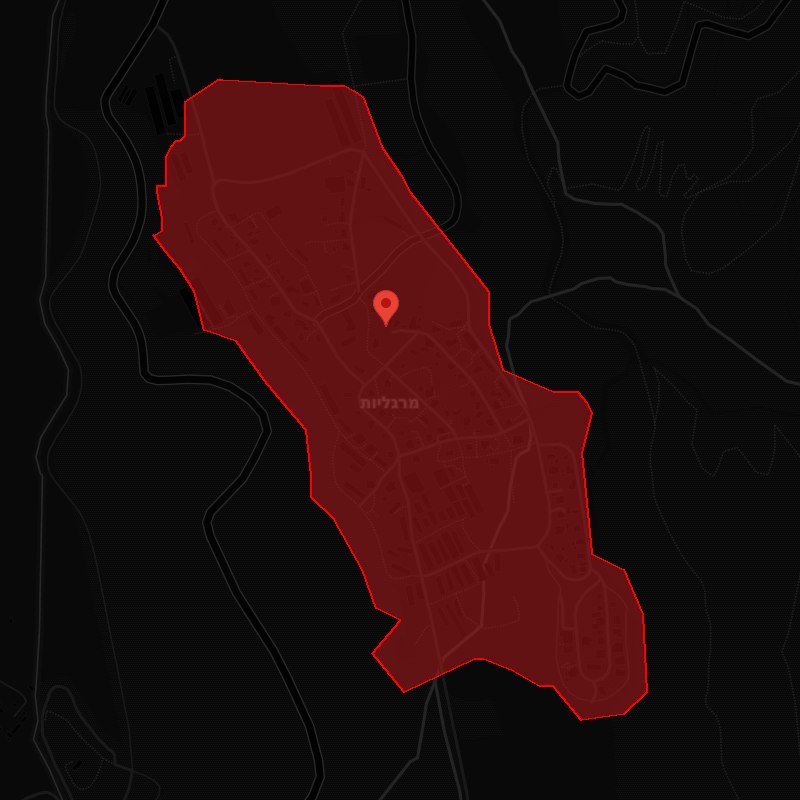
- Rocket alerts across Israel’s northern frontier (Margaliot, Zarit) reported by RocketAlert, indicating heightened missile‑fire risk.
- Hostile UAV alerts over multiple Israeli localities (Misgav Am, Netua, Shtula) also logged by RocketAlert, reflecting a surge in low‑altitude aerial threats.
- Ukrainian interceptor drone downing a Russian Shahed drone over Ukrainian territory, demonstrating Kyiv’s growing anti‑drone capabilities (monitor_the_situation, 06:49 UTC).
- Ukrainian drone strike on the Yaroslavl oil refinery in Russia, causing fires and temporary road closures (monitor_the_situation, 06:48 UTC).
While these incidents did not result in high casualty figures, they collectively illustrate an intensifying pattern of kinetic engagements across multiple fronts.