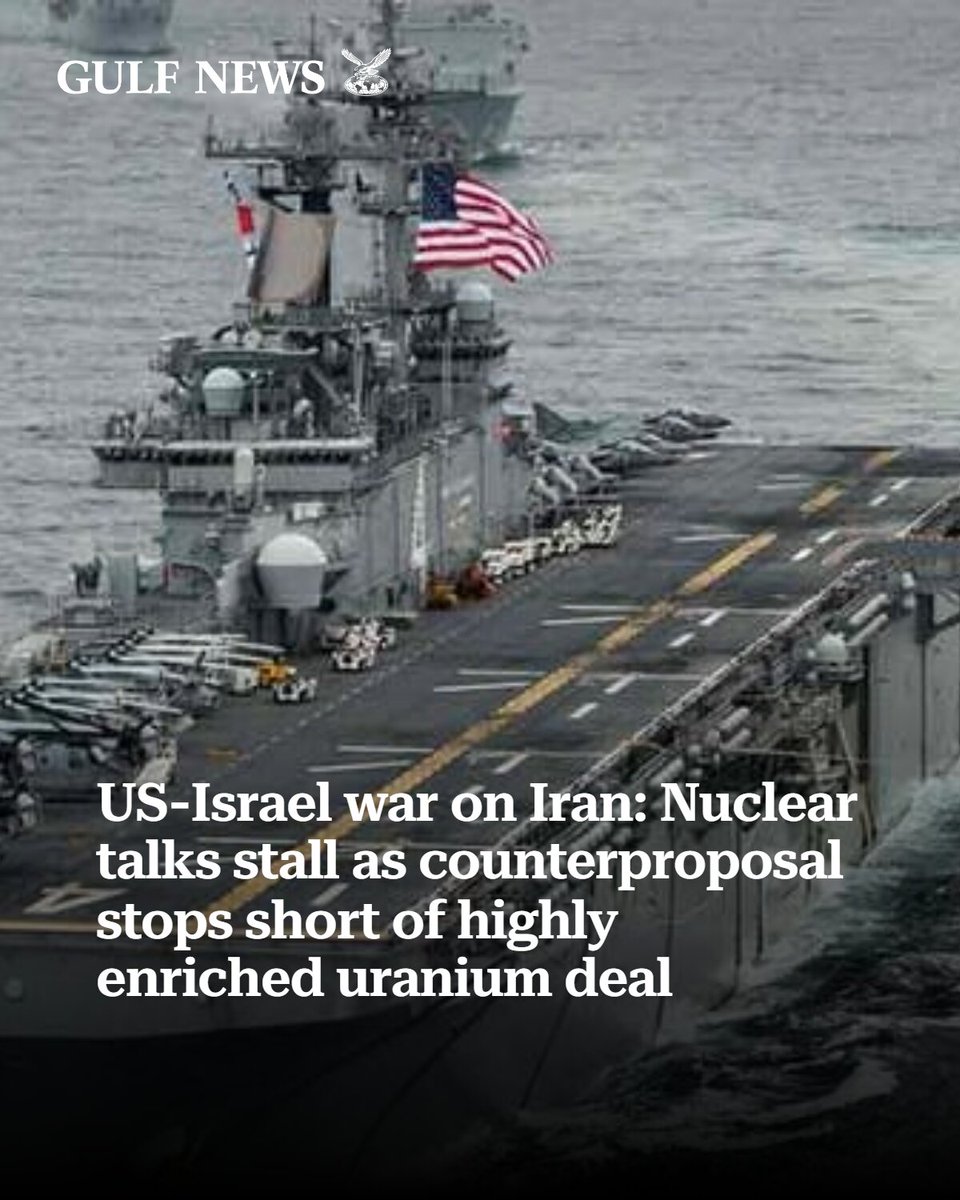
The most consequential development on 19 May 2026 emerged from Tehran, where Iran presented a new counterproposal in the United‑States‑mediated nuclear negotiations. The document explicitly omits the transfer of its highly enriched uranium stockpile, a demand that had been central to U.S. and Israeli negotiating positions. By refusing to relinquish up to 60 percent of the material, Iran has widened the diplomatic gap and heightened the risk of renewed military escalation in the region.
"Iran’s latest counterproposal omits handing over enriched uranium to the United States," monitor_the_situation reported, citing the official proposal released on Telegram (https://t.me/monitor_the_situation/17041).
Implications for the Nuclear Dialogue
The omission undermines the core confidence‑building measures that underpinned the 2025 Joint Comprehensive Plan of Action (JCPOA) framework. Without a verifiable handover, the United States faces limited leverage to certify Iran’s compliance, while Israel has warned of pre‑emptive options should Tehran retain the material. Analysts note that the counterproposal may be a strategic signal aimed at extracting concessions on sanctions relief, but the immediate effect is a hardening of U.S. and Israeli stances, potentially prompting a recalibration of military postures across the Middle East.
Escalation Threats in the Strait of Hormuz
Concurrently, Iran’s regional posture intensified with a public warning to Gulf states about imminent missile attacks on energy infrastructure. According to idkunim_il, Iranian forces are preparing to launch “dozens and even hundreds of missiles per day,” targeting refineries, ports, and potentially prompting the Houthi movement in Yemen to close the strategic Strait of Hormuz. The threat to the narrow waterway, a conduit for roughly 20 percent of global oil shipments, raises the specter of a rapid escalation that could disrupt international energy markets.
"Iran is preparing for a short but high‑intensity fight, expecting to launch dozens to hundreds of missiles daily," idkunim_il noted (https://t.me/idkunim_il/59486).
Lebanese Front: Artillery, ATGM and Drone Strikes
In southern Lebanon, the Israeli Defense Forces (IDF) and Hezbollah continued a pattern of reciprocal attacks. At 05:36 UTC, Israeli artillery shelled the town of Marjayoun, striking positions identified as belonging to Hezbollah. Monitor_the_situation provided video evidence of the bombardment, confirming the use of standard artillery shells and reporting no immediate casualty figures.
"Israeli Military Shells Marjayoun in Southern Lebanon," monitor_the_situation (https://t.me/monitor_the_situation/17049).
Earlier, at 01:23 UTC, Hezbollah released footage of an anti‑tank guided missile (ATGM) strike that hit an Israeli Merkava tank in Kfarkela. The dual‑angle video demonstrated a successful penetration of the tank’s armor, underscoring Hezbollah’s growing proficiency with precision‑guided weapons supplied by Iran.
"Hezbollah filmed an ATGM strike that hit an Israeli Merkava tank in Kfarkela," monitor_the_situation (https://t.me/monitor_the_situation/17035).
Within the same hour, Hezbollah employed first‑person‑view (FPV) drones to target Israeli construction equipment near Deir Seryan. Two separate videos, posted at 01:11 UTC, showed FPV drones striking an IDF excavator, a tactic that reflects a broader shift toward low‑cost, high‑impact UAV operations on the front line.
"Hezbollah used an FPV drone to strike an Israeli excavator near Deir Seryan," monitor_the_situation (https://t.me/monitor_the_situation/17034).
Naval Seizure in International Waters Near Gaza
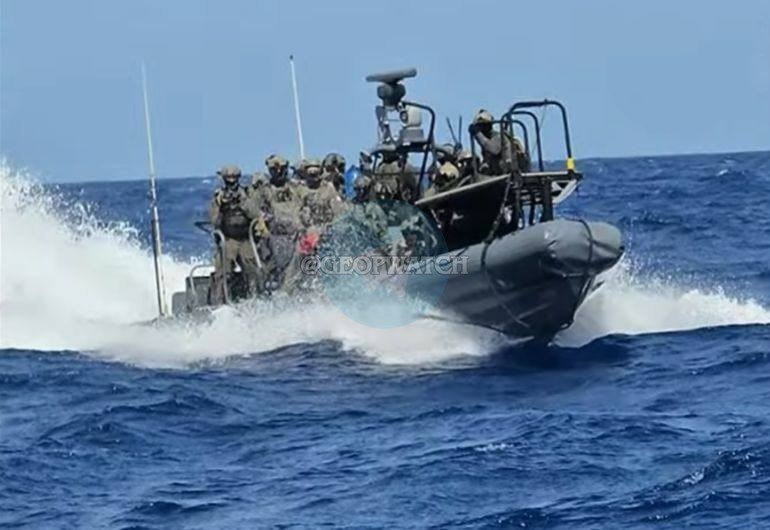
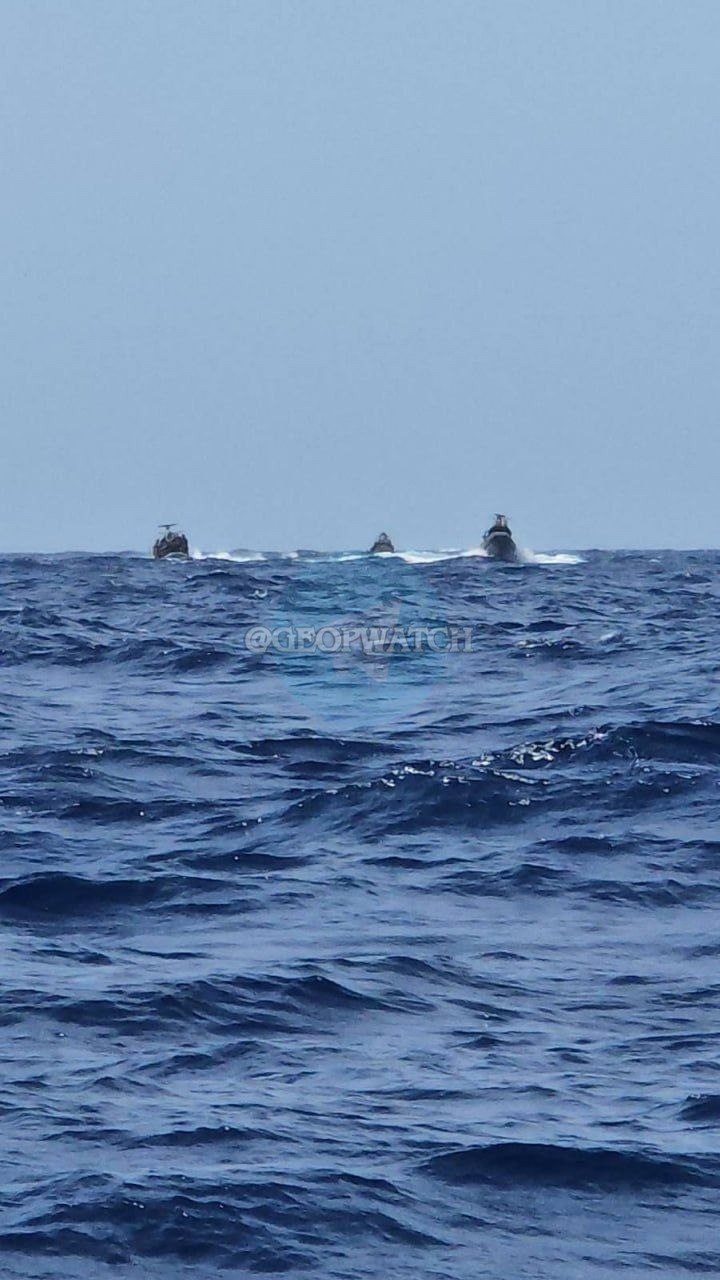
In the maritime domain, Israeli commandos intercepted vessels belonging to the Global Sumud Flotilla (GSF) in international waters approximately 250 nautical miles west of Gaza. The operation, described by Prime Minister Benjamin Netanyahu as a move to “neutralize an attempt to break Israel’s blockade on Hamas,” resulted in the kidnapping of Irish activist Dr. Margaret Connolly, sister of Irish President Catherine Connolly. GeoPWatch documented the seizure with photographs and identified the involved parties as Israeli commandos and the civilian GSF fleet.
"Israeli commandos seized Global Sumud Flotilla vessels and kidnapped Dr. Margaret Connolly," GeoPWatch (https://t.me/GeoPWatch/33530).
Strategic Assessment
The convergence of diplomatic deadlock, missile posturing in the Gulf, and intensified ground combat in Lebanon signals a multi‑front escalation risk. Iran’s refusal to cede enriched uranium removes a key diplomatic lever, while its missile threat to the Strait of Hormuz could compel Gulf Cooperation Council (GCC) states to reconsider their security calculations. In Lebanon, the escalation of artillery, ATGM, and drone attacks demonstrates Hezbollah’s adaptive tactics and suggests a potential increase in Israeli retaliatory operations. The naval seizure near Gaza adds a maritime dimension to the already volatile blockade enforcement, raising concerns about the safety of humanitarian actors and the potential for broader international involvement.
Collectively, these developments illustrate a tightening of pressure points across the Middle East. The absence of a clear diplomatic pathway for the nuclear issue, combined with overt military preparations, creates a feedback loop where each side may interpret the other’s actions as justification for further escalation. Monitoring agencies and regional actors will need to balance deterrence with diplomatic outreach to prevent a spiral into open conflict.