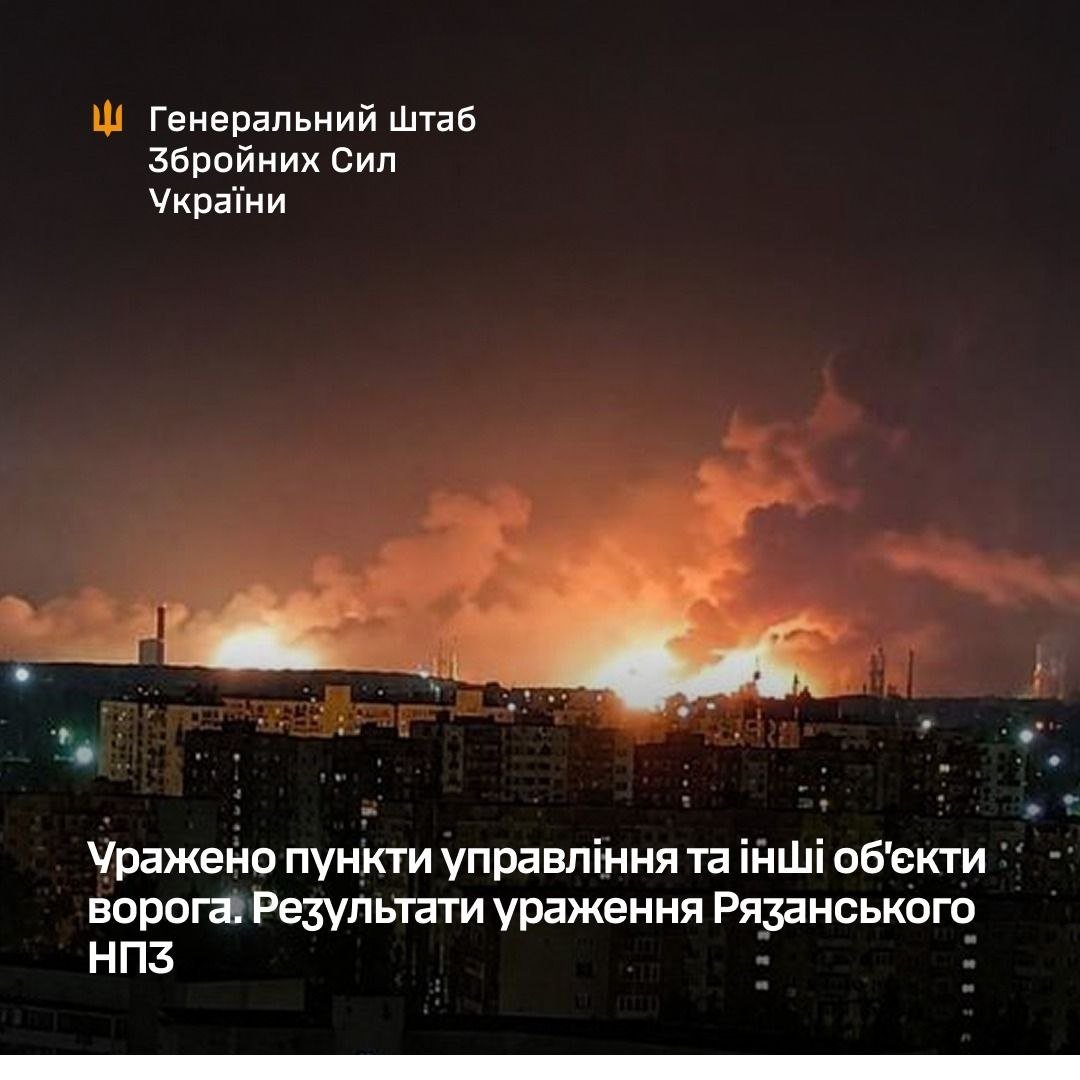
At 08:15 UTC on 16 May 2026, a Russian Iskander‑M ballistic missile struck a warehouse owned by MIGTRANS cargo forwarding company northwest of Pivdenne in Odesa Oblast. The site, identified by Ukrainian authorities as a drone‑assembly workshop, suffered extensive structural damage and loss of material. The attack, reported by the Telegram channel monitor_the_situation, represents the most significant kinetic event recorded for the day, illustrating Russia’s continued use of long‑range precision weapons against logistical and production nodes supporting Ukraine’s unmanned‑air system capabilities.
"A Russian Iskander‑M ballistic missile struck a warehouse owned by MIGTRANS cargo forwarding company northwest of Pivdenne, Odesa Oblast. The facility was reportedly used by Ukraine as a drone assembly workshop." – monitor_the_situation, 16 May 2026
The missile’s impact destroyed a substantial portion of the building, igniting secondary fires and rendering the facility inoperable. No casualty figures were released, but the loss of a dedicated assembly location is likely to affect Ukraine’s short‑range drone output in the coming weeks. Video evidence accompanying the report confirms the blast and subsequent fire, corroborating the channel’s account.
Ukrainian Counter‑Drone Operations
Throughout the afternoon, Ukrainian forces conducted a series of drone strikes against Russian‑held targets in Crimea, Berdiansk (Zaporizhzhia Oblast), and Luhansk Oblast. The Unmanned Systems Forces, as cited by the same source, deployed multiple loitering munitions to degrade command‑and‑control nodes, ammunition depots, and radar installations. While exact casualty numbers were not disclosed, the strikes were described as “significant” in the channel’s conflict classification (S3 – SIGNIFICANT).
In Donetsk Oblast, Ukrainian operators employed a swarm of 30 first‑person‑view (FPV) drones to destroy a Russian “turtle” tank. The coordinated attack, verified by video from @NOELreports, resulted in the complete destruction of the heavily armoured vehicle, as confirmed by a Russian soldier on the ground. This engagement demonstrates the increasing effectiveness of low‑cost, high‑precision UAV tactics against heavily protected assets.
"Ukrainian forces destroyed a Russian turtle tank using 30 FPV drones in Donetsk Oblast, Ukraine. A Russian soldier confirmed the vehicle was completely destroyed after repeated strikes." – monitor_the_situation, 16 May 2026
Further north, the 151st Mechanized Brigade’s drone operators eliminated a rare 2S43 Malva 152 mm self‑propelled artillery system in Tavilzhanka, Kharkiv Oblast. The Malva, a relatively new addition to Russian artillery inventories, was captured on video during the strike, highlighting Ukraine’s capacity to locate and neutralise high‑value, mobile firepower assets.
In the Sumy region, Russian Geran‑2 drones conducted a night‑time attack on the village of Shkyrmanivka, igniting a residential fire. The incident underscores the persistent threat posed by Russian loitering munitions to civilian infrastructure, even in areas distant from the front line.
Russian Missile and Air Operations
At 11:16 UTC, Russian forces launched a helicopter‑borne Kh‑39 LMUR missile against a Ukrainian position in Donetsk Oblast. The missile penetrated a building’s window before detonating, causing structural damage. No personnel casualties were reported, but the precision nature of the strike indicates continued Russian reliance on air‑launched guided munitions to target entrenched Ukrainian positions.
Later, at 06:51 UTC, a Russian Su‑35 fighter attempted to intercept a Ukrainian tactical aircraft over Dnipropetrovsk Oblast. The interception failed, and the Ukrainian aircraft proceeded to release glide‑bombs toward Velyka Novosilka in Donetsk Oblast. The glide‑bombs, likely employing the KAB‑500S or similar precision‑guided munitions, are designed to strike targets from altitude while minimizing exposure to air‑defence systems. The incident reflects the contested airspace over eastern Ukraine and the ongoing cat‑and‑mouse dynamics between Russian interceptors and Ukrainian strike platforms.
Ground Fortifications and Logistics Disruptions
In a separate development, Russian engineers installed anti‑tank “dragon’s teeth” barriers along the occupied Crimean coastline. The fortifications, documented in a video release, aim to impede potential amphibious assaults and reinforce defensive depth ahead of the summer tourism season. While primarily a defensive measure, the construction effort reallocates engineering resources that could otherwise support frontline operations.
Ukrainian drone strikes also targeted Russian logistics hubs. The Spartan Brigade National Guardsmen deployed UAVs against a supply depot near Donetsk, while the Ukrainian General Staff reported strikes on command posts near Pokrovsk, an equipment hangar in Selydove, a logistics depot in Baranykivka, and a repair unit in Pryvillya. Although casualty figures were not disclosed, the cumulative effect of these attacks is to degrade Russian sustainment capabilities across Donetsk and Zaporizhzhia oblasts.
Strategic Implications
The events of 16 May 2026 illustrate a multi‑dimensional kinetic environment in Ukraine. Russian forces continue to leverage long‑range ballistic missiles and air‑launched precision weapons to strike high‑value targets, while Ukrainian forces increasingly rely on swarms of low‑cost drones to neutralise Russian armour, artillery, and logistics. The parallel use of high‑tech and low‑tech assets by both sides suggests a convergence toward hybrid kinetic tactics that blend conventional firepower with autonomous systems.
From an operational perspective, the Iskander‑M strike on the MIGTRANS warehouse demonstrates Russia’s willingness to target production facilities that directly support Ukraine’s UAV capabilities. Conversely, Ukraine’s successful destruction of a turtle tank and a 2S43 Malva artillery system indicates a growing proficiency in counter‑UAV swarm tactics and target acquisition, potentially reshaping the balance of firepower on the battlefield.
Continued monitoring of casualty reports, equipment losses, and the evolution of defensive fortifications will be essential for assessing the longer‑term impact of these kinetic engagements on the broader conflict dynamics.