On 14 May 2026 a series of coordinated kinetic operations intensified the conflict landscape in Ukraine, targeting both civilian infrastructure and military logistics. The most consequential incident occurred in the capital, where a Russian unmanned aerial vehicle (UAV) struck a multi‑storey residential building, causing the structure to collapse during an active ceasefire. Subsequent attacks involved Russian first‑person view (FPV) drones that eliminated dozens of Ukrainian unmanned ground vehicles (UGVs) on a key supply corridor in Donetsk Oblast, a cargo vessel laden with Russian ammunition that was hit shortly after docking in the occupied port of Berdyansk, and a Geran‑2 drone that engaged a workshop at the ArcelorMittal steel plant in Kryvyi Rih. All events were documented by open‑source channels and corroborated by multiple media outlets.
Kyiv Apartment Block Collapse
At 13:31 local time a Russian combat drone penetrated Kyiv’s air defence envelope and impacted an eight‑storey apartment block in the city centre. The strike caused the building’s façade to give way, leading to a complete structural collapse. According to AlJazeera, the attack occurred while a ceasefire was in effect, violating the terms of the temporary truce announced earlier in the week. No official casualty figures were released at the time of reporting, but emergency services confirmed multiple injuries and a death toll that is expected to rise as rescue operations continue. The weapon employed was identified as a standard Russian UAV, though the specific model was not disclosed. The incident underscores the vulnerability of urban centres even under ceasefire conditions and highlights the challenges faced by Ukrainian air‑defence systems in detecting low‑observable UAVs.
Russian drone attack hits Kyiv apartment block during ceasefire
Key point: The strike demonstrates that ceasefire agreements remain fragile and can be breached by aerial platforms that evade conventional radar detection.
FPV Drone Strike on Logistics UGVs in Konstantinovka
At 15:23 the Russian Ministry of Defence released footage showing a swarm of FPV drones engaging Ukrainian logistics assets along the H‑20 highway near Konstantinovka in Donetsk Oblast. The video, posted on the monitor_the_situation channel, displayed the drones targeting and destroying dozens of unmanned ground vehicles that were transporting ammunition, fuel, and spare parts to front‑line units. The FPV drones, operated in a coordinated manner, employed kinetic impactors to neutralise the UGVs, effectively disrupting a critical supply line. No casualties were reported among personnel, as the UGVs were unmanned, but the loss of equipment represents a material setback for Ukrainian sustainment operations. The attack illustrates the expanding role of low‑cost, high‑precision UAVs in anti‑logistics warfare.
Key point: FPV drones are being used to systematically degrade Ukrainian logistical capabilities on major transport routes.
Cargo Ship Hit in Berdyansk Port
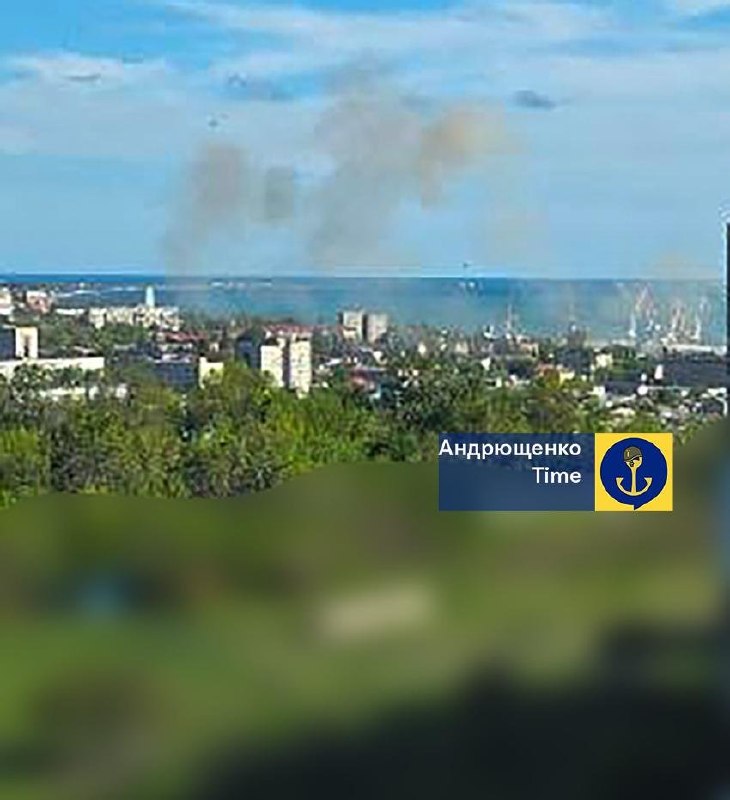
At 14:01 a cargo vessel carrying Russian ammunition was struck shortly after it moored at the occupied port of Berdyansk in Zaporizhzhia Oblast. The monitor_the_situation channel shared a photograph of the damaged hull, indicating that the explosion originated from a surface‑to‑surface attack, though the exact weapon system was not identified. The ship’s cargo, intended for redistribution to Russian‑controlled forces, was partially destroyed, reducing the immediate availability of ammunition in the region. Ukrainian authorities have not released casualty figures, and the incident did not result in reported injuries among port workers. The targeting of a logistics hub within an occupied territory signals a strategic intent to impair Russian supply chains beyond the front lines.
Key point: Attacks on maritime logistics assets in occupied ports extend the conflict’s kinetic dimension to the Black Sea supply network.
Geran‑2 Drone Attack on ArcelorMittal Workshop
At 12:21 a Geran‑2 UAV equipped with an electro‑optical seeker was observed targeting a workshop within the ArcelorMittal steel plant in Kryvyi Rih, Dnipropetrovsk Oblast. Video released by the intelslava channel shows the drone approaching at low altitude before releasing a payload that caused a localized fire and structural damage to the facility’s production area. The plant, a major contributor to Ukraine’s industrial output, reported temporary suspension of operations in the affected sector. No personnel injuries were reported, but the incident highlights the vulnerability of critical industrial infrastructure to precision UAV attacks. The Geran‑2, a derivative of the Iranian Shahed series, is known for its loitering capability and ability to strike fixed targets with high accuracy.
Key point: The use of Geran‑2 drones against industrial targets demonstrates a shift toward precision strikes on economic assets.
Overall Assessment
The coordinated kinetic events of 14 May 2026 reveal a multi‑domain approach by Russian forces, employing a spectrum of UAV technologies to achieve tactical objectives across urban, logistical, maritime, and industrial environments. The Kyiv apartment block collapse, occurring under a ceasefire, raises concerns about the enforceability of de‑escalation agreements. The destruction of logistics UGVs on the H‑20 highway and the hit on a cargo ship in Berdyansk illustrate a concerted effort to disrupt supply chains that sustain front‑line combat operations. Finally, the Geran‑2 strike on the ArcelorMittal workshop underscores the growing emphasis on targeting economic infrastructure to erode Ukraine’s war‑fighting capacity. These incidents collectively suggest an escalation in the use of low‑cost, high‑precision UAV platforms to achieve strategic effects without deploying larger, more detectable air assets.