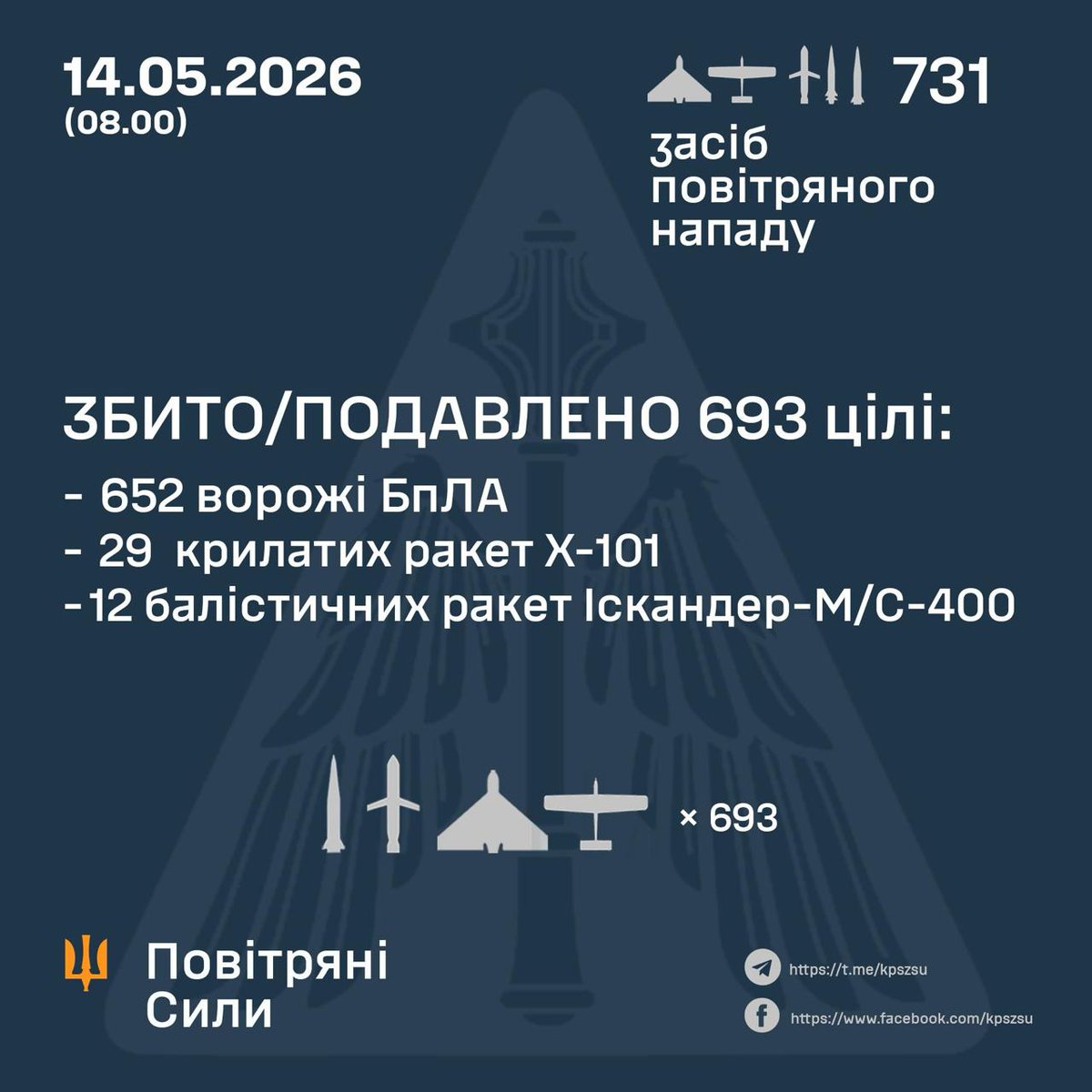
In the early hours of 14 May 2026, Russia launched a coordinated aerial and missile offensive that lasted more than 24 hours, employing more than 1,400 unmanned aerial systems and over 50 guided missiles across Ukrainian territory. The operation, reported by the Telegram channel monitor_the_situation, marks the most extensive single‑day strike since the conflict began and follows a brief cease‑fire for President Vladimir Putin’s military parade.
Source: https://t.me/monitor_the_situation/16338.
Nationwide Scale of the Attack
The barrage combined a mix of Russian‑manufactured drones—including Geran‑2, Gebera and Geran‑3 models—and a variety of missile types such as Iskander‑M ballistic missiles, Kh‑101 cruise missiles, and other precision‑guided weapons. According to Ukrainian Air Force figures cited by GeoPWatch, 1,428 Geran‑2, Gebera and Geran‑3 drones were launched in the 24‑hour window, the highest daily total since the war’s inception.
Source: https://t.me/GeoPWatch/33250. The same channel also reported that up to 1,300 drones and 50 missiles were launched overall, underscoring the intensity of the operation.
Source: https://t.me/intelslava/87807.
Focused Assault on Kyiv
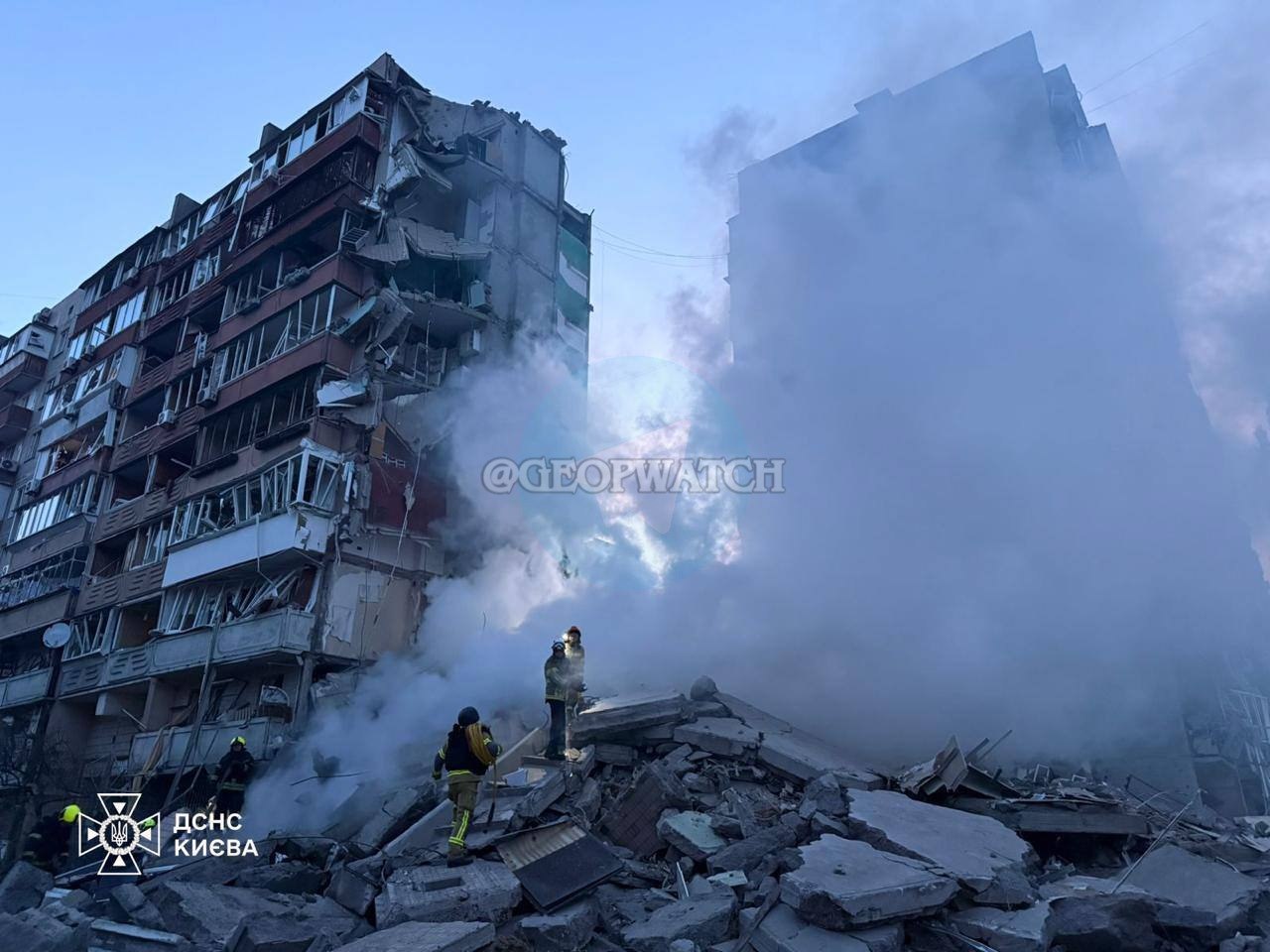
Kyiv bore the brunt of the offensive. At 02:34:57, a Russian cruise missile struck an apartment building, leveling part of the complex and causing structural damage. The impact was captured in a photo posted by GeoPWatch.
Source: https://t.me/GeoPWatch/33244. Within the same hour, a Geran‑2 drone hit a gas station in the capital, as documented by intelslava.
Source: https://t.me/intelslava/87805. At 01:05:10, more than a dozen Kh‑101 cruise missiles impacted Kyiv, confirming a sustained high‑impact missile wave.
Source: https://t.me/GeoPWatch/33240.
Air‑Defense Performance
Ukrainian air‑defence units reported mixed results. By 01:07:12, only one of approximately 16 cruise missiles over Kyiv had been intercepted, while ballistic missile interceptions were comparatively more successful.
Source: https://t.me/GeoPWatch/33241. A separate report at 01:36:02 highlighted a “very high impact rate” for Russian missiles and described Ukrainian air‑defence performance as “poor.”
Source: https://t.me/GeoPWatch/33243. The disparity suggests that the sheer volume of incoming munitions overwhelmed existing defensive systems.
Collateral Damage in the Capital
Mayor Tymur Tkachenko of Kyiv’s Military Administration confirmed that falling drone debris struck the roof of an apartment building and littered a city street, illustrating the indirect hazards of saturated drone attacks.
“Debris from falling drones has struck the roof of an apartment building and a street,” Tkachenko said.Source: https://www.jpost.com/international/internationalrussia-ukraine-war/article-896129. No casualty figures were released in the immediate aftermath, but the physical damage adds to the humanitarian strain on the capital’s civilian population.
Missile Types and Trajectories
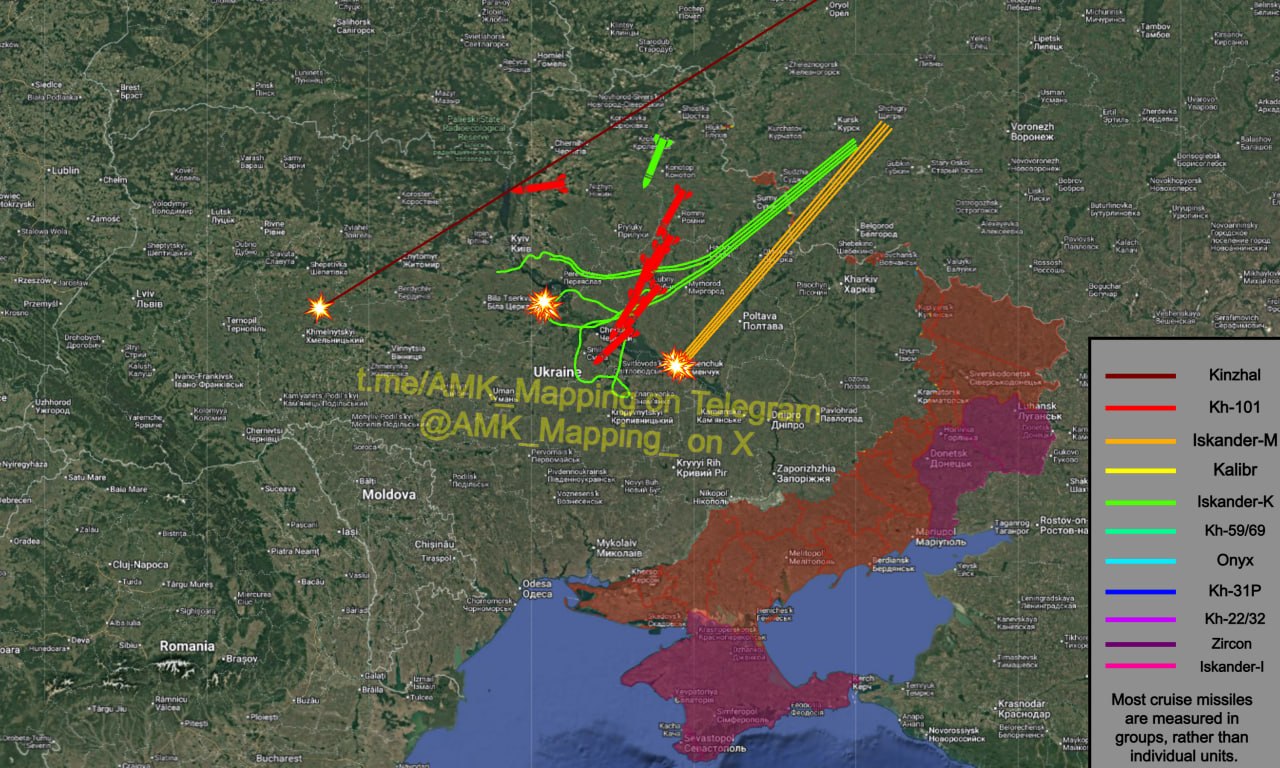
In addition to the Kh‑101 strikes, Iskander‑M ballistic missiles were launched continuously toward Kyiv, with at least a dozen reported impacts by 00:23:19. The Iskander‑K cruise missiles fired from Russia’s Bryansk Oblast were also tracked heading toward Poltava Oblast, indicating a broader regional targeting strategy.
Source (Iskander‑M): https://t.me/GeoPWatch/33234. Source (Iskander‑K): https://t.me/GeoPWatch/33236. In Sumy Oblast, strategic bombers released Kh‑101 missiles that entered Ukrainian airspace, expanding the geographic scope of the offensive.
Source: https://t.me/GeoPWatch/33232.
Strategic Implications
The coordinated use of high‑capacity drone swarms alongside precision cruise and ballistic missiles reflects a Russian doctrine aimed at saturating Ukrainian air‑defence layers, degrading command‑and‑control infrastructure, and applying psychological pressure on the civilian population of Kyiv. The timing—immediately after a temporary cease‑fire for a Russian parade—suggests an intent to demonstrate operational reach and resolve.
Analysis: The volume of attacks, combined with the diversity of weapon systems, indicates a shift toward mass‑layered strikes designed to exploit any gaps in detection and interception capabilities.
International Monitoring and Reporting
Multiple open‑source intelligence (OSINT) channels—monitor_the_situation, GeoPWatch, intelslava, and the Jerusalem Post—provided real‑time documentation of the events, underscoring the role of civilian monitoring networks in conflict transparency. Their reports collectively confirm the scale, weapon mix, and geographic spread of the offensive, offering a comprehensive picture for analysts and policymakers.