On May 12, 2026, Russian forces unleashed a coordinated swarm of more than 200 unmanned aerial vehicles (UAVs) against Ukrainian targets in the Dnipropetrovsk region as the three‑day ceasefire expired. The attack resulted in one civilian death and four injuries, according to the regional administration chief cited by Al Jazeera. The large‑scale strike underscores a shift toward high‑intensity aerial kinetic operations on both sides of the front.
Russian high‑volume drone offensive
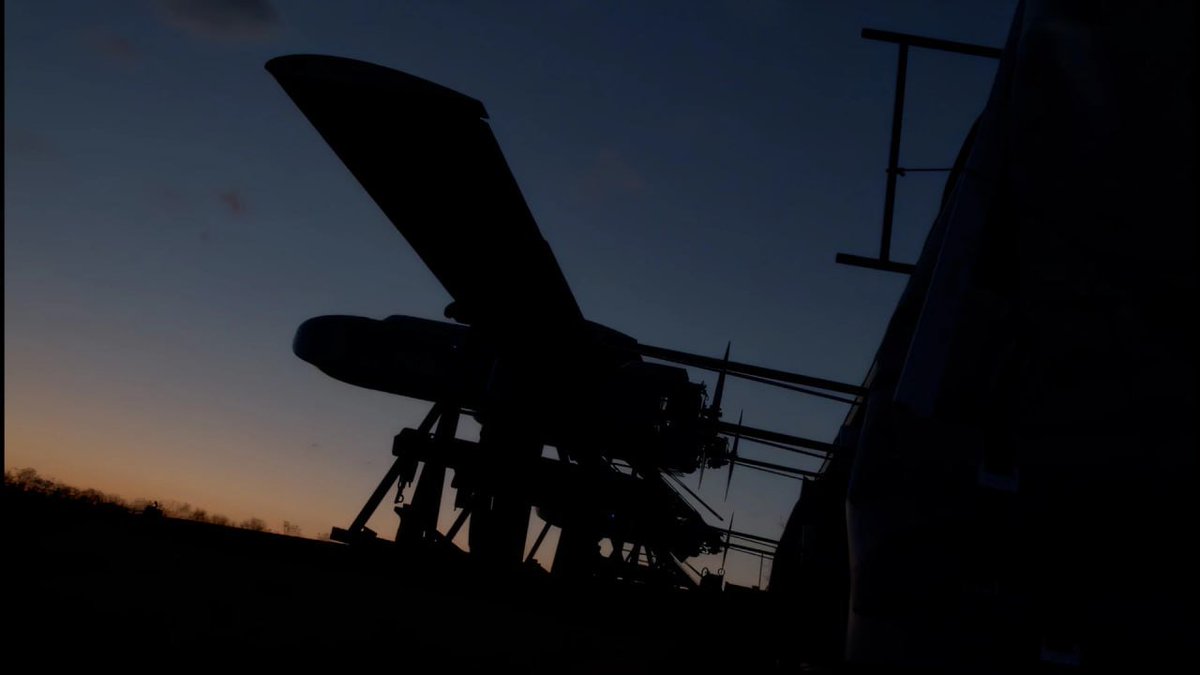
The Al Jazeera report confirms that the drones were launched from positions within Russian‑occupied territories, targeting critical infrastructure and civilian settlements in Dnipropetrovsk Oblast. While the exact models were not disclosed, the volume of aircraft suggests the use of mass‑produced loitering munitions, likely including Geran‑2 and similar platforms previously observed in the conflict. The attack marks the most extensive single‑day UAV deployment recorded since the truce began on May 9, 2026.
"Russia fired over 200 drones at Ukraine as the truce expires," the Al Jazeera article states, highlighting the scale of the operation.
Casualties were limited to one fatality and four wounded, but the psychological impact of a sustained aerial barrage is significant. Ukrainian authorities have activated emergency response protocols and are conducting damage assessments on power grids, transport links, and residential areas.
Ukrainian counter‑UAV operations in Donetsk Oblast
In parallel, Ukrainian forces intensified their own UAV campaign across Donetsk Oblast. At 15:57:38, the 412 Nemesis Brigade employed mid‑strike drones to target Russian air‑defence installations up to 200 km from their launch points. According to Monitor the Situation, the brigade achieved a hit rate of one target for every three sorties, degrading Russian surface‑to‑air missile (SAM) coverage and threatening rear‑area logistics.
Earlier, at 15:31:46, Ukrainian drone operators ambushed a Russian military column traveling the Bakhmut‑to‑Chasiv Yar road. The attack focused on Chinese‑supplied Desertcross 1000‑3 ATVs, forcing Russian soldiers to abandon their vehicles and disperse. Video evidence posted by the same source (Monitor the Situation) shows the column halting under fire, with personnel seeking cover on the roadside.
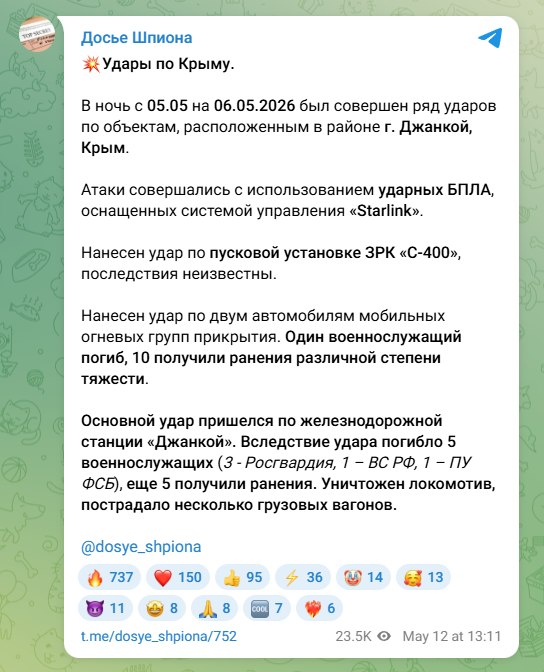
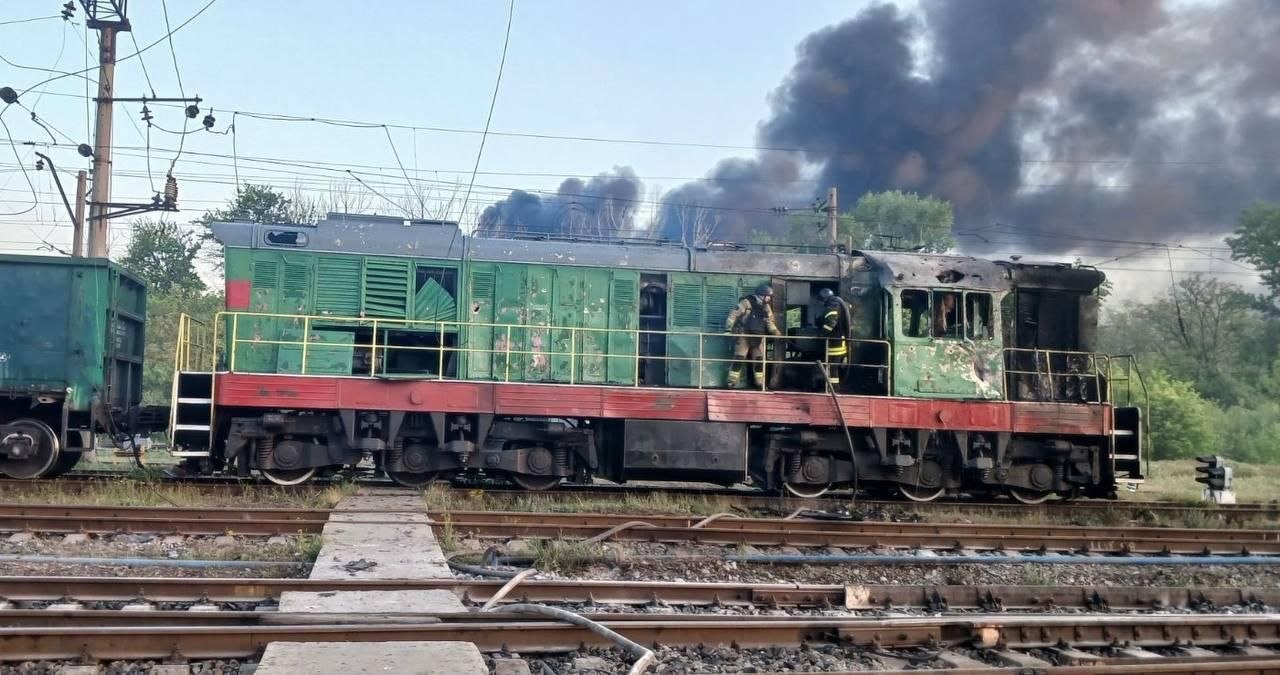
At 14:09:25, Ukrainian drones struck a Russian S‑400 launcher and accompanying support vehicles near Dzhankoi in occupied Crimea. The strike killed one Russian serviceman and wounded ten, as reported by Monitor the Situation. The use of UAVs against high‑value air‑defence assets demonstrates Ukraine’s growing capability to engage strategic targets beyond the immediate front line.
Russian deployment of the Yolka drone interceptor system
Responding to the surge in Ukrainian UAV activity, Russian forces deployed the Yolka drone interceptor system in Donetsk Oblast at 16:11:35. The system, designed to detect and neutralize low‑altitude UAVs, represents a tactical escalation in electronic and kinetic counter‑UAV measures. The deployment was documented in a video released by Monitor the Situation, showing Yolka units being positioned near key supply routes.
The Yolka system’s introduction may constrain Ukrainian drone operations in the short term, but its effectiveness will depend on integration with existing Russian air‑defence networks and the ability to counter a diverse UAV fleet that includes both loitering munitions and reconnaissance platforms.
Additional UAV strikes and infrastructure attacks
Ukrainian unmanned systems continued to target Russian logistics and command nodes throughout the day. At 08:08:28, coordinated strikes hit PRV‑16 and P‑18 radar installations, a fuel depot, an ammunition depot, and troop positions across Donetsk Oblast. The operation, attributed to the Ukrainian Unmanned Systems Forces in coordination with the SBS Deep Strike Center, was reported by Monitor the Situation.
Earlier, at 07:01:59, a wave of UAV attacks across occupied Donetsk generated multiple explosions, though damage assessments remain pending (Monitor the Situation). At 06:03:58, Ukrainian Hornet mid‑range strike drones disrupted Russian supply lines deep behind the front, further illustrating the expanding reach of Ukrainian UAV capabilities (Monitor the Situation).
Ground movements in Zaporizhzhia Oblast
Beyond aerial kinetic actions, Ukrainian ground forces conducted a counter‑offensive in western Zaporizhzhia Oblast at 10:27:12. The 153rd Mechanized Brigade, supported by additional units, pushed Russian forces back from the villages of Veselyanka and Novoyakovlevka. While no specific casualty figures were released, the maneuver indicates a coordinated effort to regain territorial momentum (Monitor the Situation).
Russian Geran‑2 drone attacks on energy infrastructure
In the early morning, Russian Geran‑2 drones targeted energy facilities in Dnipropetrovsk Oblast. At 07:38:11, three drones struck the Pokrov solar substation, damaging critical components (Monitor the Situation). At 07:44:41, a Geran‑2 strike ignited a large fire at an oil depot in Samar, further stressing the regional power and fuel supply (Monitor the Situation).
Assessment of the kinetic landscape
The events of May 12, 2026, illustrate a pronounced escalation in UAV‑centric warfare across multiple fronts. Both sides are employing drones not only for reconnaissance but as primary strike platforms against high‑value targets, including air‑defence systems, logistics hubs, and energy infrastructure. The Russian introduction of the Yolka interceptor system signals an attempt to blunt Ukrainian UAV effectiveness, yet the breadth of Ukrainian drone operations—ranging from mid‑strike platforms to Hornet strike drones—suggests a resilient and adaptable aerial capability.
Simultaneously, the large‑scale Russian drone barrage against Dnipropetrovsk underscores a strategic shift toward massed UAV attacks to achieve attrition and psychological pressure, even as casualty numbers remain relatively low. The concurrent ground counter‑offensive in Zaporizhzhia demonstrates that kinetic actions remain multidimensional, integrating air, land, and electronic warfare.
Overall, the kinetic tempo on May 12 reflects a conflict increasingly defined by unmanned systems, with both parties seeking to leverage technological advantages while countering emerging threats through new defensive measures.