On May 12, 2026 the Israeli Air Force launched a large‑scale operation in southern Lebanon, striking more than one hundred Hezbollah targets in the Litani area. The coordinated strike, conducted alongside the Golani Brigade and Division 36, resulted in the deaths of dozens of militants, according to the monitoring channel monitor_the_situation.
"The Israeli Air Force conducted a special operation to clear the Litani area, striking over 100 Hezbollah targets in coordination with the Golani Brigade and Division 36. Dozens of militants were killed in the operation."
Follow‑up airstrikes and ground incursions
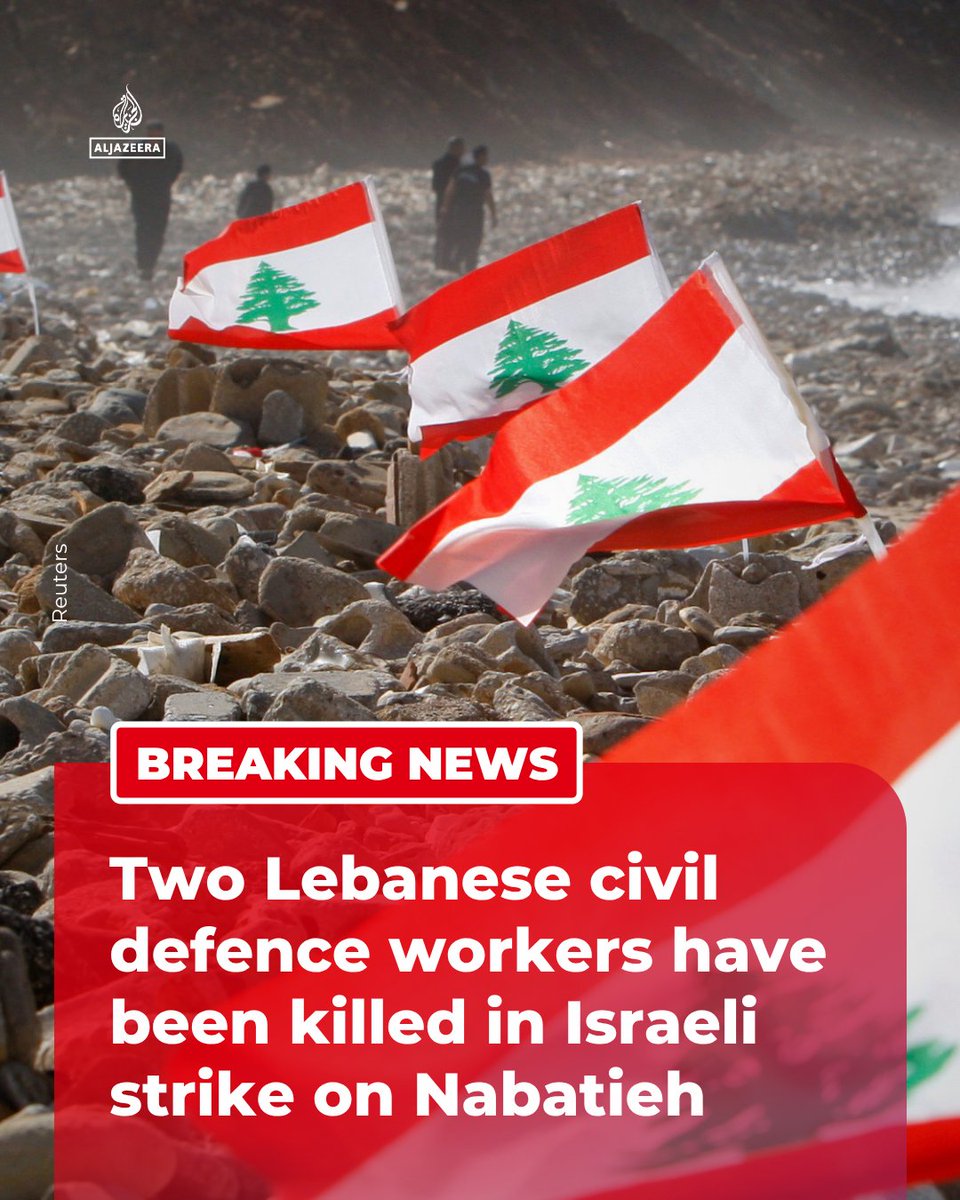
Within hours the Israeli military expanded its kinetic campaign. In Nabatieh, a southern Lebanese town, an airstrike killed two civil‑defence workers engaged in rescue efforts, as reported by monitor_the_situation.
"Israeli Strike Kills Two Civil Defence Workers in Nabatieh, Lebanon. An Israeli airstrike on the southern Lebanese town of Nabatieh killed two Lebanese civil defence workers who were conducting a rescue mission following an earlier attack, according to state media."
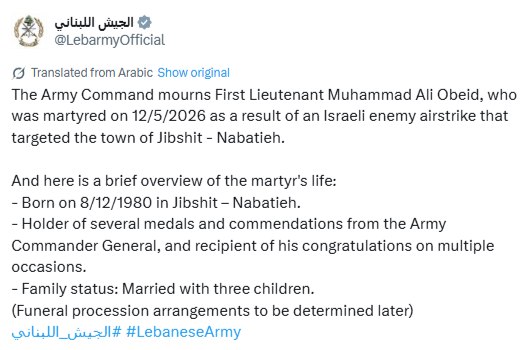
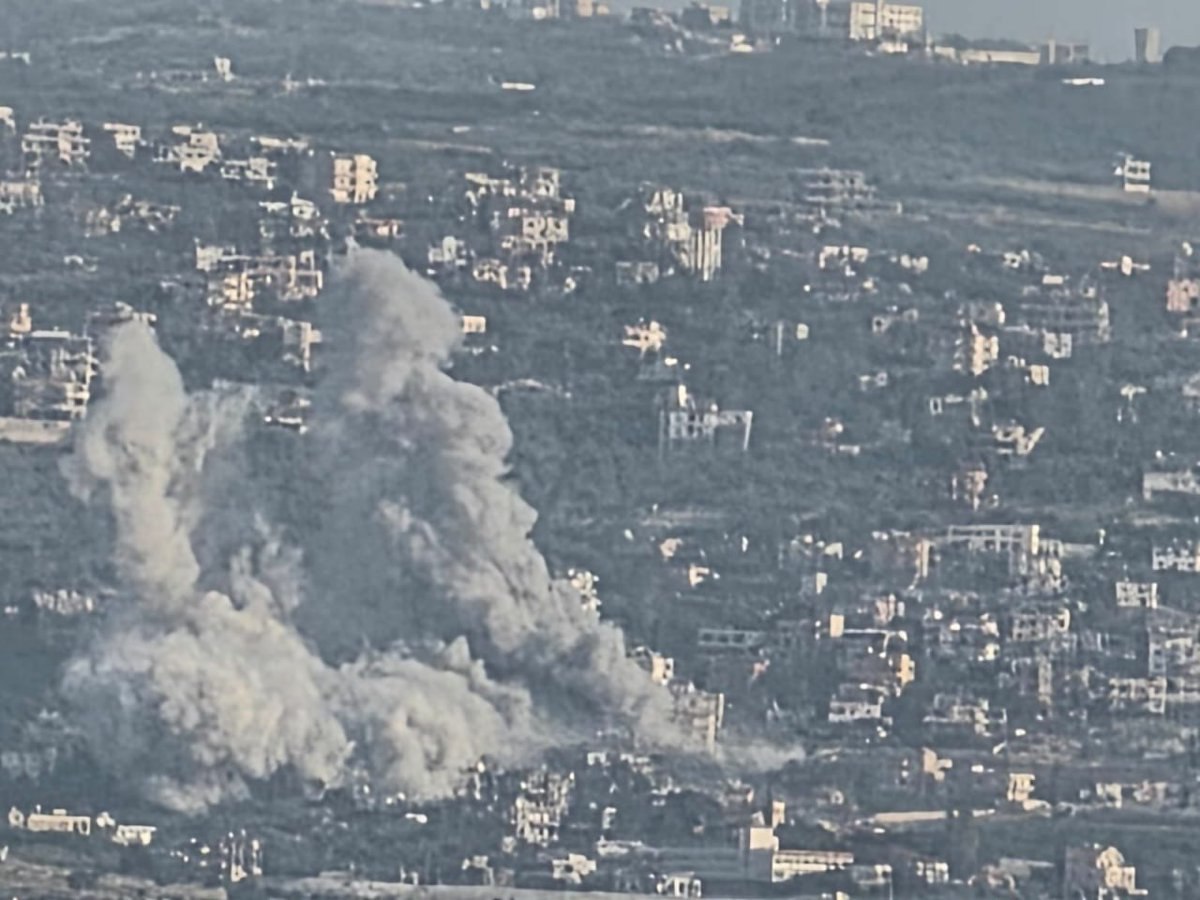
Later, the Lebanese Army confirmed that First Lieutenant Muhammad Ali Obeid was killed in an Israeli Air Force strike on the village of Jibchit. The incident was documented by GeoPWatch and accompanied by three photographs of the aftermath.
"The Lebanese Army announced the death of First Lieutenant Muhammad Ali Obeid who was killed today in an IAF airstrike in the town of Jibchit, southern Lebanon."
Additional artillery and air attacks hit the villages of Al‑Mansouri and Al‑Hawsh in the Tyre district, targeting Hezbollah positions. Both events were logged by monitor_the_situation and featured visual evidence of the strikes.
"Israel Strikes Al‑Mansouri in Southern Lebanon"
"Israel Strikes Al‑Hawsh in Southern Lebanon's Tyre District"
Hezbollah’s drone and missile response
Hezbollah escalated its own kinetic actions with a series of unmanned aerial vehicle (UAV) attacks. At approximately 16:00 and 18:00 on May 12, the group reported destroying two Merkava tanks in the Taybeh area, confirming the loss of at least one tank to “appropriate weapons.” An FPV (first‑person view) drone subsequently struck an IDF infantry unit in the same locality.
"Hezbollah announced targeting 2 Merkava tanks using 'appropriate weapons', destroying at least 1 of them and setting it ablaze in southern Lebanon's 'Taybeh'... At 17:16, an IDF Infantry force fortifying in a building was struck by an FPV drone in the town."(Source: GeoPWatch)
Earlier in the day, Hezbollah released footage of an FPV drone hitting an Israeli Merkava tank in Al‑Bayada, confirming the increasing precision of its drone operations.
"Hezbollah released video of an FPV drone strike on an Israeli Merkava tank in the town of Al‑Bayada, southern Lebanon. The drone struck the closed rear hatch of the tank."(Source: CIG_telegram)
Additional drone activity was reported along the Israel‑Lebanon border, including an explosive drone that detonated near the border after Israeli interception, and a separate incident where an explosive drone injured two IDF soldiers on the Israeli side of the frontier.
"Hezbollah launched multiple explosive drones and suspicious aerial targets toward Israeli forces operating in southern Lebanon and into Israeli territory. The Israeli Air Force intercepted one drone, while another exploded near the border."(Source: monitor_the_situation)
Casualties and infrastructure impact
The cumulative effect of the May 12 kinetic events includes at least several dozen militant fatalities, two civilian civil‑defence workers, one Lebanese lieutenant, and multiple injuries among IDF personnel. Israeli strikes also damaged civilian infrastructure, notably a water‑pumping station in southern Lebanon, further straining local resources.
"Israeli military forces blew up a water pumping station in southern Lebanon, destroying critical civilian infrastructure amid ongoing cross‑border hostilities."(Source: monitor_the_situation)
Hezbollah’s drone attacks have targeted both military and civilian assets, including an Israeli command post in Al‑Bayada, where equipment was damaged, and an HMMWV destroyed in Bayada on May 8.
"Hezbollah published footage of an FPV drone striking an Israeli command post in Al‑Bayada, damaging equipment inside."(Source: monitor_the_situation)
Strategic implications
The synchronized Israeli air and ground operations demonstrate a concerted effort to degrade Hezbollah’s command‑and‑control networks and logistical capabilities in the Litani corridor. Simultaneously, Hezbollah’s expanding drone repertoire—ranging from FPV strike drones to explosive UAVs—signals a shift toward asymmetric aerial tactics capable of penetrating Israeli air defenses.
Both sides have cited operational successes, yet the escalation raises the risk of broader regional involvement. The United States, already engaged in naval blockades and confrontations with Iran, continues to monitor the situation closely, while Iran’s own threats to enrich uranium to weapons‑grade levels add a nuclear dimension to the conflict’s backdrop.
Overall, the kinetic surge on May 12 underscores a volatile escalation cycle in southern Lebanon, with each side employing increasingly sophisticated weaponry and tactics, and civilian populations bearing the brunt of infrastructure damage and casualties.