On 8 May 2026, United States Central Command (CENTCOM) and the United States Navy reported the disabling of two vessels that attempted to breach a U.S. naval blockade in the Gulf of Oman. The operation, conducted at 14:07:52 UTC, marked the latest escalation in a series of kinetic engagements between U.S. and Iranian forces in the strategically vital waters between Oman and Iran.
Blockade Enforcement in the Gulf of Oman
The two vessels, identified by monitoring channels as violating the blockade, were intercepted and disabled by U.S. naval assets operating in international waters. No weapons were employed during the interception, and there were no reported casualties on either side. The action was confirmed by the Telegram channel monitor_the_situation (source).
"US forces disabled two vessels violating the blockade in the Gulf of Oman," monitor_the_situation, 8 May 2026.
Iranian Countermeasures and Detentions
In parallel, Iranian forces intensified their own interdiction efforts. At 10:25:14 UTC, Iranian authorities detained the Barbados‑flagged oil tanker Ocean Koi in the Strait of Hormuz after a series of clashes with U.S. forces (source). Earlier, at 10:05:36 UTC, another oil tanker was seized on accusations of attempting to disrupt Iran’s oil exports (source). Both incidents involved no exchange of fire, but they underscored Tehran’s willingness to assert control over maritime traffic.
Escalation in the Strait of Hormuz
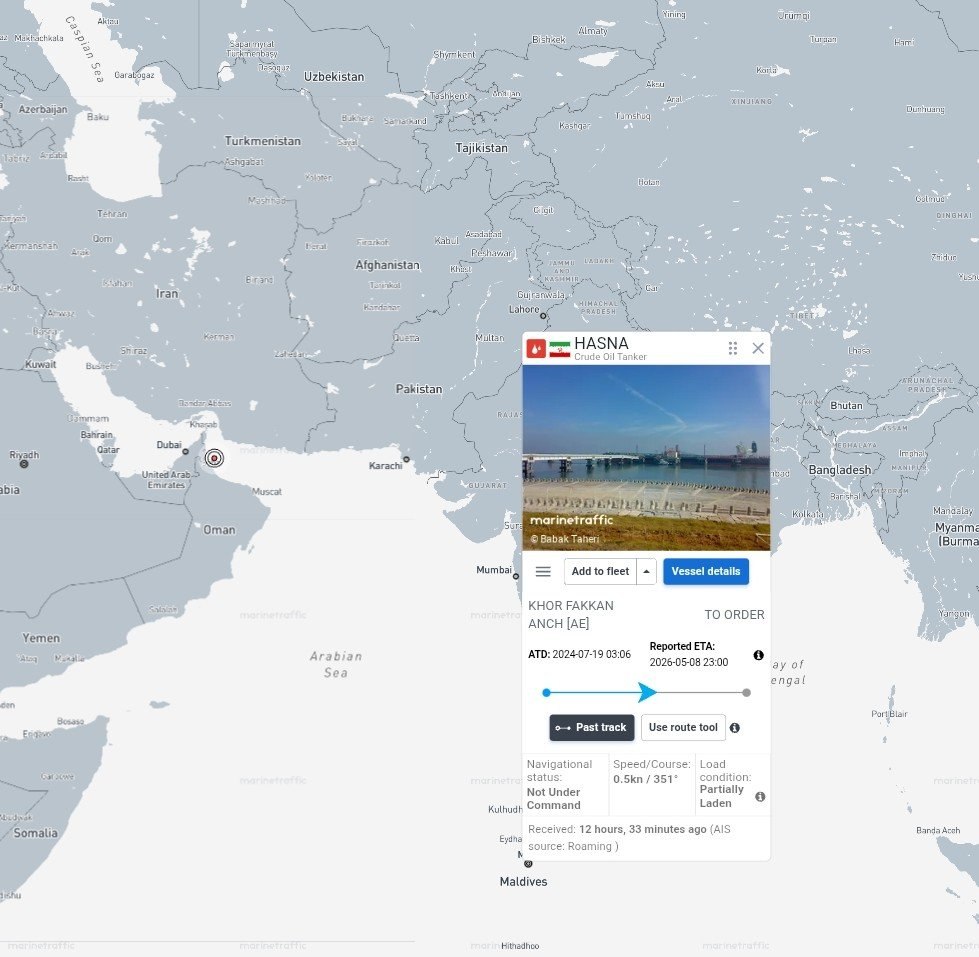
The Strait of Hormuz witnessed the most intense kinetic activity of the day. At 09:50:45 UTC, a U.S. F/A‑18 Super Hornet struck the Iranian oil tanker Hasna, prompting an immediate retaliatory response from the Islamic Revolutionary Guard Corps (IRGC) Navy against U.S. destroyers in international waters (source). The engagement involved no reported casualties, but it marked a direct use of combat aircraft against Iranian commercial assets.
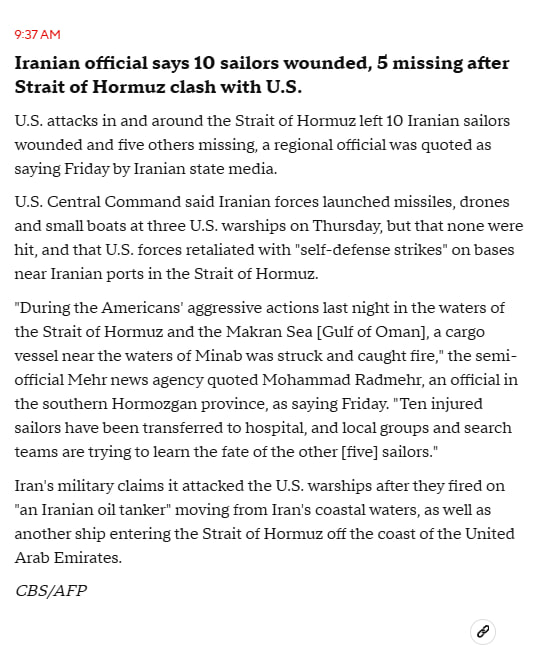
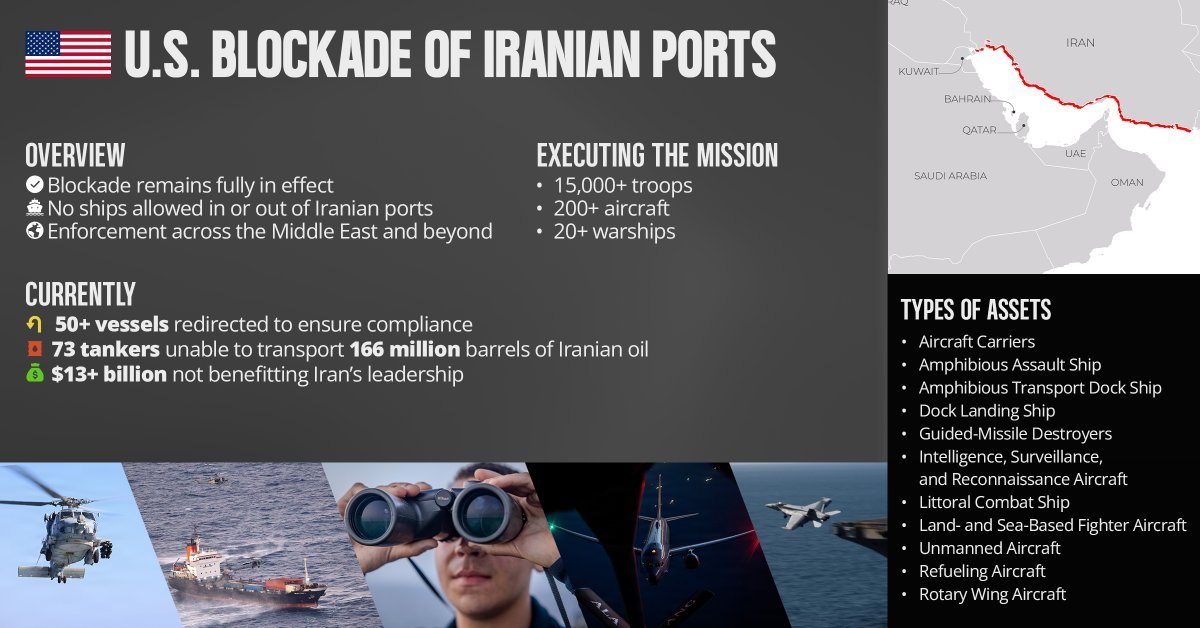
Later, at 14:46:12 UTC, Iranian forces launched missiles, drones, and small boats against U.S. warships near Minab, Hormozgan Province. Iranian state media cited CBS News, reporting ten Iranian sailors wounded and five missing as a result of the clashes (source). The United States confirmed the presence of its destroyers USS Truxton, USS Rafael Peralta, and USS Mason operating in the Arabian Sea as part of the blockade, having redirected 57 commercial vessels (source).
Broader Naval Operations
Throughout the day, the United States reported multiple interdictions of oil tankers attempting to breach the blockade. At 17:53:04 UTC, CENTCOM announced the interception of nine oil tankers in the Strait of Hormuz, a claim echoed by President Trump’s public statement that the blockade remained “successful” despite isolated breaches (source). Conversely, Iranian media released footage on 11:56:35 UTC showing U.S. warships targeted by IRGC forces, though no damage was confirmed (source).
Commercial shipping has been severely disrupted. Since Tuesday, no registered commercial vessels have transited the Strait of Hormuz, according to monitoring reports (source). U.S. Central Command also blocked more than 70 tankers from entering or leaving the port of Bandar Abbas, halting the movement of over 166 million barrels of oil (source).
Regional Spillover: Iranian Missile and Drone Strikes on Dubai
Iran’s kinetic actions extended beyond Iranian waters. At 13:18:18 UTC, missiles and drones launched from Iran struck Dubai, United Arab Emirates, generating large smoke plumes over the city (source). While casualty figures were not disclosed, the attack highlighted the potential for the Gulf conflict to affect neighboring states.
Analysis of Operational Trends
The events of 8 May illustrate a clear pattern of escalation:
- U.S. enforcement of a maritime blockade has become increasingly assertive, employing both surface vessels and air assets to interdict Iranian‑linked tankers.
- Iranian retaliation has shifted from passive detentions to active use of missiles, drones, and small‑boat swarms against U.S. warships, resulting in personnel casualties.
- Commercial shipping disruption is now a strategic objective for both sides, with over 70 tankers blocked and a complete halt to registered commercial transits through the Strait of Hormuz.
These dynamics suggest a heightened risk of inadvertent escalation, especially given the proximity of naval assets and the involvement of high‑value platforms such as F/A‑18 aircraft and IRGC missile batteries. The absence of reported casualties in many engagements does not preclude the possibility of future incidents with higher human costs.
Outlook
Both the United States and Iran appear committed to maintaining pressure through kinetic means. Continued monitoring of vessel movements, real‑time intelligence from open‑source channels, and diplomatic engagement will be essential to prevent further escalation. The international community, particularly oil‑importing nations, should prepare for sustained volatility in global energy markets as the blockade and counter‑blockade dynamics evolve.