The most consequential kinetic event recorded on 8 May 2026 was a coordinated assault by the Allied Democratic Forces (ADF), a Ugandan rebel group with ties to the Islamic State, in the North Kivu and Ituri provinces of the Democratic Republic of Congo (DRC). According to the open‑source intelligence channel rnintel, the attacks resulted in 36 fatalities, underscoring the group’s capacity to conduct high‑impact operations far from its traditional strongholds.
"Ugandan rebel group, ADF, which has links to the Islamic State, launched several attacks in the North Kivu and Ituri regions of eastern Democratic Republic of Congo, killing 36 people." – rnintel, 09:26 UTC
ADF Infiltration and Casualties
The ADF’s offensive targeted civilian settlements and security outposts in both provinces, employing small‑arms fire and improvised explosive devices. While the exact weapons used were not disclosed, the casualty figure of 36 includes both combatants and non‑combatants. The incident marks a significant escalation in the group’s cross‑border activities, raising concerns for regional stability and prompting immediate alerts from the United Nations Office for the Coordination of Humanitarian Affairs (OCHA).
Iranian Ballistic Missile and Drone Launches Against the UAE
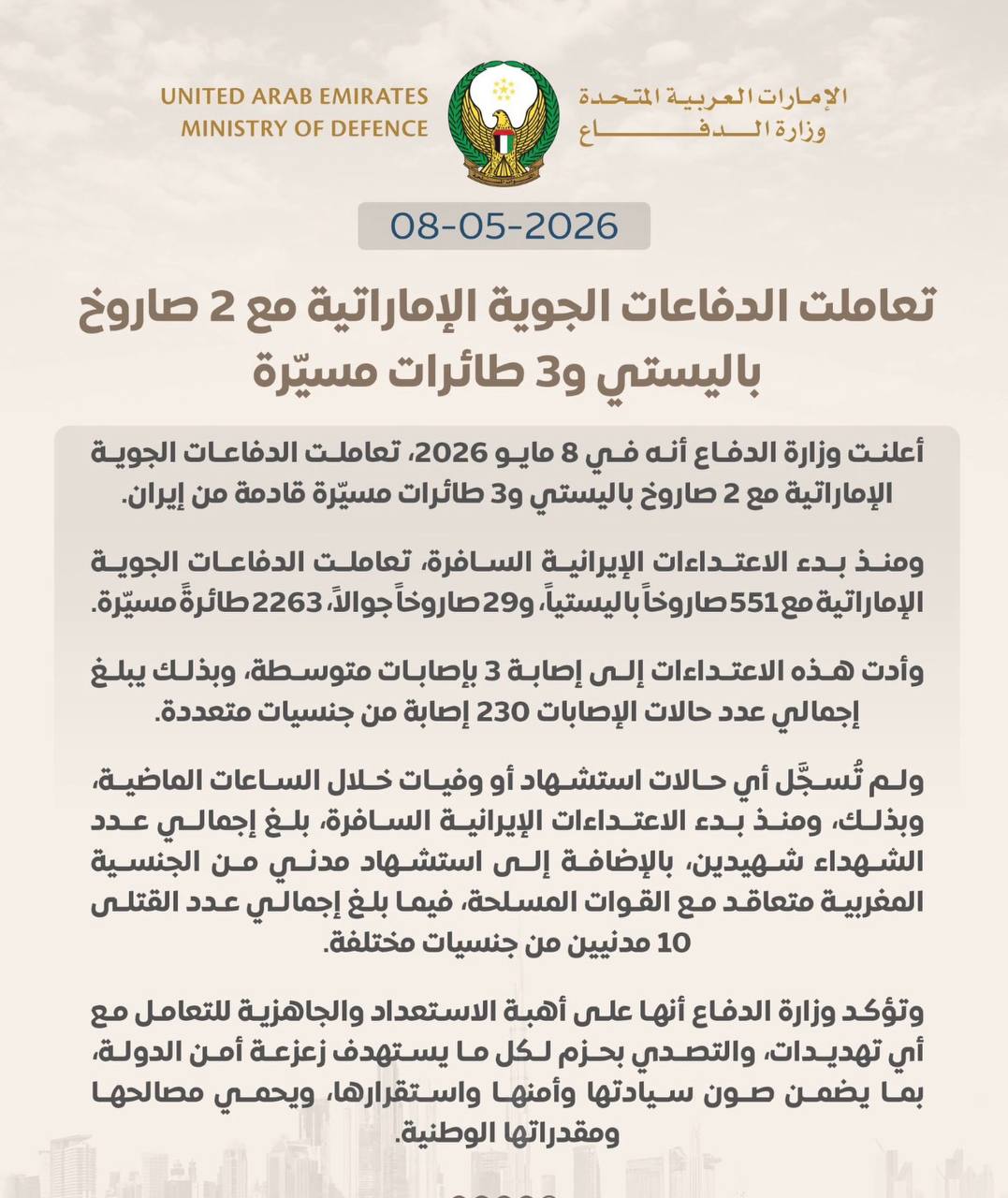
At 11:12 UTC, the Telegram channel GeoPWatch reported that Iran launched two ballistic missiles and three unmanned aerial systems (UAS) toward the United Arab Emirates (UAE). The missiles, identified as short‑range ballistic projectiles, and the drones were intercepted by UAE air defenses, though the channel did not disclose any casualties or material damage. The launch represents a notable escalation in Iran’s use of kinetic assets against neighboring states.
"Iran targeted the UAE with 2 Ballistic missiles and 3 Drones." – GeoPWatch, 11:12 UTC
US Special‑Operations Deployment to Diego Garcia
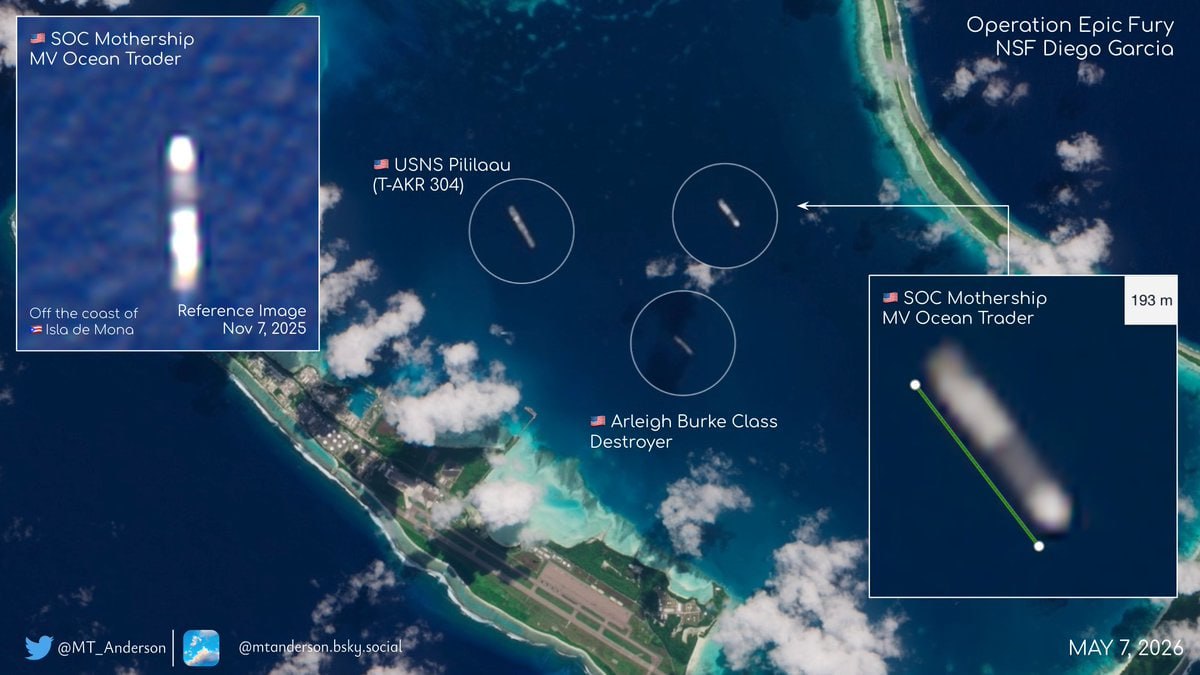
In the Indian Ocean, the United States expanded its forward‑deployed posture by positioning the MV Ocean Trader, a special‑operations mothership, alongside the USNS Pililaau and an Arleigh Burke‑class destroyer within the lagoon of Diego Garcia. The information, posted by the channel CIG_telegram at 17:22 UTC, was corroborated by Sentinel‑2 satellite imagery captured on 7 May. While no weapons were reported as being deployed, the presence of these assets signals heightened US readiness in a strategically vital maritime hub.
"Likely spot of Spec Ops Command (SOC) mothership, MV Ocean Trader, safely anchored inside the atoll. USNS Pililaau & an Arleigh Burke also in the lagoon." – CIG_telegram, 17:22 UTC
Air Engagement Over Saudi Arabia
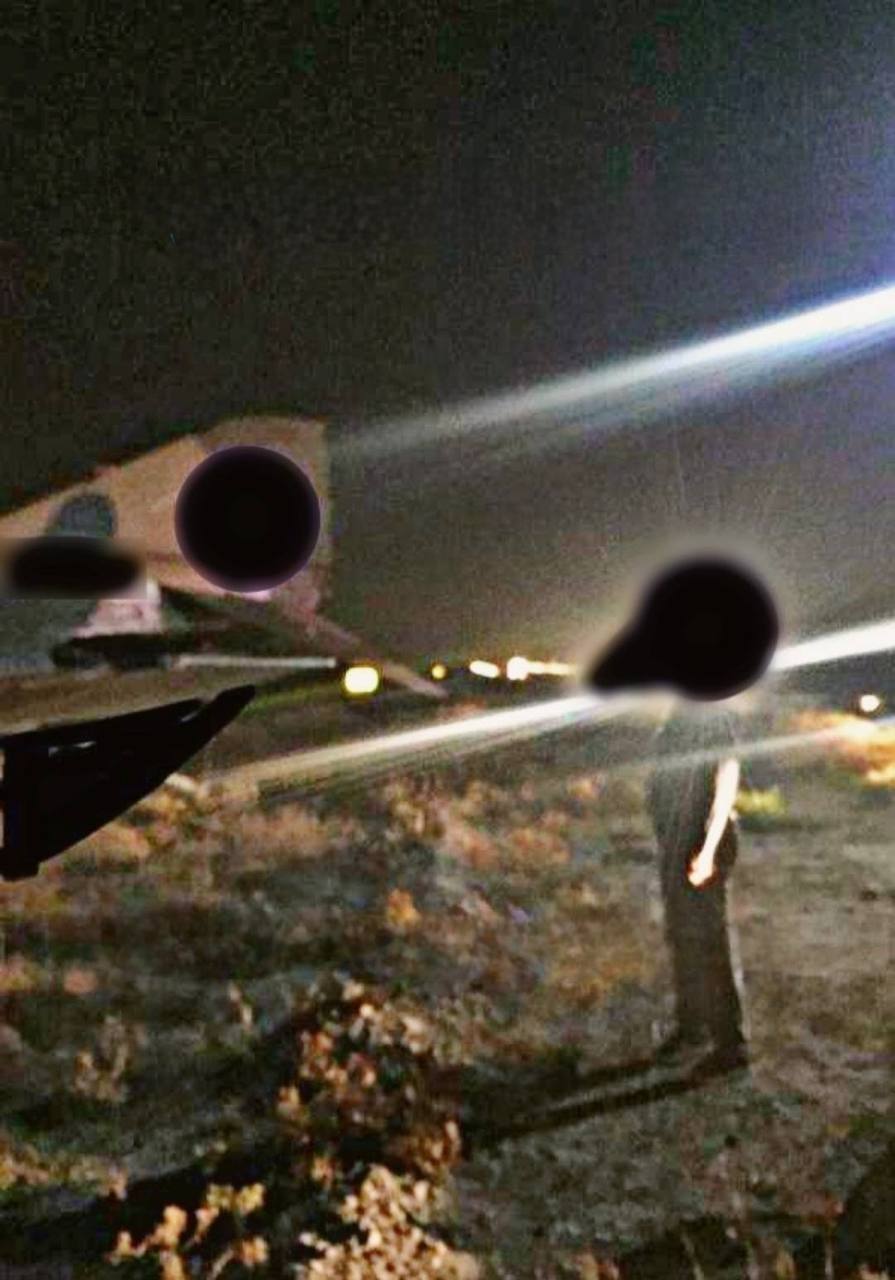
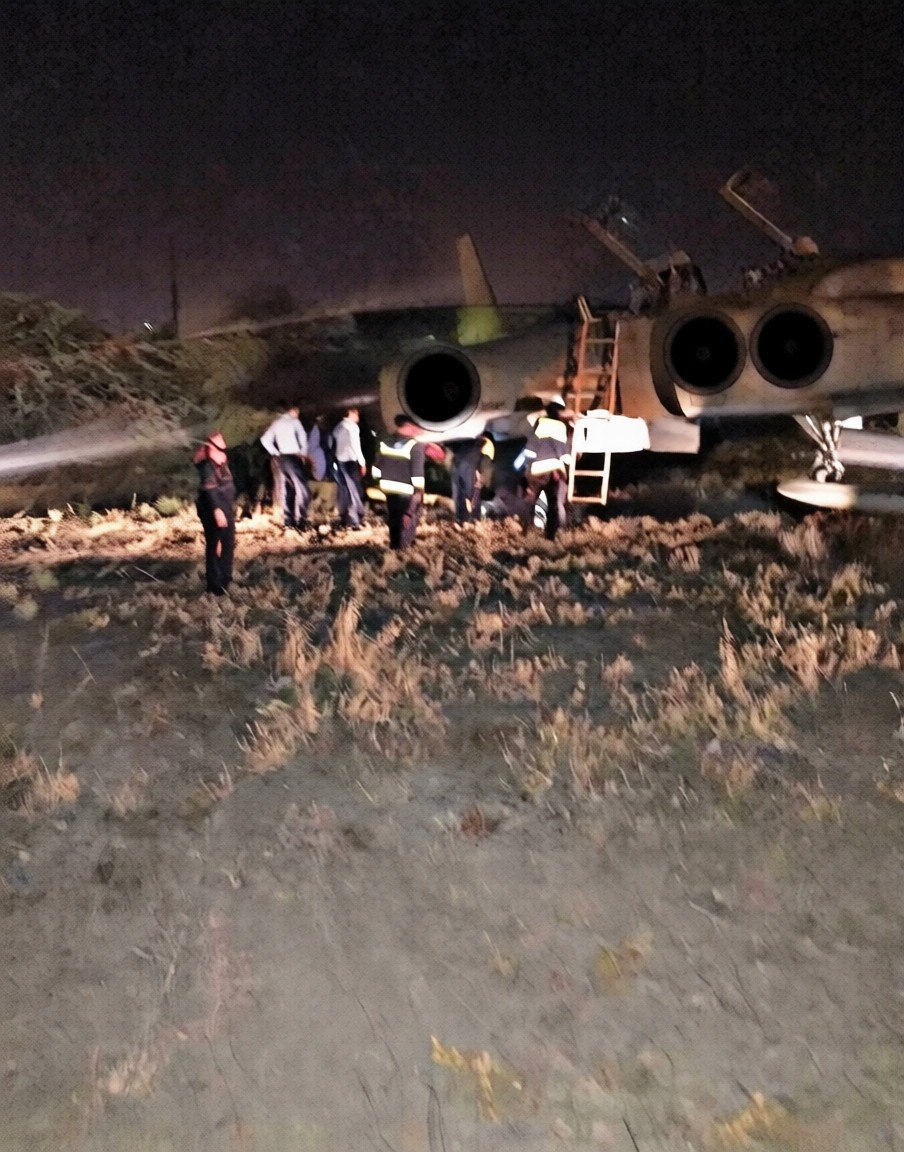
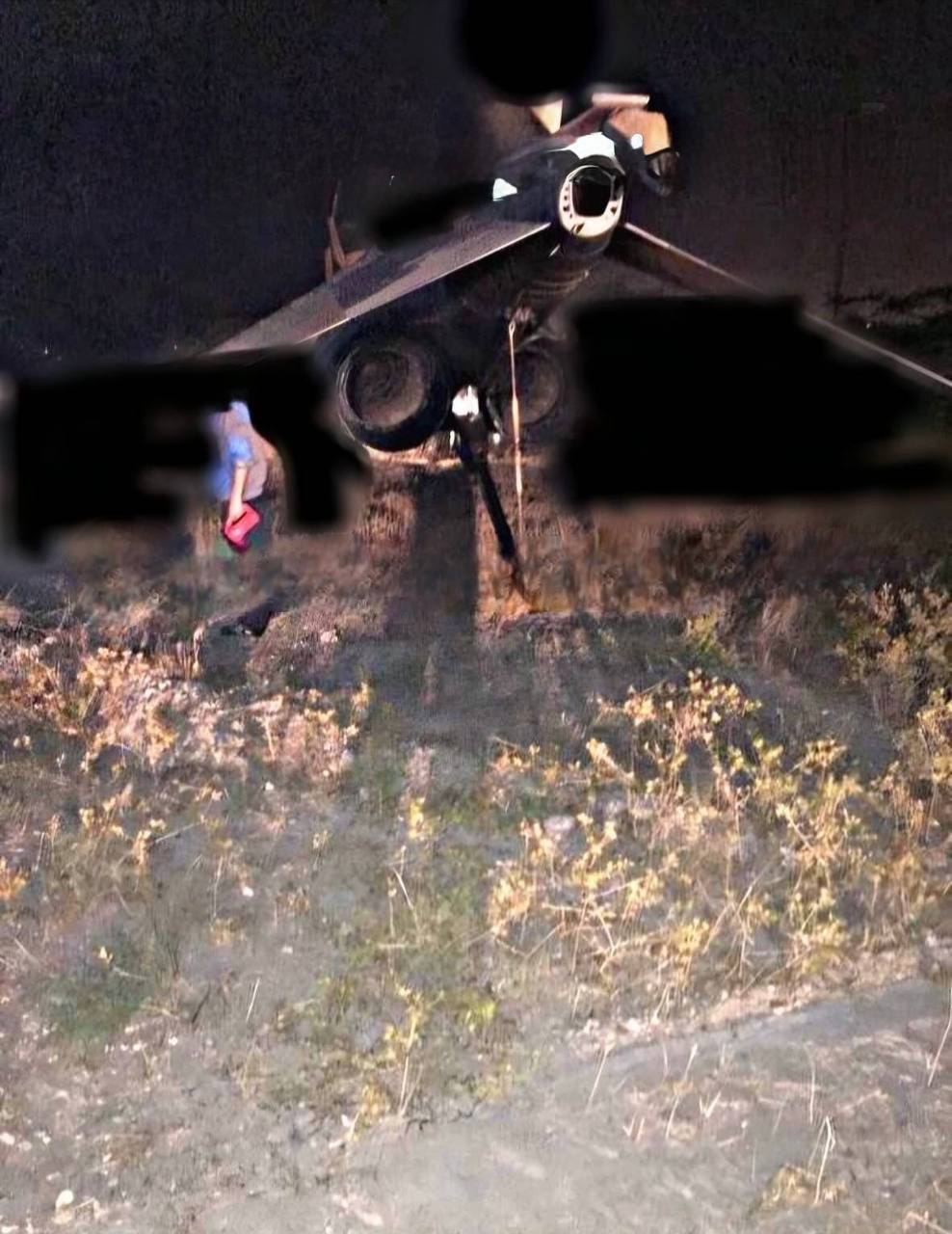
At 16:49 UTC, the channel intelslava released images of an Iranian Air Force F‑4E Phantom making a hard landing after a reported dogfight with a United States Air Force F‑16CJ Wild Weasel over Saudi Arabian airspace. The Iranian aircraft suffered hydraulic system pressure issues and transmitted a 7700 emergency squawk. No casualties were reported, but the incident illustrates the risk of direct aerial confrontations between Iranian and US forces in the Gulf region.
"Images show an Islamic Republic of Iran Air Force (IRIAF) F‑4E Phantom after a hard landing at a base, caused by hydraulic system pressure issues. They claim that the aircraft was involved in a dogfight with a U.S. Air Force F‑16CJ Wild Weasel on April 3, during which it was damaged and transmitted a 7700 emergency squawk while flying over Saudi Arabia." – intelslava, 16:49 UTC
Israeli Strikes Inside Lebanon
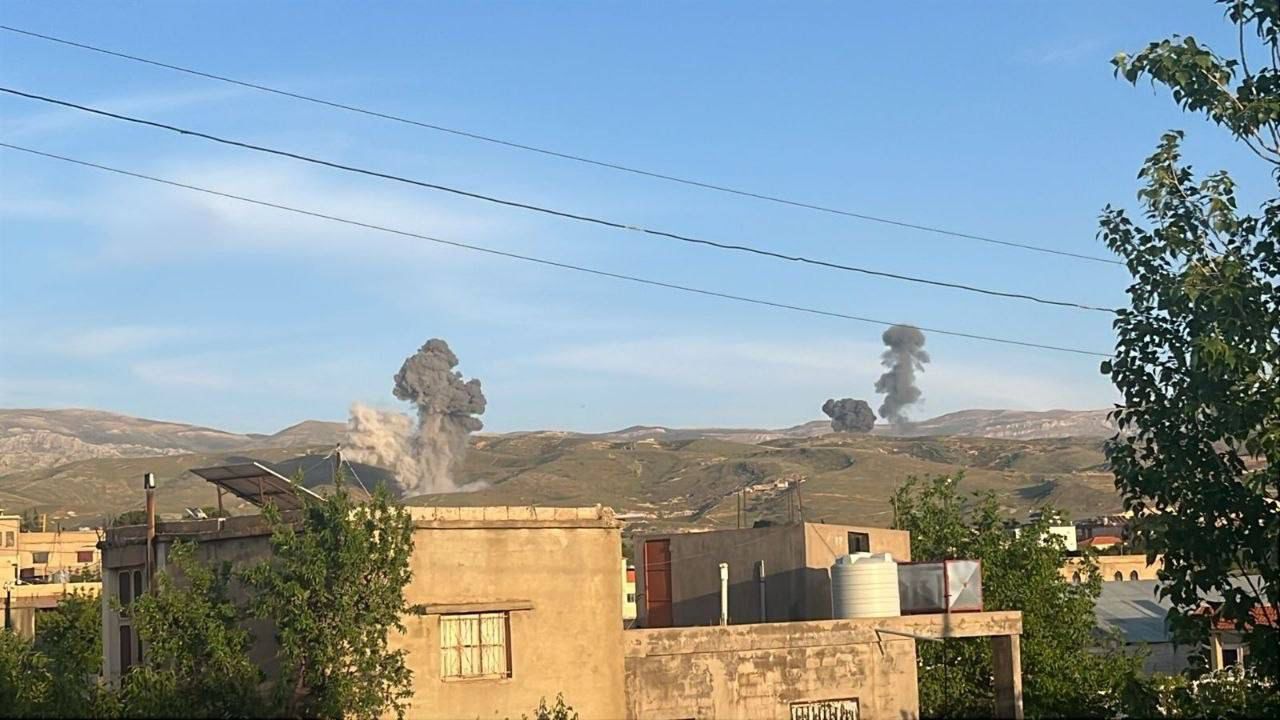
Following a series of rocket launches from Lebanon toward northern Israel, the Israeli Defense Forces (IDF) conducted airstrikes against Hezbollah positions deep within Lebanese territory. The operation, reported by idkunim_il at 16:02 UTC, involved precision munitions but no specific weapon systems were disclosed. The strikes were framed as a direct response to the earlier rocket fire, and the IDF warned of a “strong response” to any further aggression.
"In response to the launches to the north, the IDF is now striking Hezbollah targets deep inside Lebanon." – idkunim_il, 16:02 UTC
Rocket Interception Over Israel
Earlier, at 11:11 UTC, Israeli air defenses intercepted two rockets launched from Lebanon, while a third projectile fell into the Mediterranean Sea. No injuries or property damage were reported. The IDF reiterated its readiness to respond forcefully to any hostile activity.
"Two launches were successfully intercepted, and another launch fell into the sea. No falls and no casualties. The IDF will respond strongly to the fire." – idkunim_il, 11:11 UTC
Drone Explosion Injures IDF Soldiers
At 10:16 UTC, a hostile UAV detonated near an Israeli military position, injuring three soldiers—one seriously and two moderately. The incident, also reported by idkunim_il, underscores the persistent threat posed by low‑tech aerial weapons in the Israel‑Lebanon border zone.
"An IDF soldier was seriously injured and two other soldiers were moderately injured by a drone explosion." – idkunim_il, 10:16 UTC
IAEA Concerns Over Iranian Enrichment Activity
Separately, the International Atomic Energy Agency (IAEA) issued a briefing at 06:24 UTC highlighting ongoing, unexplained work at Iran’s uranium enrichment facilities. The agency noted that the sites had previously been targeted in attacks and that United Nations inspectors were denied access, raising non‑proliferation concerns. While not a kinetic event, the report adds a strategic dimension to Iran’s broader security posture.
"The International Atomic Energy Agency (IAEA) has reported regular and unexplained work at Iranian uranium enrichment sites that were previously attacked, raising concerns about nuclear non‑proliferation." – OSINTdefender, 06:24 UTC
Collectively, these incidents illustrate a pattern of heightened kinetic activity across multiple theaters on 8 May 2026. The ADF’s lethal incursion into eastern DRC represents the most severe loss of life, while Iran’s missile and drone launch, US naval deployment, and multiple Israeli‑Lebanese confrontations demonstrate an expanding spectrum of conventional and unconventional threats. Monitoring agencies should prioritize verification of casualty figures, assess the operational reach of non‑state actors such as the ADF, and track the strategic implications of state‑level kinetic engagements in the region.