The United States Navy demonstrated a markedly assertive presence on 6‑7 May 2026, conducting a carrier‑based strike in the Gulf of Oman, transiting two Arleigh Burke‑class destroyers through the Strait of Gibraltar, and confronting Iranian naval orders near the Strait of Hormuz. These actions occur against a backdrop of intensified hostilities in eastern Ukraine, where Russian forces reported the downing of 347 Ukrainian drones, and broader regional volatility involving Israel, Lebanon, and Iran.
Carrier‑Based F/A‑18 Disables Iranian Tanker in Gulf of Oman
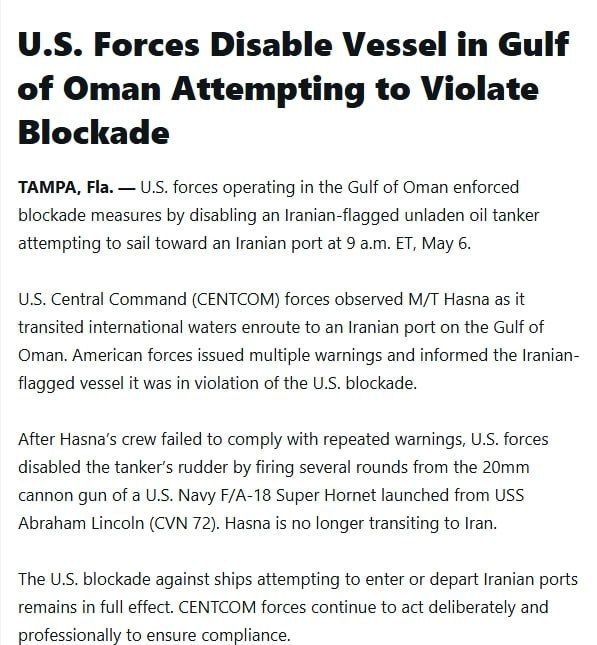
According to CENTCOM and the Telegram channel intelslava, an F/A‑18 fighter from the nuclear‑powered aircraft carrier USS Abraham Lincoln engaged the Iranian tanker Hasna on 6 May. The jet fired a 20 mm cannon round that crippled the vessel’s rudder, forcing it to halt while attempting to breach an American‑enforced blockade aimed at limiting Iran’s maritime logistics. The engagement was captured in a photo released by intelslava. No casualties were reported, and the tanker remained afloat under U.S. supervision.
"The strike was a proportional response to a vessel that ignored multiple warnings and threatened to undermine the security of the Arabian Sea corridor," a CENTCOM spokesperson said.
The incident illustrates the U.S. Navy’s willingness to employ kinetic force to enforce maritime restrictions, a policy that mirrors its broader strategy of deterrence in contested waters.
Destroyer Transit Through the Strait of Gibraltar Highlights Global Reach
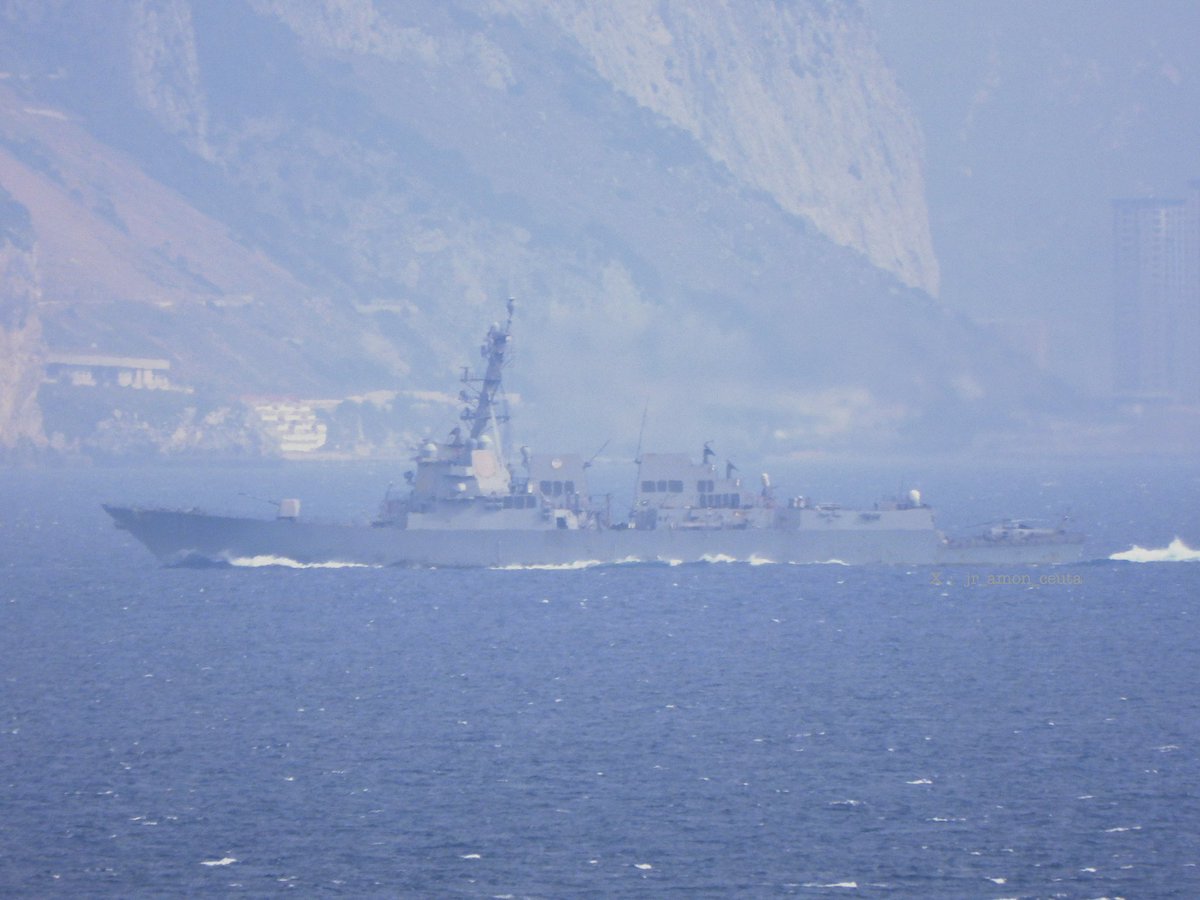
On 6 May, the destroyers USS Winston S. Churchill (DDG‑81) and USS Bainbridge (DDG‑96), accompanied by the replenishment oiler USNS John Lenthall (T‑AO‑189), moved westbound through the Strait of Gibraltar. The transit, reported by the Telegram channel monitor_the_situation, was documented with a photograph (source). While the passage was routine, its timing coincided with heightened tensions in the Strait of Hormuz and ongoing operations in the Black Sea, underscoring the Navy’s capacity to project power across multiple theaters simultaneously.
Analysts note that the Gibraltar transit serves both logistical and signaling purposes, reinforcing U.S. commitment to NATO’s southern flank while maintaining readiness for rapid redeployment to hotspots such as the Black Sea, where Ukrainian forces continue to contest Russian air and sea dominance.
Iranian Navy Orders U.S. Destroyer to Turn Back Near Strait of Hormuz
In a separate episode on 7 May, the Iranian Navy, operating under the auspices of the Islamic Revolutionary Guard Corps (IRGC) Sepah Navy, instructed the U.S. destroyer USS Frank E. Petersen Jr. to reverse course after the vessel approached the strategic chokepoint of the Strait of Hormuz. The incident, reported by monitor_the_situation, was accompanied by a video clip (source). No weapons were employed, and the U.S. ship complied without escalation.
The encounter reflects the delicate balance of power in the Persian Gulf, where Iranian forces regularly challenge foreign naval movements. The U.S. response—maintaining a visible yet non‑confrontational posture—aligns with broader diplomatic efforts to avoid inadvertent conflict while preserving freedom of navigation.
Escalation in Eastern Ukraine: Massive Drone Interception
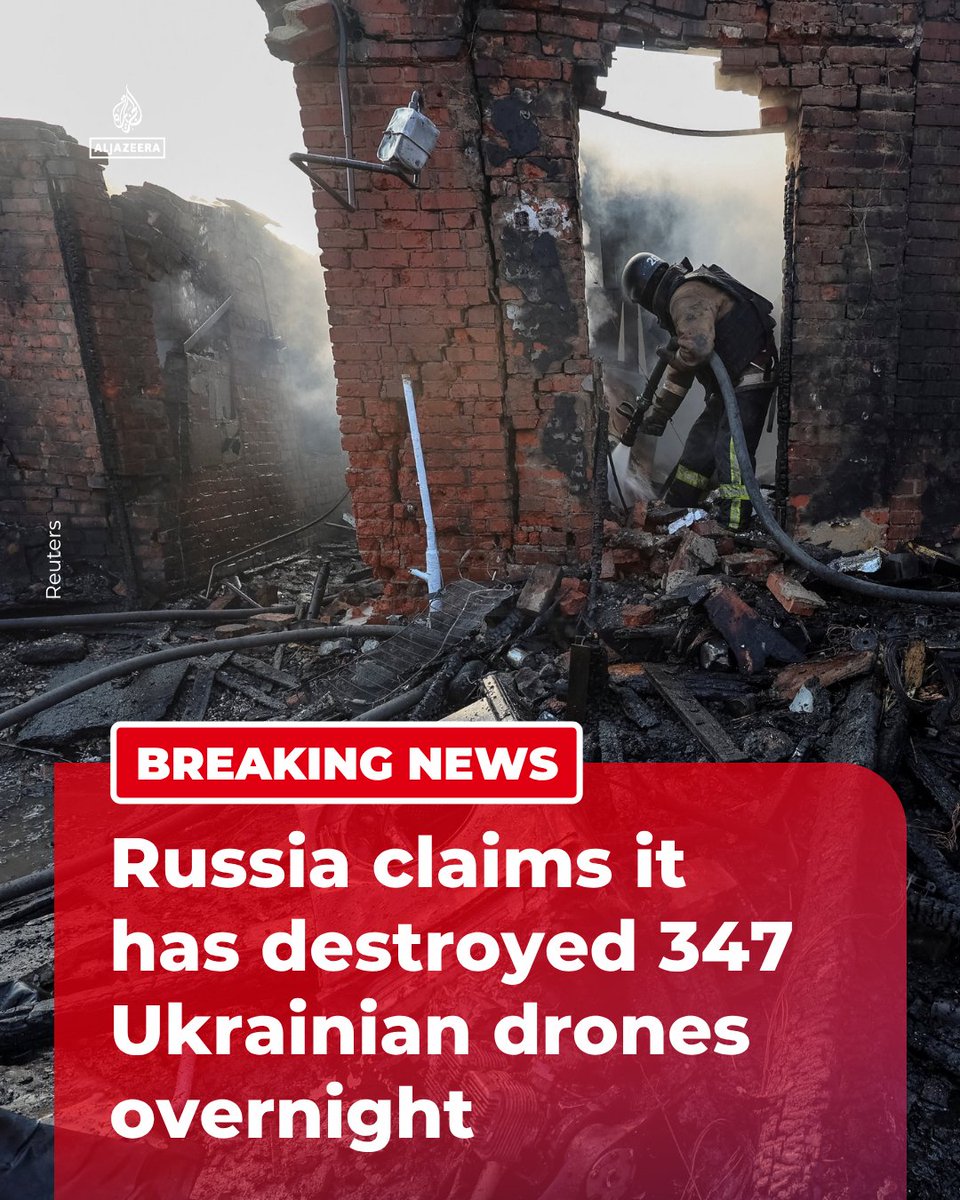
Concurrently, Russian forces announced the destruction of 347 Ukrainian drones over Donetsk Oblast since the evening of 5 May. The claim, posted by the Telegram channel monitor_the_situation, included a photo of the intercepted UAVs (source). While independent verification is pending, the scale of the reported interceptions suggests a significant intensification of Ukrainian aerial reconnaissance and strike efforts, as well as a robust Russian air‑defence response.
These drone operations are part of Ukraine’s broader strategy to compensate for limited air‑power by leveraging unmanned systems for surveillance, artillery targeting, and limited strike missions. The reported loss of 347 platforms, if accurate, would represent a substantial attrition rate, potentially constraining Kyiv’s ability to sustain high‑tempo operations in the Donetsk sector.
Regional Spill‑over: Israel‑Lebanon Clashes and Iranian Missile Tests
In southern Lebanon, Israeli forces conducted artillery shelling and airstrikes on multiple towns, raising civilian casualty concerns and violating the 2023 ceasefire framework. The action, documented by monitor_the_situation (source), employed both artillery and aircraft, though specific casualty figures were not disclosed.
Simultaneously, an explosive drone attack injured one Israel Defense Forces (IDF) soldier severely and three others lightly, as reported by JPost (source). The incident underscores the persistent threat of low‑tech UAVs in the Israel‑Lebanon frontier.
Iran’s IRGC Aerospace Force also launched several Emad medium‑range ballistic missiles from an exposed flat area, a maneuver captured on video by intelslava (source). The launch site’s lack of natural cover makes the missiles vulnerable to detection, suggesting a possible signaling intent rather than a covert strike capability.
Cross‑border Violence Extends to Russian Territory
On 7 May, Ukrainian forces reportedly struck residential buildings in Bryansk, Russia, injuring 13 civilians, including a child. The incident was reported by the Telegram channel BellumActaNews (source). While the weapons used were not specified, the attack highlights the expanding geographic scope of the conflict and the potential for retaliatory measures by Moscow.
Collectively, these events illustrate a multi‑theater environment where U.S. naval actions intersect with heightened Ukrainian combat operations and a series of regional flashpoints involving Iran, Israel, and Lebanon.
Implications for U.S. Maritime Strategy
The coordinated U.S. naval activities—carrier strike, destroyer transit, and measured response to Iranian orders—demonstrate a calibrated approach to deterrence. By projecting power in the Gulf of Oman and maintaining a visible presence in the Mediterranean, the United States signals its readiness to protect maritime commerce and uphold international norms, even as the Ukraine war strains NATO resources.
At the same time, the scale of Ukrainian drone losses may prompt Kyiv to seek additional Western support for UAV procurement and counter‑UAV technologies, potentially increasing U.S. involvement in the Black Sea arena. The convergence of these dynamics suggests that U.S. naval planners will continue to balance forward‑deployed assets across the Atlantic, Mediterranean, and Indo‑Pacific to address both state and non‑state threats.