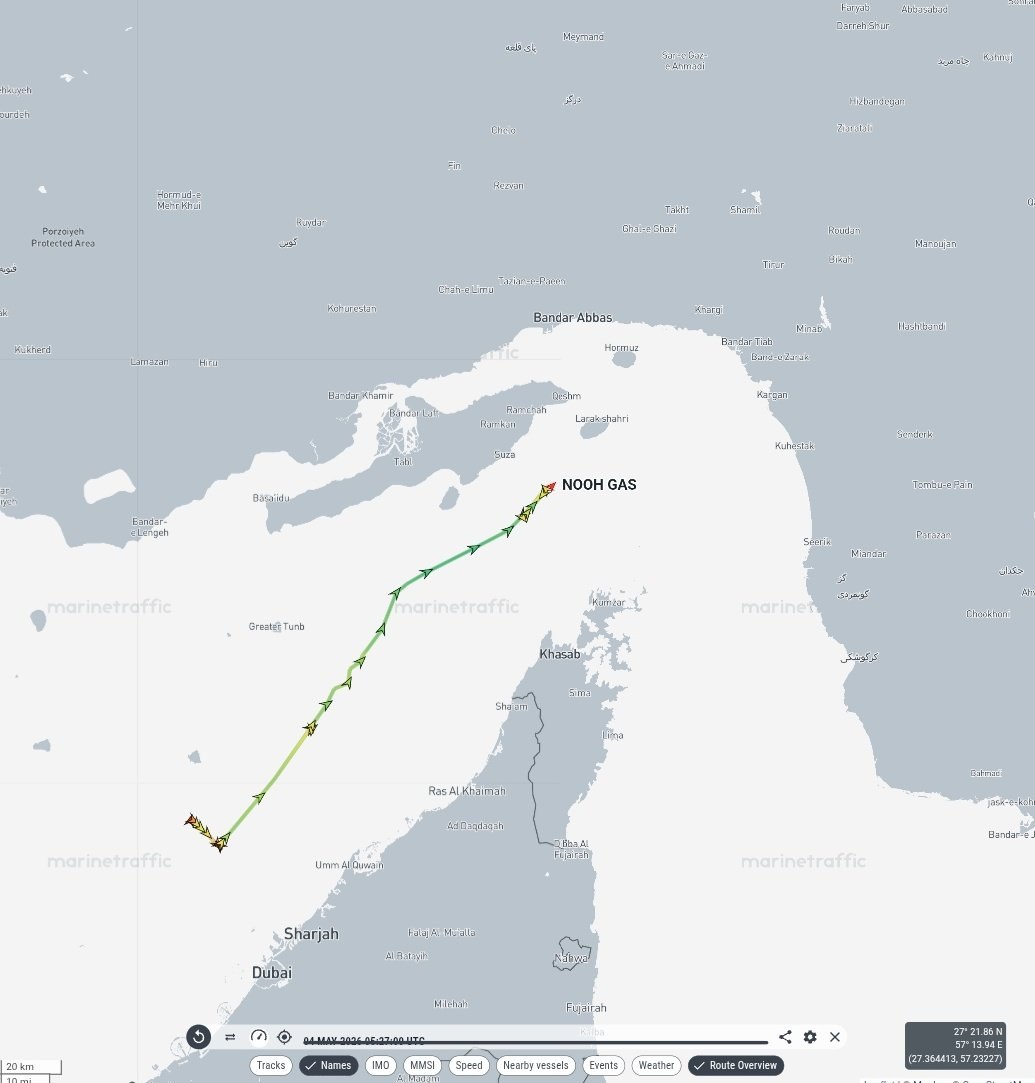
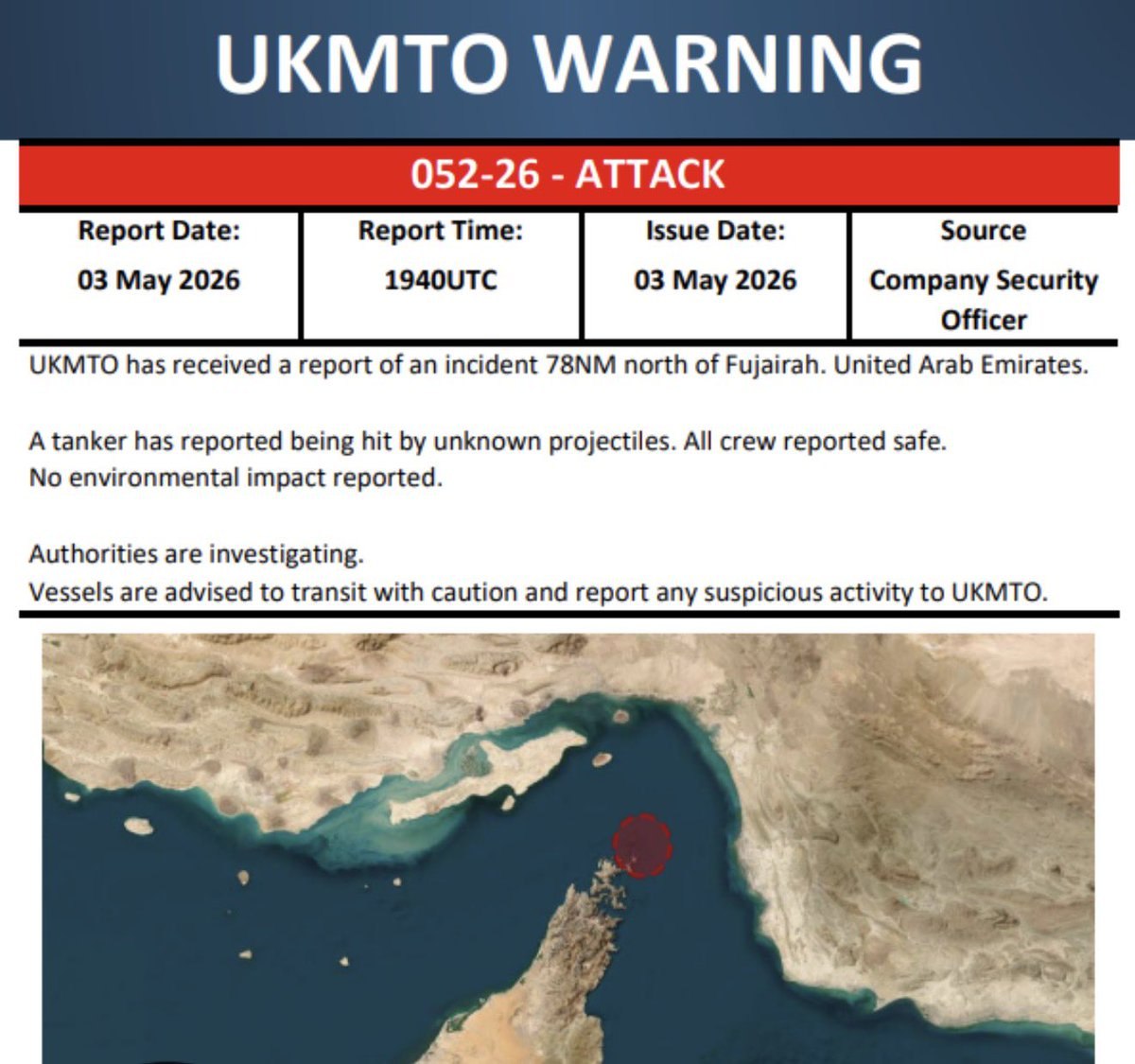
On May 4, 2026, the sanctioned Iranian LPG tanker NOOH GAS successfully transited the Strait of Hormuz despite an active United States naval blockade and a series of recent attacks on commercial vessels in the waterway. The movement, reported by the monitoring channel monitor_the_situation at 05:36 UTC, marks a direct challenge to U.S. enforcement actions and highlights the escalating risk to international shipping in one of the world’s most strategic chokepoints.
Background to the Strait of Hormuz Tensions
The Strait of Hormuz, a narrow passage linking the Persian Gulf with the Gulf of Oman, handles roughly 20% of global petroleum shipments. Since early 2026, diplomatic friction between Tehran and Washington has manifested in a series of naval confrontations, including the U.S. decision to impose a blockade on vessels identified as linked to Iran’s sanctioned energy sector. The blockade aims to prevent the export of refined products that could fund Tehran’s regional activities.
Recent Maritime Incidents
Within the first hours of May 4, three separate incidents involving commercial tankers were reported by the United Kingdom Maritime Trade Operations (UKMTO) and the monitoring channel monitor_the_situation:
- At 00:10 UTC, a tanker was struck by multiple projectiles, an event documented with a photo and attributed to “Iranian threats” in the source report (source).
- At 00:36 UTC, UKMTO confirmed two tanker attacks: a bulk carrier hit by a small craft and a second tanker struck by an unknown projectile (source).
- Later, at 05:36 UTC, the NOOH GAS, a vessel known for transporting LPG to Bangladesh and Pakistan, passed through the strait without interception (source).
None of the reported attacks resulted in confirmed casualties, and the weapons used ranged from small‑craft ramming to unidentified projectile fire. The lack of clear attribution complicates the operational picture for both naval forces and commercial operators.
U.S. Naval Response and Presidential Announcement
In parallel with the maritime incidents, U.S. President Donald Trump announced a new naval mission to escort commercial vessels through the Strait of Hormuz. The announcement, broadcast by Al Jazeera at 03:47 UTC, emphasized the United States’ commitment to safeguarding “American and allied shipping” in the face of Iranian aggression (source).
"We will begin escorting ships in the Strait of Hormuz," President Trump said, adding that the mission would be "a clear signal that the United States will not tolerate threats to free navigation."
The United States Navy, identified as the responsible organization in both the escort announcement and the NOOH GAS transit report, has deployed additional surface combatants and aerial surveillance assets to the region. The operational tempo reflects a shift from reactive patrols to proactive escort duties, a policy change not seen since the 2019 Gulf of Oman incidents.
Analysis of Strategic Implications
The NOOH GAS transit demonstrates Tehran’s willingness to test the limits of the U.S. blockade. By moving a sanctioned vessel through the strait, Iran signals that economic pressure alone may not deter its maritime logistics. The incident also raises questions about the effectiveness of the blockade, given the United States’ stated intent to interdict such vessels.
From a risk‑assessment perspective, the series of projectile attacks on tankers suggests a pattern of low‑intensity, plausible‑deniability tactics. The use of small craft and unidentified projectiles aligns with asymmetric maritime warfare doctrines, allowing actors to inflict damage without overtly escalating to full‑scale naval combat.
The U.S. escort mission, while intended to protect commercial traffic, could inadvertently increase the probability of direct confrontation. Escort vessels operating in close proximity to Iranian‑linked craft heighten the chance of misidentification and accidental engagement, especially in the congested and narrow confines of the strait.
Operational Outlook
In the short term, commercial operators are likely to adjust routing decisions based on the evolving security environment. Shipping companies may seek alternative passages, such as the longer route around the Cape of Good Hope, despite higher fuel costs, to avoid potential loss of cargo or vessel damage.
For the United States, maintaining a credible escort presence will require sustained logistical support, including replenishment at sea and coordination with allied navies, notably the United Kingdom and France, which have expressed interest in joint patrols. The Navy’s rules of engagement remain undisclosed, but any escalation to kinetic action would trigger a broader diplomatic response.
Iran, on the other hand, may continue to leverage its regional proxy networks and maritime militia to conduct sporadic attacks, preserving a level of strategic ambiguity. The lack of clear casualty figures in the reported incidents suggests that the primary objective is disruption rather than mass destruction.
Conclusion
The events of May 4, 2026, illustrate a deepening naval standoff in the Strait of Hormuz, where diplomatic posturing, economic sanctions, and limited kinetic actions intersect. The successful transit of the NOOH GAS under blockade conditions, combined with multiple tanker attacks and the U.S. decision to escort commercial vessels, underscores a trajectory toward heightened maritime risk. Stakeholders—including governments, shipping firms, and insurers—must monitor the situation closely, as any miscalculation could rapidly expand a localized confrontation into a broader regional conflict.