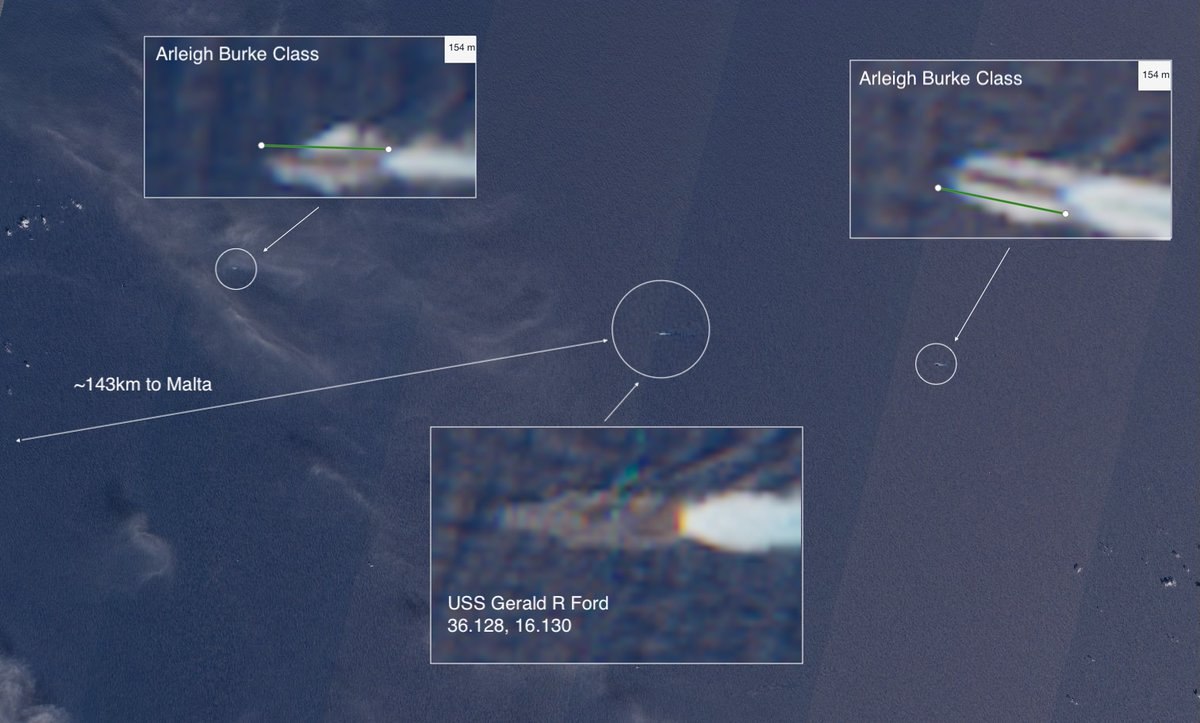
The most notable development on 4 May 2026 was the westbound transit of the United States Navy’s Carrier Strike Group 12, led by the nuclear‑powered aircraft carrier USS Gerald R. Ford, observed approximately 143 km east of Malta in the central Mediterranean. Satellite imagery captured the strike group moving homeward, underscoring the continued forward presence of U.S. naval power in a region already strained by competing interests. The observation was reported by the monitoring channel monitor_the_situation and accompanied by a single photograph confirming the carrier’s position.
"USS Gerald R. Ford Carrier Strike Group Transits Central Mediterranean," monitor_the_situation, 03:21 UTC, https://t.me/monitor_the_situation/14496
Naval Incidents Across Strategic Waterways
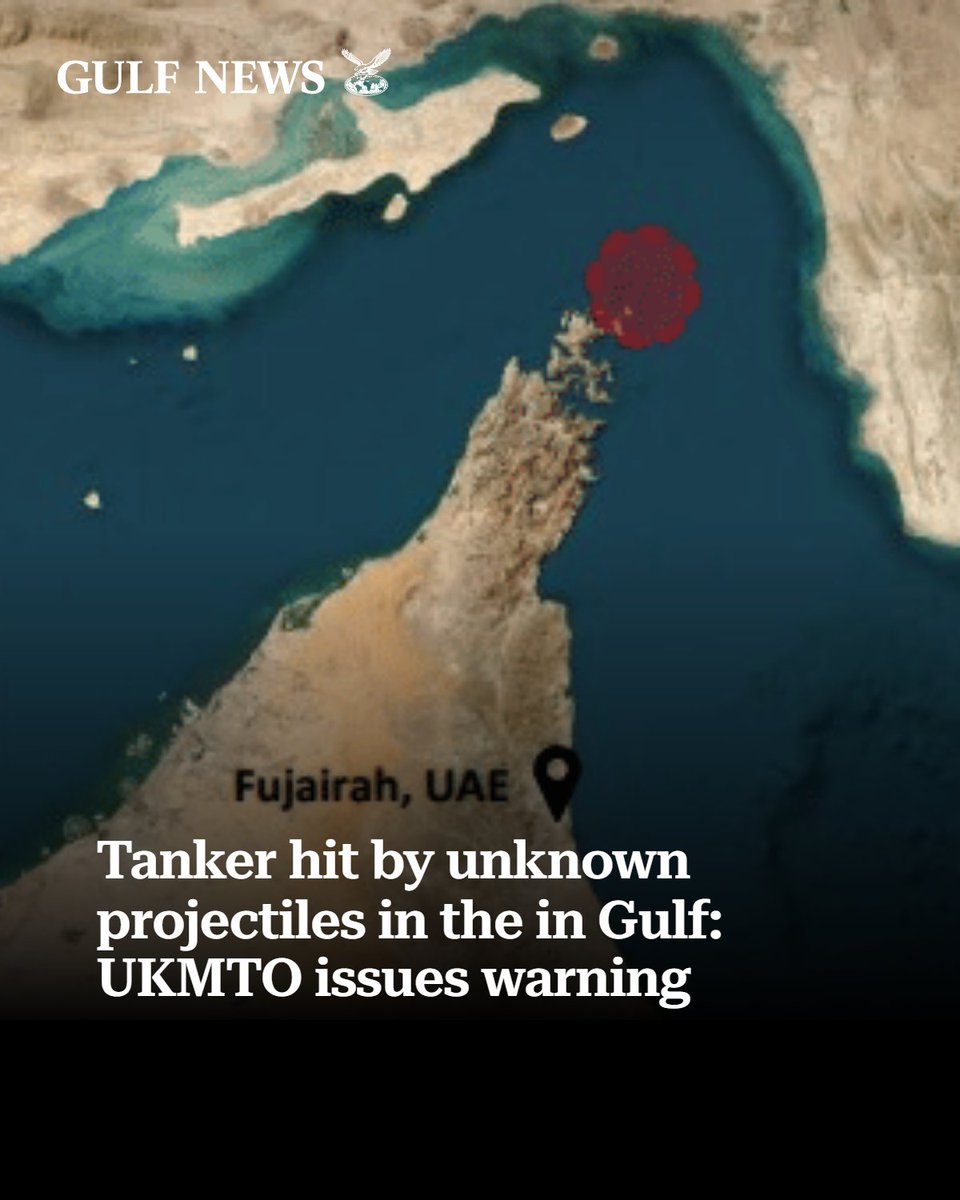
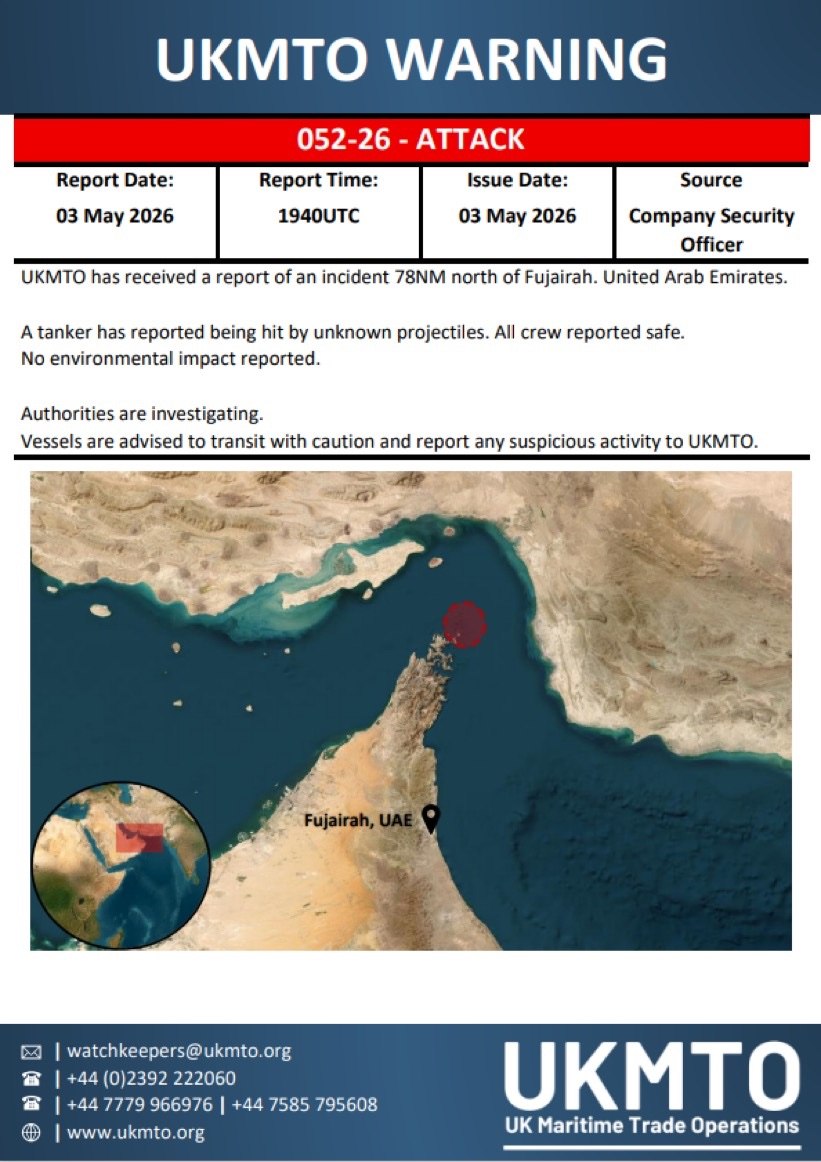
In the same 24‑hour period, three separate maritime attacks involving unknown projectiles were reported in two of the world’s most contested chokepoints. At 00:14 UTC, a vessel 78 nautical miles north of Fujairah, United Arab Emirates, was struck by an unidentified projectile amid the U.S.-led Project Freedom transit framework in the Strait of Hormuz area. The United Kingdom Maritime Trade Operations (UKMTO) logged the incident, noting heightened tensions but providing no casualty figures.
"Vessel Hit by Unknown Projectile North of Fujairah, UAE," monitor_the_situation, 00:14 UTC, https://t.me/monitor_the_situation/14489
Just minutes later, at 00:10 UTC, an unidentified tanker suffered a similar strike in the Bab el‑Mandeb Strait, Yemen, a corridor frequently targeted by Houthi forces. UKMTO again reported the event without immediate details on damage or injuries.
"Tanker Hit by Unknown Projectile in Bab el‑Mandeb, Yemen," monitor_the_situation, 00:10 UTC, https://t.me/monitor_the_situation/14486
Further east, at 02:46 UTC, a tanker was struck in the Gulf of Oman, prompting UKMTO to issue a warning to all vessels navigating the area. The attack occurred in international waters between Oman and Iran, heightening concerns over regional escalation involving Iran and the United Kingdom. No casualties were reported, but the incident was classified as “Significant” (S3) by the monitoring service.
"Tanker Struck by Attack in Gulf of Oman," monitor_the_situation, 02:46 UTC, https://t.me/monitor_the_situation/14493
Aerial Threats and Drone Activity
Drone activity featured prominently on 4 May, with two separate hostile UAV incidents recorded. At 05:33 UTC, a small unmanned aerial vehicle crashed into a residential building on Mosfilmovskaya Street in Moscow, damaging three rooms but causing no injuries. The incident, confirmed by Moscow Mayor Sergei Sobyanin, marked the first known aerial attack on the Russian capital in years.
"Drone hits residential building on Mosfilmovskaya Street, Moscow," intelslava, 05:33 UTC, https://t.me/intelslava/87394
Earlier, at 01:23 UTC, Russian forces of the 27th Guards Motor Rifle Division released footage of UAV flights near the settlement of Dobropolye in Donetsk Oblast, Ukraine. The footage, posted by the intelligence channel intelslava, demonstrated continued aerial reconnaissance and potential strike capability along the front line.
"UAV operators of 27th Guards Motor Rifle Division near Dobropolye," intelslava, 01:23 UTC, https://t.me/intelslava/87393
Ground Violence and Cross‑Border Crime
On the ground, a violent incident unfolded in the West Bank. At 00:16 UTC, the Israeli Defense Forces (IDF) captured a Palestinian man who had infiltrated Israel and murdered his 12‑year‑old son in the village of Beit Ur near Ramallah. The perpetrator allegedly stabbed the child near an agricultural area before burning the body. The IDF reported the capture without indicating any further casualties.
"IDF captures Palestinian man who murdered son in Beit Ur," JPost, 00:16 UTC, https://www.jpost.com/israel-news/crime-in-israel/article-895009
These disparate events—ranging from high‑profile naval movements to low‑intensity drone strikes and a tragic familial homicide—illustrate a pattern of simultaneous, multi‑domain instability. While none of the incidents reported direct casualties beyond the West Bank murder, the frequency and geographic spread signal a heightened risk of escalation across maritime, aerial and terrestrial domains.
Analysts note that the clustering of maritime attacks in the Gulf of Oman, Strait of Hormuz and Bab el‑Mandeb reflects ongoing strategic competition among regional powers, particularly Iran’s influence and the response of Western navies. The presence of the USS Gerald R. Ford in the Mediterranean, though routine, serves as a deterrent signal to adversaries and a reminder of the United States’ commitment to freedom of navigation.
In the aerial sphere, the Moscow drone incident demonstrates that even heavily secured capitals are vulnerable to small‑scale UAV threats, a trend observed globally as commercial and improvised drones become more accessible. The Russian‑Ukrainian front continues to see UAV usage for reconnaissance and limited strike missions, underscoring the evolving role of unmanned systems in conventional conflicts.
On the ground, the Beit Ur homicide underscores the persistent volatility of the Israeli‑Palestinian conflict, where personal grievances can quickly intersect with broader security concerns.
Collectively, these events reinforce the need for continuous monitoring across all domains. The simultaneous occurrence of naval, aerial and ground incidents on a single day highlights the interconnected nature of modern security challenges and the importance of coordinated international response mechanisms.