On 1 May 2026, Israeli forces conducted a high‑impact airstrike that destroyed a monastery and an adjoining nuns’ school in southern Lebanon. The strike, reported by the monitoring channel monitor_the_situation at 14:45 UTC, represents the most significant kinetic event recorded for the day and underscores a widening pattern of attacks on civilian and religious infrastructure amid the ongoing cross‑border conflict with Hezbollah.
Airstrike on Civilian Infrastructure
The targeted complex was located in a rural area of southern Lebanon, a region that has seen repeated artillery exchanges and aerial operations since the conflict’s resurgence earlier this year. According to the source, the strike resulted in the complete destruction of both the monastery and the school, though no specific casualty figures were released at the time of reporting. Video evidence accompanying the report (see source URL) shows the blast’s aftermath, with smoke and debris covering the site.
"Israeli forces destroyed a monastery and nuns' school in southern Lebanon, escalating attacks on civilian infrastructure," – monitor_the_situation, 14:45, 1 May 2026.
Key implications include a potential shift in target selection by the Israeli military, moving beyond strictly military objectives to include sites of cultural and humanitarian significance. International humanitarian law obliges parties to distinguish between combatants and civilians, and the destruction of a religious institution may trigger diplomatic scrutiny.
Hezbollah’s Drone Campaign
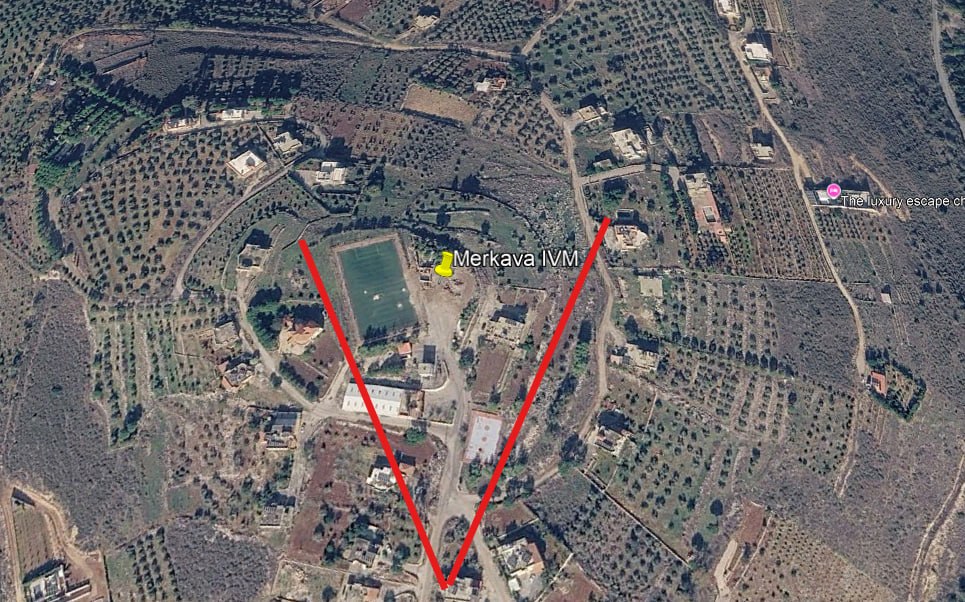
In parallel, Hezbollah intensified its UAV operations across multiple locations in southern Lebanon. The most notable incident, documented by GeoPWatch at 17:15 UTC, featured a first‑person‑view (FPV) drone equipped with a PG‑7‑VL‑AT‑1 anti‑tank projectile that successfully penetrated the armor of an Israeli Merkava IV tank in Qantara. The drone’s HEAT warhead struck the tank’s cope‑cage and continued toward the ammunition rack, causing a secondary explosion that disabled the vehicle. The video release, accompanied by a caption emphasizing the tactical novelty of the attack, marks a significant evolution in asymmetric anti‑armor capabilities.
"Hezbollah has published footage of the targeting and destruction of an IDF 'Merkava IV(M)' Tank using a Fiber‑Optic FPV drone fitted with a PG‑7‑VL‑AT‑1 Projectile," – GeoPWatch, 17:15, 1 May 2026.
Earlier in the day, at 15:39 UTC, the channel intelslava released footage of Ababil‑2T one‑way attack drones launched toward Israeli positions in the town of Taybeh. These UAVs are designed for single‑use, explosive impact missions and reflect Hezbollah’s diversification of drone types. While the video did not confirm any damage, the deployment demonstrates a sustained effort to pressure Israeli forces with low‑cost, high‑risk assets.
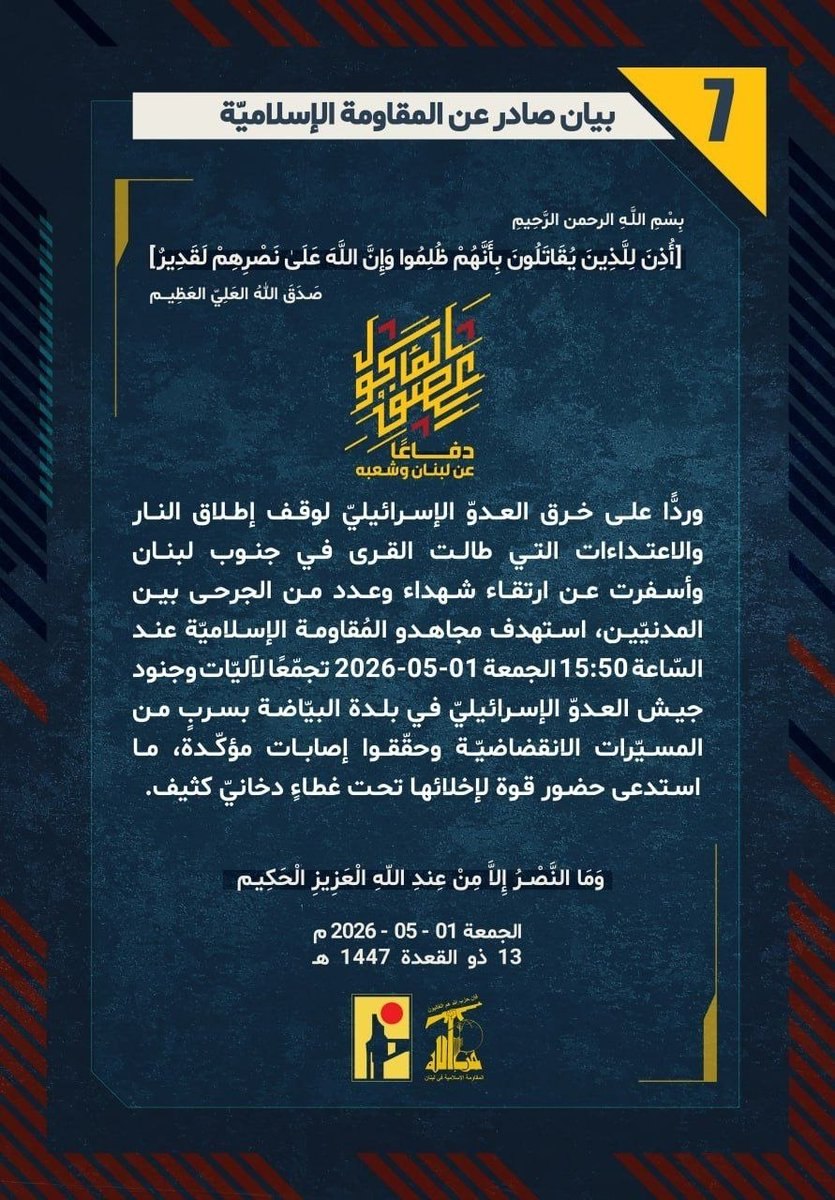
Additional drone activity was reported at 14:16 UTC in Al‑Bayyada, where a swarm of unmanned aerial systems engaged Israeli soldiers, resulting in casualties and a subsequent rescue operation. The source, monitor_the_situation, provided a single photograph of the aftermath, confirming that at least one Israeli serviceman required medical attention.
At 13:57 UTC, Hezbollah announced a separate drone strike on an Israeli Merkava tank, though details remain sparse. The claim aligns with the broader pattern of UAV‑based anti‑armor tactics observed throughout the day.
Israeli Air Defense Interceptions
The Israeli Air Force (IAF) responded to the heightened UAV threat with multiple interceptions. At 15:20 UTC, the IAF intercepted a rocket launched toward IDF positions in southern Lebanon and engaged a suspicious aerial target in the same sector, as reported by monitor_the_situation. Later, at 10:47 UTC, the IAF shot down an inbound drone targeting IDF positions, confirming the effectiveness of Israel’s layered air‑defense architecture.
These defensive actions were complemented by a broader offensive operation at 10:15 UTC, when Israeli forces struck over 40 Hezbollah positions across southern Lebanon. While the specific locations of the targets were not disclosed, the operation was described as a coordinated air campaign aimed at degrading Hezbollah’s command and control infrastructure.
Broader Operational Context
The kinetic events of 1 May 2026 illustrate a rapid escalation in both the scale and the nature of hostilities along the Israel‑Lebanon border. Israeli airpower continues to target what it identifies as Hezbollah assets, yet the inclusion of civilian structures—most prominently the monastery and school—raises the risk of broader humanitarian fallout.
Hezbollah’s adoption of FPV drones equipped with anti‑tank munitions and one‑way attack UAVs signals a tactical adaptation to Israel’s superior air capabilities. By leveraging low‑cost, readily available technology, Hezbollah can impose a persistent threat to armored units and forward operating bases, potentially forcing the IDF to allocate additional resources to counter‑UAV measures.
From an analytical perspective, the convergence of high‑value airstrikes and sophisticated UAV attacks suggests a mutually reinforcing cycle of escalation. Each side’s actions appear designed to impose operational costs on the opponent while signaling resolve to domestic and international audiences.
Monitoring agencies will continue to track casualty reports, infrastructure damage assessments, and any diplomatic responses that may arise from the destruction of religious sites. The evolving dynamics underscore the importance of real‑time intelligence to inform both strategic decision‑making and humanitarian response planning.