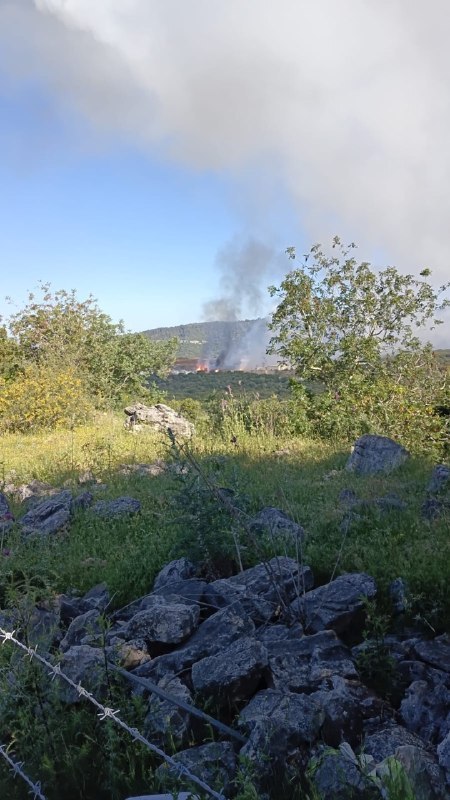
On April 30, 2026, the Israeli Defense Forces (IDF) recorded a series of coordinated actions that marked a heightened response to both aerial threats from Hezbollah and maritime attempts to breach the blockade of the Gaza Strip. The most consequential incident occurred in the early morning hours when a Hezbollah‑operated unmanned aerial vehicle (UAV) struck an Israeli military vehicle near the town of Shomera in the Northern District. According to the monitoring channel monitor_the_situation, the drone successfully hit a convoy of vehicles that were gathering for routine operations, though no casualty figures were released at the time of reporting.
Hezbollah Drone Strike Near Shomera
The UAV attack was logged at 05:57:27 local time. Israeli sources confirmed that the target was a military transport vehicle, part of a larger formation moving along a road that connects the strategic border area with central Israel. While the impact caused material damage, the IDF has not disclosed injuries or fatalities among the personnel present. The incident underscores Hezbollah’s continued capability to deploy low‑cost, remotely piloted systems against Israeli ground forces, a tactic that has been refined since the 2023 conflict escalation.
"Hezbollah launched drones targeting a gathering of Israeli military vehicles near Shomera in northern Israel, successfully striking one according to Israeli reports." – monitor_the_situation, https://t.me/monitor_the_situation/13770
The strike prompted an immediate alert across the Northern Command, leading to the deployment of additional air defense assets and a review of UAV detection protocols along the Lebanon‑Israel frontier. The IDF’s response, while not publicly detailed, is expected to involve both kinetic and electronic counter‑measures aimed at degrading Hezbollah’s drone launch capabilities.
Interception of the Global Sumud Flotilla in International Waters
At 02:10:26, Israeli naval forces intercepted approximately a dozen vessels belonging to the Global Sumud Flotilla, a humanitarian aid convoy bound for Gaza. The interception took place in international waters of the Mediterranean Sea, roughly 1,000 kilometres from the Gaza coastline. The operation, reported by Al Jazeera, involved the boarding and seizure of the boats without the use of force, as the flotilla was not armed.
"Israel seizes Global Sumud Flotilla boats 1,000km away from Gaza" – Al Jazeera, https://www.aljazeera.com/video/newsfeed/2026/4/30/israel-seizes-global-sumud-flotilla-boats-1000km-away-from-gaza?traffic_source=rss
The seized vessels were carrying medical supplies, food, and construction materials intended for civilian distribution in the enclave. Israeli officials justified the action by citing security concerns, asserting that the flotilla could be exploited to smuggle weapons or to challenge the naval blockade that Israel has maintained since 2007. No casualties were reported during the boarding, and the crews were detained for questioning before being released.
Israeli Navy Intercepts Activist Flotilla Near Gaza
Earlier, at 01:05:53, the Israeli Navy intercepted an activist flotilla attempting to breach the maritime blockade directly off the Gaza Strip. The operation, also documented by monitor_the_situation, involved the deployment of fast‑attack craft that surrounded the civilian vessels and ordered them to halt. The activists, representing a coalition of NGOs and volunteer groups, claimed the mission was purely humanitarian and non‑violent.
"Israeli Navy Intercepts Provocative Flotilla Bound for Gaza" – monitor_the_situation, https://t.me/monitor_the_situation/13748
All vessels were boarded, and the participants were escorted to an Israeli port for processing. No weapons were found, and there were no injuries on either side. The interception reinforces Israel’s policy of preventing any unauthorized maritime traffic from reaching Gaza, a stance that has drawn criticism from international human‑rights organizations but remains consistent with Israel’s security doctrine.
Surrounding of Activist Flotilla Off Crete
At 00:15:47, Israeli naval units conducted a maneuver off the coast of Crete, Greece, where they surrounded an activist flotilla traveling through international waters toward Gaza. Video footage shared by monitor_the_situation shows Israeli vessels forming a perimeter around the flotilla, signaling a coordinated effort to monitor and potentially interdict the ships before they entered the eastern Mediterranean.
"Israeli Forces Surround Gaza Flotilla off Crete, Greece" – monitor_the_situation, https://t.me/monitor_the_situation/13743
The surrounding action did not result in a direct boarding at that time, but it demonstrated Israel’s willingness to project naval power far from its own coastline to pre‑emptively address perceived security threats. The incident also raised diplomatic questions, as Greece has historically supported humanitarian aid initiatives to Gaza, though it has not formally objected to Israel’s naval operations in international waters.
Strategic Implications
The series of events on April 30 illustrates a multi‑domain Israeli response that integrates air, land, and sea capabilities. The drone strike near Shomera signals a renewed low‑intensity conflict front with Hezbollah, prompting the IDF to sharpen its UAV detection and interception posture along the northern border. Simultaneously, the naval interceptions underscore Israel’s determination to enforce the maritime blockade of Gaza, extending its operational reach to distant international waters and even to the vicinity of third‑party states such as Greece.
From a security perspective, the coordinated timing of the drone attack and the flotilla interceptions may reflect an Israeli strategy to demonstrate deterrence across multiple threat vectors. By responding swiftly to aerial aggression while simultaneously curbing humanitarian convoys that could be leveraged for illicit smuggling, Israel aims to maintain a narrative of defensive necessity.
International observers are likely to scrutinize the legality of intercepting civilian vessels in international waters, especially when no weapons are present. However, Israel’s position rests on the premise that the blockade is a lawful security measure under international law, a stance that continues to be contested in diplomatic forums.