In the early hours of 26 April 2026, a gunman opened fire at the White House Correspondents' Dinner, prompting the immediate evacuation of President Donald Trump and Vice President JD Vance, and resulting in the shooter’s death at the hands of the United States Secret Service.
Incident Overview
According to a report from the Telegram channel idkunim_il (2026-04-26T05:10:49), the assailant fired at a guard positioned at the entrance to the White House compound where the dinner was being held. The shooter’s weapon was a firearm, though the specific model was not disclosed. President Trump, who was attending the event, was unharmed. The gunman was apprehended shortly after the exchange, and the Secret Service confirmed that the suspect was killed in the lobby of the dinner venue (Source: CIG_telegram, 2026-04-26T00:49:59).
Footage captured by the channel GeoPWatch shows Vice President JD Vance being escorted out of the building amid the gunfire (2026-04-26T02:10:49). The rapid response of Secret Service agents and other security personnel prevented further casualties.
Security Response
The United States Secret Service played a decisive role in neutralizing the threat. A separate Telegram post from the same agency announced that the suspect was killed in the lobby, confirming that the shooter did not survive the encounter (2026-04-26T00:49:59). The agency’s swift action aligns with established protocols for protecting the president and senior officials during an active shooter scenario.
Following the incident, the White House issued an evacuation order for all attendees, including President Trump. The president was moved to a secure location within the White House complex, as detailed by the channel GeoPWatch (2026-04-26T00:36:35). The evacuation was completed without injury to any dignitaries or staff.
Political Reactions
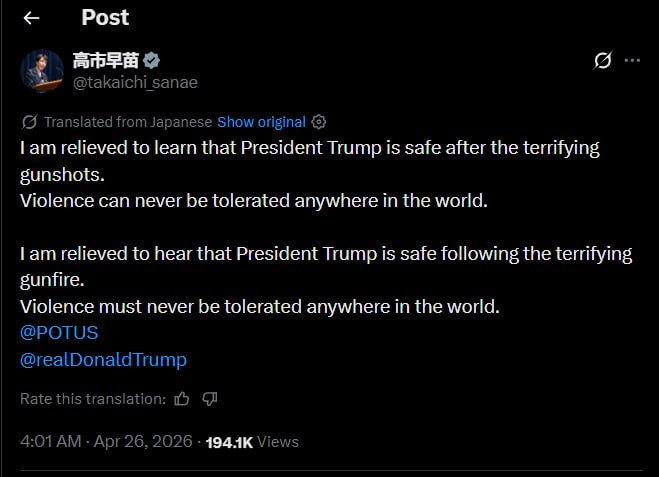
International leaders quickly expressed relief at the president’s safety. Japanese Prime Minister Sanae Takaichi posted a statement on the Telegram channel BellumActaNews, emphasizing that “violence can never be tolerated anywhere in the world” and confirming her relief that President Trump was unharmed (2026-04-26T04:32:20). The full quote is presented below:
🇯🇵🤝🇺🇸 — Japanese Prime‑Minister Sanae Takaichi following the attack on the White House Correspondents' Dinner: I am relieved to learn that President Trump is safe after the terrifying gunshots. Violence can never be tolerated anywhere in the world.
Domestic officials, including members of Congress, issued statements praising the effectiveness of the Secret Service and calling for a review of security measures at high‑profile events. No official speculation about motive or affiliation of the shooter was offered in the immediate aftermath.
Media Reporting
Major news outlets quickly disseminated the core facts. CNN, referenced by the Telegram channel rnintel, reported that President Trump was safe and that the only casualty was the shooter (2026-04-26T00:58:07). The network’s coverage focused on the rapid containment of the threat and the successful evacuation procedures.
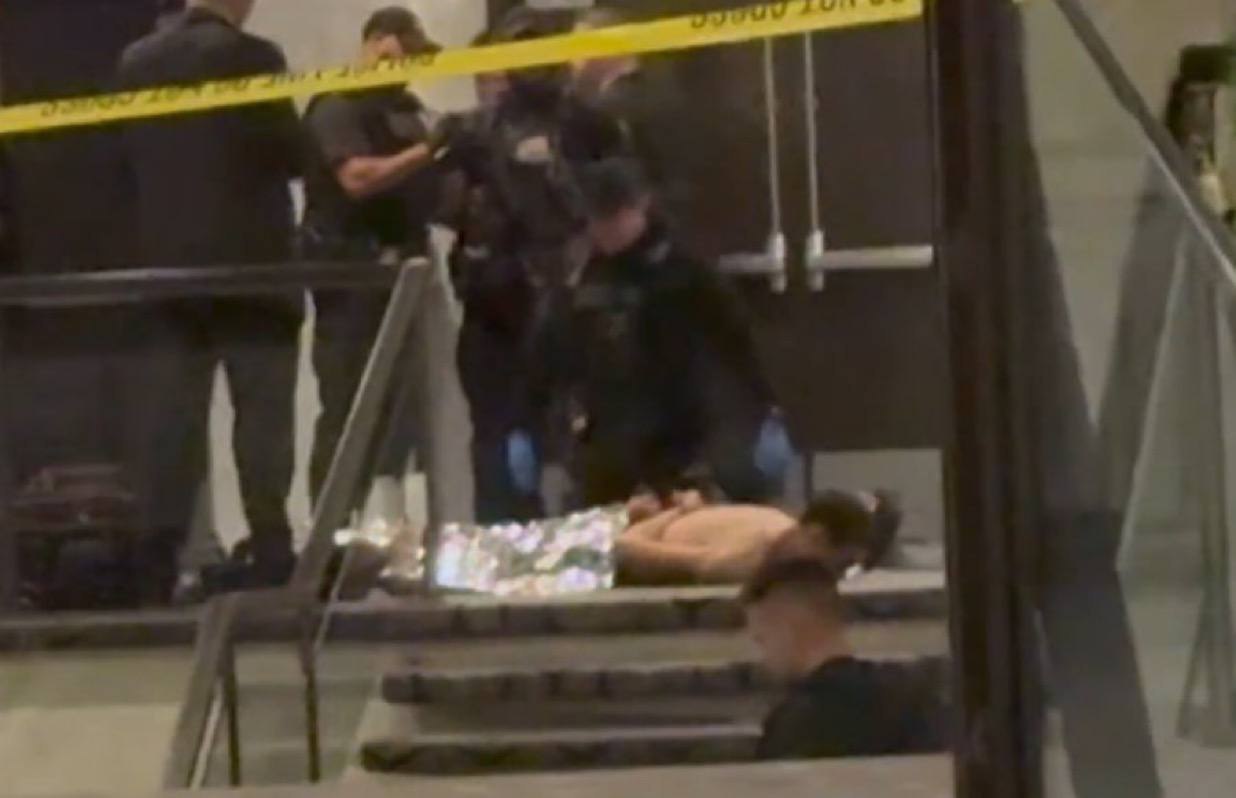
Photographic evidence of the arrested suspect was released by BellumActaNews (2026-04-26T01:41:17), providing visual confirmation of the individual taken into custody. The image was accompanied by a brief caption noting the suspect’s arrest at the dinner venue.
Implications for Security Protocols
The incident underscores the persistent risk of violent attacks at high‑visibility political gatherings. While the Secret Service’s response prevented loss of life among elected officials, the event raises questions about perimeter security, screening procedures, and intelligence sharing among federal agencies.
Analysts note that the shooter’s ability to approach a guard at the White House entrance suggests a potential lapse in access control. The rapid escalation from a single shot to a full‑scale evacuation highlights the need for continuous assessment of threat vectors, especially in environments where media, political, and diplomatic actors converge.
Future policy recommendations may include enhanced biometric verification for all attendees, increased deployment of armed security personnel in proximity to the president, and expanded coordination with local law‑enforcement agencies to monitor potential threats in real time.
In the immediate term, the White House has announced a comprehensive after‑action review, with findings to be presented to the National Security Council within the next two weeks. The review will examine the sequence of events, the effectiveness of the evacuation, and the decision‑making process that led to the shooter’s neutralization.