On 26 April 2026, Russian military operations escalated on the eastern front of Ukraine with a coordinated strike involving long‑range cruise missiles and low‑altitude first‑person view (FPV) drones. The attacks were reported by multiple open‑source monitoring channels and targeted densely populated areas in the Donbas region, the city of Kramatorsk in Donetsk Oblast, and the industrial centre of Dnipropetrovsk. While casualty figures have not been independently verified at the time of writing, the use of precision‑guided cruise missiles and the reported lack of anti‑drone defenses in Kramatorsk suggest a heightened threat to civilian infrastructure.
Kh‑101 and Kalibr Cruise Missiles Strike Donbas
At 01:19:52 UTC, the Telegram channel monitor_the_situation posted that Russian forces launched a salvo of Kh‑101 air‑launched and Kalibr sea‑launched cruise missiles from a Buyan‑M corvette operating in the Caspian Sea. The missiles were directed at strategic targets across the Donbas region, which includes the contested oblasts of Donetsk and Luhansk. The Kh‑101 is a long‑range, low‑observable cruise missile capable of delivering a conventional warhead at distances up to 2,500 km, while the Kalibr family provides a versatile sea‑based strike option with ranges of up to 1,500 km. Both weapon systems are integrated into Russia’s modernized long‑range strike doctrine.
🟠 **Russia Launches Kh‑101 and Kalibr Missiles at Donbas, Ukraine** Russian forces fired Kh‑101 air‑launched and Kalibr sea‑launched cruise missiles targeting Ukraine's Donbas region, with updated details confirming launches from a Buyan‑M corvette in the Caspian Sea. Source: https://t.me/monitor_the_situation/12945
The launch platform—a Buyan‑M class corvette—highlights Russia’s expanding use of naval assets to project power far beyond the Black Sea, leveraging the Caspian Sea as a staging area. According to the source, the missiles were aimed at “critical infrastructure” in Donbas, though specific facilities were not enumerated. No immediate reports of damage or casualties were released, but the strike underscores the capability of Russian forces to conduct deep‑strike operations without relying on airbases within contested territory.
FPV Drone Assault on Kramatorsk
Four hours later, at 04:25:48 UTC, the same monitoring channel reported that Russian FPV drones penetrated the eastern suburbs of Kramatorsk, a city of roughly 150,000 residents that serves as a logistical hub for Ukrainian defence forces. The drones, described as “fibre‑optic FPV” systems, are equipped with small explosive payloads and are manually piloted in real time, allowing operators to adjust flight paths in response to ground conditions. Ukrainian sources indicated that the city’s anti‑drone defenses are limited, leaving the suburbs vulnerable to low‑altitude incursions.
Russian fibre optic FPV drones targeted eastern suburbs of Kramatorsk as frontline advances closer, with Ukrainian sources noting lack of anti‑drone defenses in the city. Source: https://t.me/monitor_the_situation/12952
While the report did not specify casualties, the presence of civilian housing and critical utilities in the affected suburbs raises the risk of collateral damage. The use of FPV drones reflects a tactical shift toward inexpensive, highly maneuverable weapons that can saturate air‑defence systems and strike with precision at short range.
Renewed Drone Attacks on Dnipropetrovsk
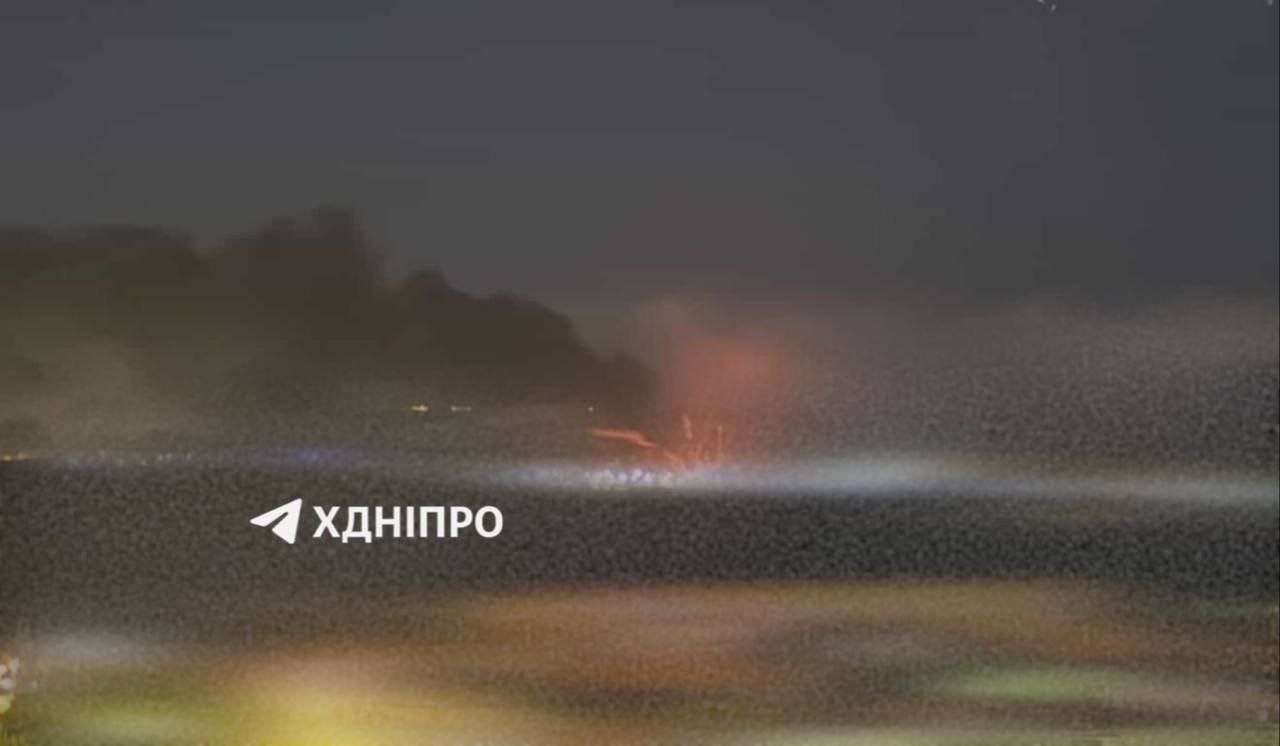
At 03:43:38 UTC, the Telegram channel intelslava documented a separate wave of drone attacks on Dnipropetrovsk, an industrial city located on the Dnipro River. The report noted that after a brief lull, Russian strike drones resumed operations over the city, delivering kinetic impacts on unspecified targets. The channel shared a photograph of the aftermath, though the image did not reveal the extent of structural damage.
After a short break, Dnipropetrovsk again became the target of attacks. Russian strike drones attacked the city. Source: https://t.me/intelslava/87089
Similar to the Kramatorsk incident, no casualty figures were provided, and the identity of the operating unit was not disclosed. The recurrence of drone strikes across multiple Ukrainian cities within a single day suggests a coordinated campaign aimed at stretching Ukrainian air‑defence resources and creating a persistent threat environment.
Operational Implications
The simultaneous deployment of long‑range cruise missiles and low‑altitude FPV drones indicates a layered approach to offensive operations. Cruise missiles provide the ability to strike high‑value, hardened targets deep within Ukrainian territory, while FPV drones enable rapid, low‑cost attacks on softer targets and can be employed to probe or overwhelm air‑defence systems. The lack of reported Ukrainian anti‑drone measures in Kramatorsk points to a capability gap that could be exploited in future operations, especially as Russia continues to field increasingly sophisticated drone swarms.
From a strategic perspective, the attacks serve multiple objectives: degrading Ukrainian logistical networks, testing the resilience of civilian infrastructure, and signaling Russia’s capacity to project power from maritime platforms far from the front line. The use of a Caspian Sea corvette for missile launches also demonstrates an expansion of Russia’s operational theatre, potentially complicating NATO’s maritime monitoring efforts in the region.
Conclusion
On 26 April 2026, Russian forces executed a multi‑domain strike campaign that combined Kh‑101 and Kalibr cruise missiles with FPV drone incursions over Kramatorsk and Dnipropetrovsk. While immediate casualty data remains limited, the attacks underscore a clear escalation in both the scale and diversity of Russian weaponry employed against Ukrainian urban centres. Continued monitoring of anti‑drone defence development and missile interception capabilities will be essential for assessing the evolving threat landscape on the eastern front.