On the night of April 22‑23, Ukraine experienced a series of kinetic engagements across multiple fronts, ranging from a lethal Russian UAV strike in Dnipro to large‑scale aerial interceptions over the Donbas and a fire at the Feodosia oil depot in Crimea.
Russian UAV strike on Dnipro
At 03:42 UTC, a Russian‑launched drone attacked the city of Dnipro, killing two civilians and wounding at least eight others. Fires erupted in two multi‑storey apartment blocks, prompting emergency services to evacuate residents. The incident was confirmed by Governor Oleksandr Hanzha, who reported that the strike targeted a residential area rather than a military objective. The source channel monitor_the_situation provided the initial report.
“A Russian drone strike overnight on April 22–23 targeted Dnipro, killing two civilians and injuring at least eight others, with fires breaking out in apartment buildings, according to Ukraine's Governor Oleksandr Hanzha.”
The use of a single UAV to inflict civilian casualties underscores the continued Russian reliance on low‑cost, expendable drones to achieve psychological impact and to stretch Ukrainian emergency response capacities. While the casualty count remains modest, the incident highlights the vulnerability of densely populated urban zones to precision‑guided loitering munitions.
Ukrainian air‑defence success in the Donbas
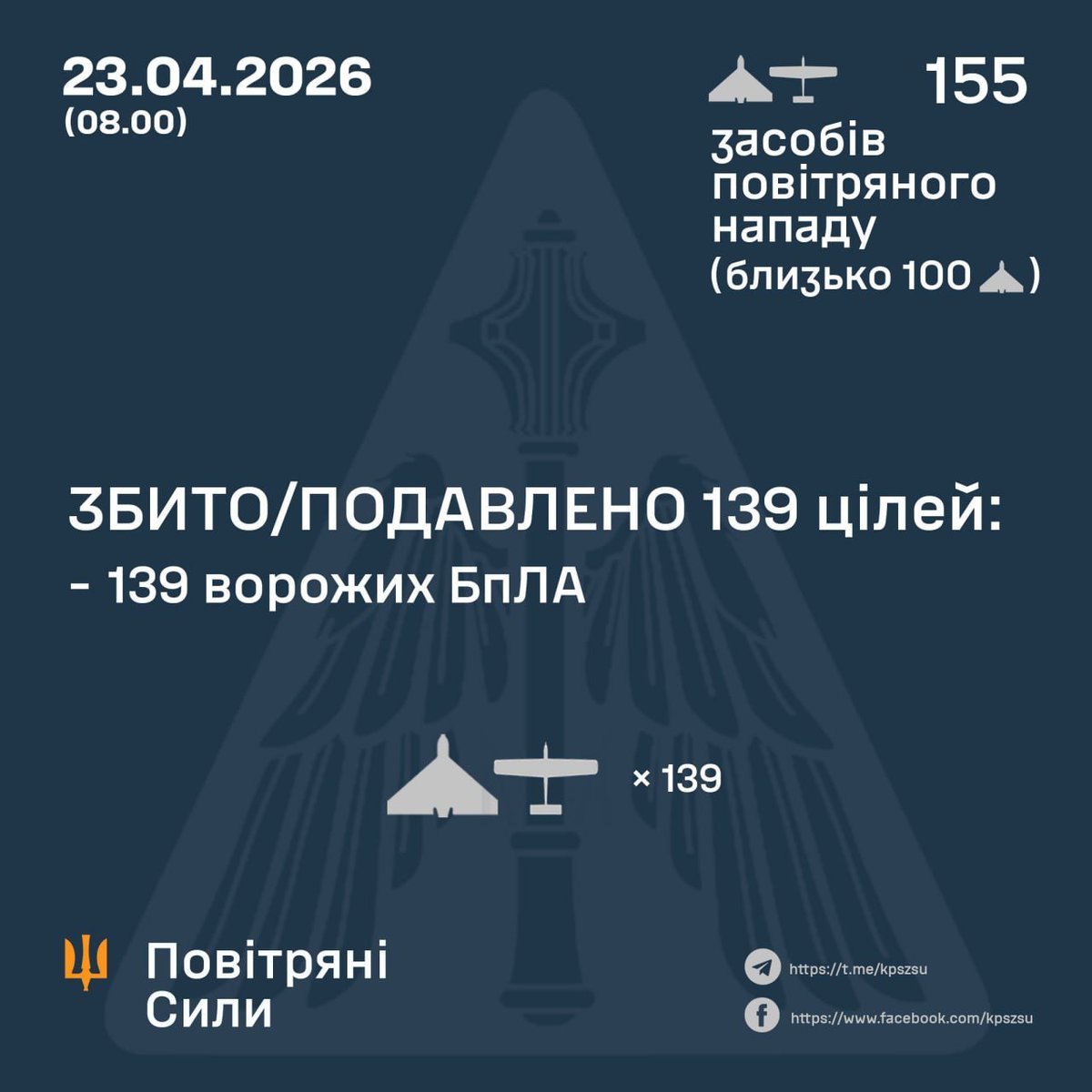
Between 05:41 and 05:50 UTC, Ukrainian air‑defence units engaged a massive wave of Russian UAVs launched from the south. According to monitor_the_situation, Ukrainian systems shot down 139 of 155 drones, including roughly 100 Shahed‑type loitering munitions. Interceptions were recorded at nine separate locations across the Donbas region, indicating a coordinated Russian aerial offensive.
The Ukrainian Tempest air‑defence system also downed a Gerbera reconnaissance drone, as reported by the same source at 05:36 UTC.
“Ukrainian air defenses intercepted or suppressed 139 out of 155 Russian drones launched overnight April 22‑23, including around 100 Shahed UAVs, with impacts at 9 locations amid intensified Russian aerial operations.”
The high interception ratio reflects the maturation of Ukraine’s layered air‑defence architecture, which now integrates legacy Soviet systems, Western‑supplied medium‑range missiles, and the newly fielded Tempest platform. The ability to neutralise the majority of Shahed drones reduces the threat to critical infrastructure and frontline positions, while also imposing a logistical cost on Russian UAV launch operations.
Explosion at Feodosia oil depot, Crimea
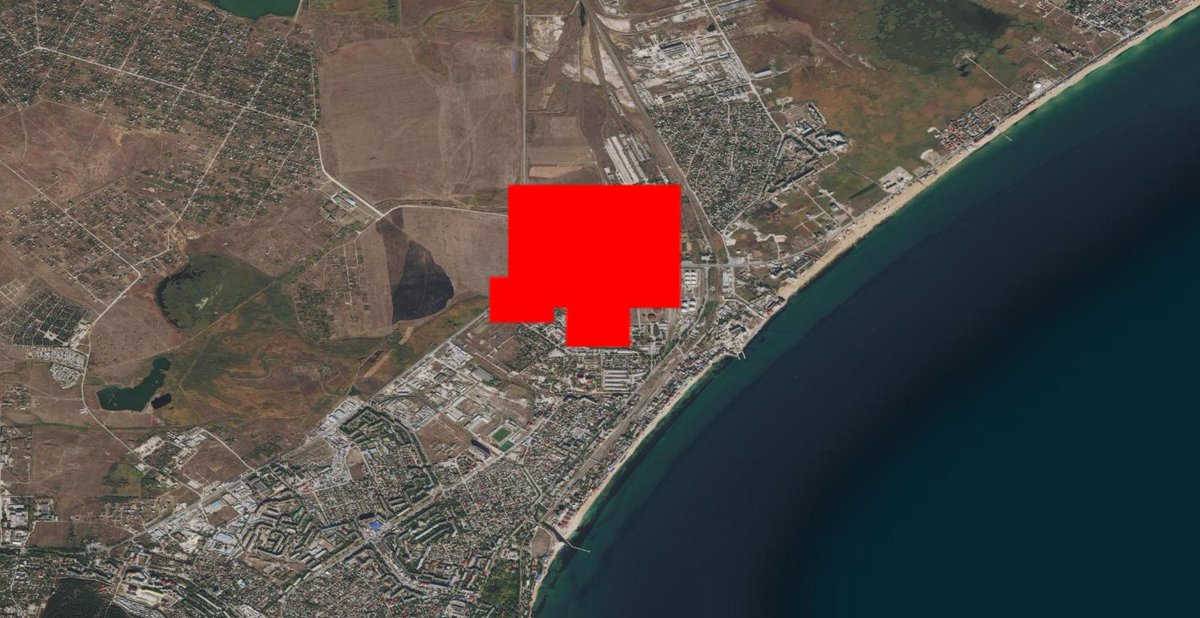
At 05:50 UTC, a series of explosions ripped through the Feodosia oil depot on the Crimean peninsula. The blasts ignited a large fire that was subsequently detected by the NASA FIRMS satellite system. The depot had previously suffered attacks that destroyed more than half of its fuel storage capacity. The event was documented by monitor_the_situation, which also released a photograph of the burning facility.
“Renewed explosions overnight at the Feodosia oil depot in Crimea triggered a major fire detected by NASA FIRMS, following prior attacks that destroyed over half of its fuel tanks.”
Feodosia supplies a significant share of fuel to the Russian‑controlled peninsula. The renewed damage could constrain local energy distribution, increase reliance on overland supply lines, and raise the risk of secondary incidents. Although no immediate casualty figures were released, the incident demonstrates the strategic value placed on energy infrastructure in the broader conflict calculus.
Ground engagement: Russian buggy assault repelled
In the early morning hours, Ukrainian forces on the Donbas frontline near the Pokrovsk axis repelled a Russian assault using light‑armoured buggies. The engagement, reported by monitor_the_situation, demonstrated continued small‑unit offensive actions by Russian forces and a robust defensive response by Ukrainian troops.
Buggy‑type vehicles, while offering limited protection, provide high mobility across the contested steppe terrain. Their deployment suggests Russian attempts to probe Ukrainian defensive depth and to exploit any gaps in the frontline. The successful repulse indicates that Ukrainian infantry units maintain effective anti‑vehicle capabilities and situational awareness despite ongoing aerial pressure.
Overall assessment
The events of 23 April illustrate a multi‑dimensional kinetic environment in Ukraine. Russian forces employed both high‑altitude UAVs and low‑tech ground vehicles, while Ukrainian defenses responded with layered air‑defence systems and rapid ground‑force reactions. The civilian toll remains limited to the Dnipro strike, but the scale of aerial interceptions underscores the intensity of the ongoing aerial campaign. Simultaneously, the fire at Feodosia highlights the conflict’s spill‑over effects on regional energy security, and the buggy assault reveals that conventional ground manoeuvres continue alongside aerial warfare.