On 19 April 2026, a series of coordinated Iranian naval actions in the Strait of Hormuz and the broader Persian Gulf produced the most severe disruption of commercial shipping in the waterway since the 2022 escalation. Iranian forces fired on vessels, blocked sanctioned tankers, and threatened to close the strait, while the United States Navy conducted a full‑scale mine‑clearance operation that halted all tanker movements for the day. The combined effect forced multiple ships to reverse course, amplified insurance premiums, and heightened the risk of inadvertent escalation between Tehran and Washington.
Iranian Attacks Force Vessels to Reverse Course
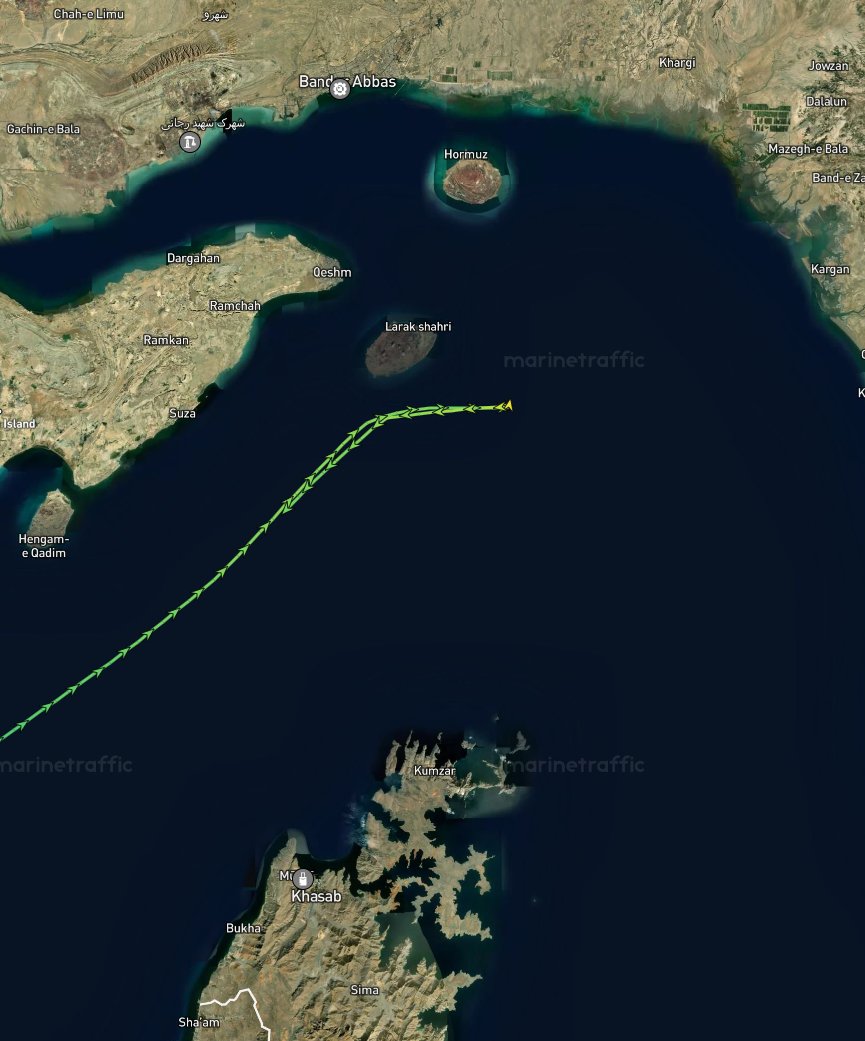
At 17:43 UTC, monitor_the_situation reported that Iranian forces engaged several commercial vessels transiting from the Strait of Hormuz to the Gulf of Oman. Video playback from MarineTraffic shows ships abruptly turning back toward the Gulf of Oman, a maneuver that is atypical for routine traffic. The report notes that the attacks began on 17 April and continued through 19 April, compelling at least five merchant vessels to abort their passages. No casualties were reported, but the incident underscores a shift from low‑level harassment to direct kinetic interference.
"Iranian Attacks Force Ships to Turn Back in Strait of Hormuz" – monitor_the_situation, https://t.me/monitor_the_situation/11572
Key weapons were not disclosed; the attacks appear to have involved small‑caliber fire or warning shots, consistent with prior IRGC tactics of using “bullets” to signal intent without causing mass casualties. The organizations implicated include the Islamic Revolutionary Guard Corps (IRGC) and the Joint Maritime Information Center, which monitors regional maritime activity.
U.S. Mine‑Clearance Halts All Tanker Traffic
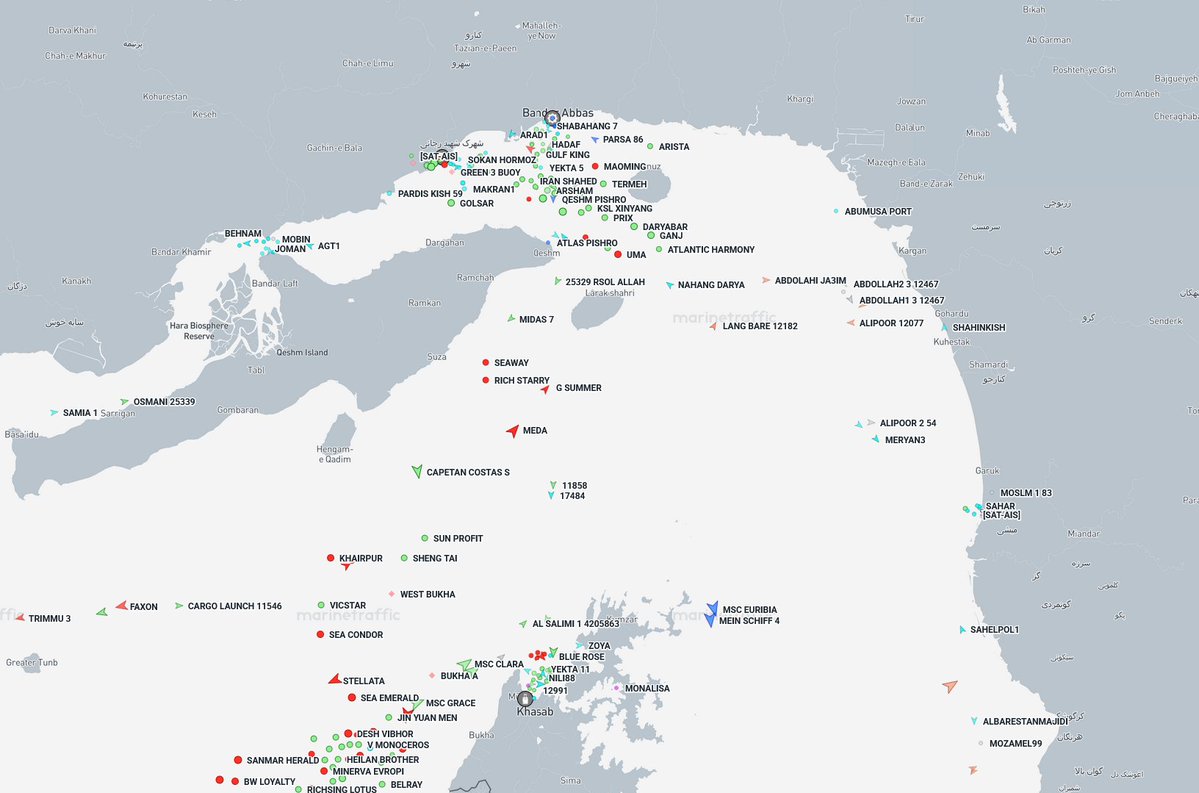
Earlier that afternoon, at 17:28 UTC, the United States Navy began a coordinated mine‑clearance operation in the Strait of Hormuz, responding to intelligence that Iran had deployed naval mines to block the waterway. CNN, cited by monitor_the_situation, confirmed that zero tankers crossed the strait on 19 April, a direct result of the clearance effort. The operation involved surface vessels equipped with mine‑hunting sonar and airborne assets deploying magnetic sweep gear. While no mines were confirmed detonated during the operation, the precautionary shutdown effectively immobilized a critical segment of global oil logistics.
"No Tankers Cross Strait of Hormuz Amid US Mine Clearance" – monitor_the_situation, https://t.me/monitor_the_situation/11566
The United States Navy’s involvement highlights the strategic importance of the strait, which transports roughly 20 percent of the world’s petroleum. The presence of U.S. mine‑clearance teams also signals Washington’s willingness to project power to keep the chokepoint open, even as diplomatic channels remain strained.
IRGC’s Hostile Posture Extends Across the Persian Gulf
At 16:18 UTC, the Joint Maritime Information Center reported that the Iranian Revolutionary Guard Navy had adopted a hostile stance toward both merchant and naval vessels operating in the Persian Gulf. The statement, relayed by monitor_the_situation, cited “increased regional tensions and the presence of United States naval forces” as justification for the posture. Although no direct engagements were recorded in this window, the IRGC’s declaration serves as a warning to commercial operators and foreign warships alike.
"Iranian Revolutionary Guard Naval Forces take hostile posture toward merchant and naval vessels" – monitor_the_situation, https://t.me/monitor_the_situation/11553
The IRGC’s messaging aligns with a broader pattern of using maritime intimidation to extract political concessions, particularly in the context of ongoing U.S.–Iran negotiations over nuclear and regional issues.
Additional Incidents Illustrate Escalating Maritime Friction
Several other events on 19 April reinforce the perception of a rapidly deteriorating security environment:
- 07:01 UTC – Direct Fire on Vessels: Iranian forces opened fire on passing ships, causing a complete standstill of traffic in the strait. The incident was captured on video and disseminated by monitor_the_situation.
- 09:27 UTC – Blockade of Sanctioned Tankers: Two internationally sanctioned oil tankers were intercepted and forced to turn back, demonstrating Iran’s willingness to enforce its own embargoes despite U.S. sanctions.
- 11:15 UTC – Attack on Indian‑Flagged Tankers: India’s External Affairs Ministry confirmed that two Indian‑flagged crude‑oil carriers were attacked while attempting to transit the strait. No injuries were reported, but the incident prompted New Delhi to issue a diplomatic protest.
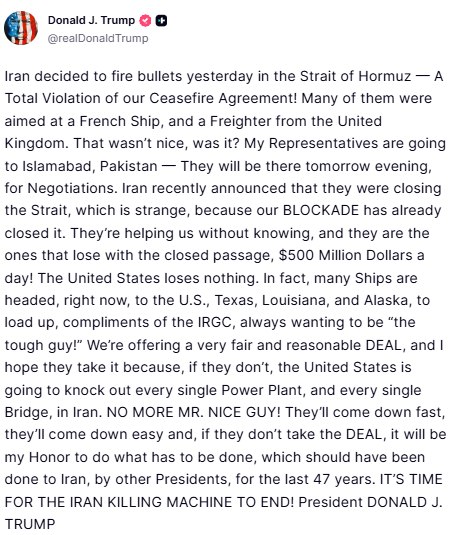
- 12:16 UTC – Political Rhetoric from the United States: Former President Donald Trump, via Truth Social, claimed Iran fired bullets at French and British vessels and threatened “massive retaliation.” While the statement was political, it referenced the same “bullets” motif used in earlier IRGC warnings.
Each of these incidents was reported by open‑source channels such as monitor_the_situation, GeoPWatch, and the Jerusalem Post, underscoring the role of social‑media monitoring in real‑time conflict analysis.
Strategic Implications and Risk Assessment
The convergence of Iranian kinetic actions and U.S. mine‑clearance operations creates a compound risk environment. From a logistical perspective, the forced reversals and traffic standstill have already increased freight rates for oil and container shipments by an estimated 8‑12 percent, according to market analysts. From a security standpoint, the lack of casualties does not diminish the potential for accidental escalation; misidentification of vessels or inadvertent triggering of mines could quickly spiral into a broader naval confrontation.
Furthermore, the IRGC’s willingness to target sanctioned tankers while simultaneously threatening Western‑flagged ships suggests a calibrated strategy aimed at pressuring both the United Nations sanctions regime and the United States’ regional naval dominance. The United States’ rapid deployment of mine‑clearance assets, while preserving the strait’s openness, also signals a readiness to engage militarily if Iranian actions threaten freedom of navigation.
In the absence of a diplomatic breakthrough, the pattern observed on 19 April is likely to persist, with intermittent spikes in kinetic activity punctuated by U.S. counter‑measures. Stakeholders—including shipping companies, insurers, and regional governments—should monitor official communications from the IRGC, the United States Navy, and international maritime authorities for updates on navigation advisories and potential escalation triggers.