The United States Navy initiated a formal blockade of Iranian ports in the Arabian Sea early on 18 April 2026, directing twenty‑one merchant vessels to comply with the restriction. The operation, confirmed by U.S. Central Command (CENTCOM) and reported by monitor_the_situation, marks the most expansive maritime enforcement action against Iran since the 2020 Gulf tensions.
Blockade Enforcement in the Arabian Sea
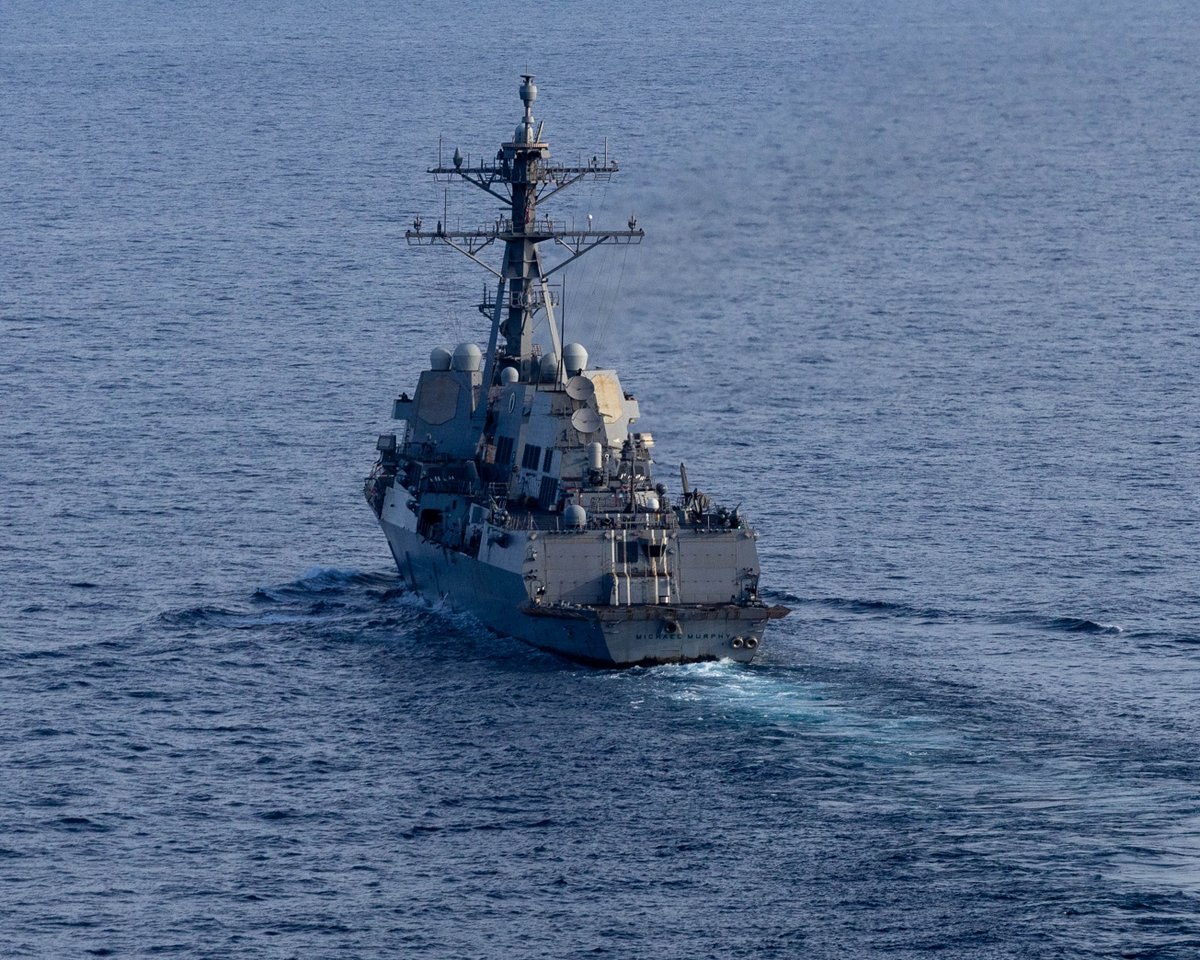
At 00:52:51 UTC, the guided‑missile destroyer USS Michael Murphy began patrolling a designated corridor in international waters of the Arabian Sea, broadcasting compliance orders to commercial traffic bound for Iranian ports such as Bandar Abbas and Khorramshahr. No weapons were employed, and no casualties were reported. The blockade is intended to interdict oil and dual‑use cargoes, leveraging the United Nations‑mandated sanctions framework while remaining within the bounds of international law.
"USS Michael Murphy patrols as US forces direct 21 ships complying with the naval blockade on Iranian ports, amid ongoing tensions with Iran," the source noted (monitor_the_situation, https://t.me/monitor_the_situation/11261).
Iranian Tankers Attempt to Evade Near the Strait of Hormuz
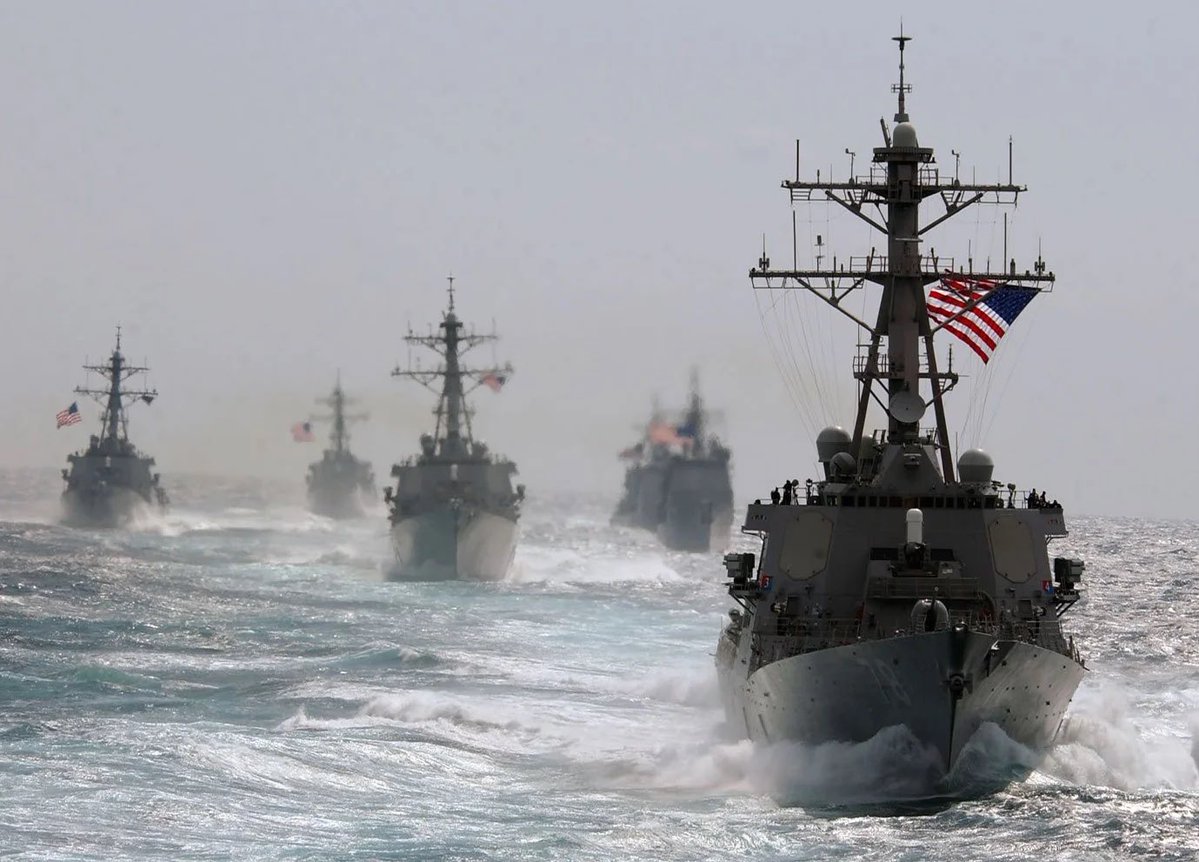
Simultaneously, five Iranian‑flagged oil tankers altered their electronic navigation signatures in an effort to obscure their routes near the Strait of Hormuz. At 05:30:50 UTC, satellite and AIS data showed the vessels masking their positions as U.S. destroyers maintained a defensive perimeter in the Persian Gulf’s international waters. The maneuver, described by monitor_the_situation as an “attempt to break the US blockade,” did not result in any hostile engagement.
"Five Iranian oil tankers hid navigation data to challenge the US naval blockade enforced by destroyers near the Strait of Hormuz," the report stated (monitor_the_situation, https://t.me/monitor_the_situation/11269).
Oil Tankers Depart Gulf of Oman Ahead of Blockade Activation
In a related development, five oil tankers stationed near Iran’s eastern port in the Gulf of Oman departed the area just hours before the blockade officially took effect. Satellite imagery captured at 05:47:42 UTC confirmed the vessels’ exit, suggesting pre‑emptive compliance by commercial operators wary of interdiction. No weapons were involved, and the movement was purely logistical.
"Oil Tankers Exit Gulf of Oman Ahead of US Iran Blockade," the channel reported (monitor_the_situation, https://t.me/monitor_the_situation/11284).
US Carrier Group Transit Through the Suez Canal
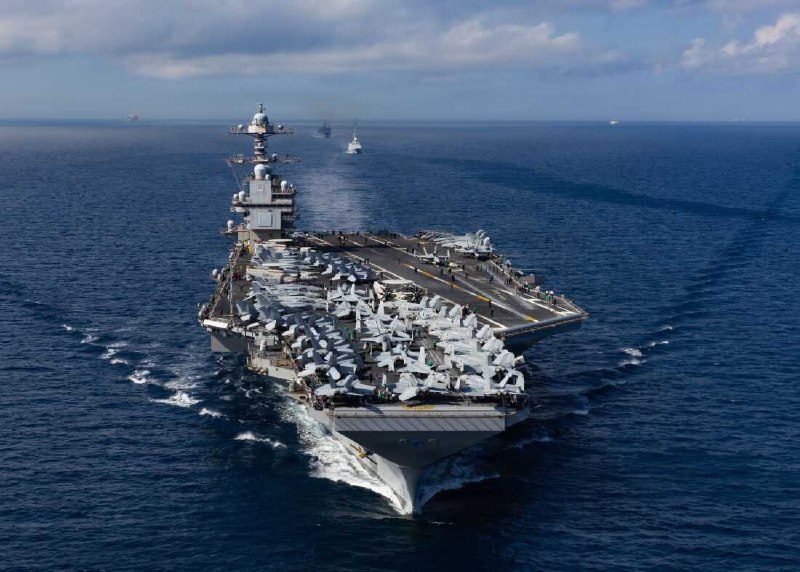
While the blockade unfolded, the United States projected power elsewhere. The carrier strike group centered on USS Gerald R. Ford completed a 296‑day deployment and transited the Suez Canal at 03:40:09 UTC, emerging into the Red Sea. The transit, documented by monitor_the_situation, underscores the Navy’s global reach and its capacity to redeploy assets rapidly in response to evolving threats.
"USS Gerald R. Ford Carrier Strike Group Transits Suez Canal, Egypt," the source noted (monitor_the_situation, https://t.me/monitor_the_situation/11265).
Arrival of USS Gerald R. Ford in the Red Sea
Shortly thereafter, at 02:33:00 UTC, the carrier arrived in the Red Sea, a move confirmed by a U.S. official speaking to CNN and relayed by rnintel. The presence of the carrier in this strategic waterway adds a further layer of deterrence, complementing the Arabian Sea blockade and signaling U.S. intent to maintain freedom of navigation across multiple theaters.
"The USS Gerald R. Ford has arrived in the Red Sea, a U.S. official tells CNN," the report stated (rnintel, https://t.me/rnintel/59447).
Strategic Context and Maritime Chokepoints
The coordinated actions illustrate a multi‑pronged U.S. strategy targeting Iran’s maritime logistics. By enforcing a blockade in the Arabian Sea, pressuring tankers in the Gulf of Oman, and monitoring traffic through the Strait of Hormuz, the United States aims to curtail Iran’s ability to export oil and acquire critical materials. The simultaneous deployment of a carrier strike group through the Suez Canal and into the Red Sea demonstrates a readiness to project force across the Indian Ocean, the Red Sea, and the Eastern Mediterranean.
Operational Implications
All reported events occurred without the exchange of fire, indicating a deliberate preference for coercive diplomacy over kinetic escalation. The absence of casualties and weapons use suggests that both sides are adhering to a calibrated threshold, where economic pressure and maritime denial replace direct combat. However, the repeated attempts by Iranian tankers to conceal navigation data highlight a willingness to test the blockade’s limits, potentially raising the risk of accidental encounters.
Conclusion
As of 18 April 2026, the United States has established a sustained maritime containment regime against Iran, leveraging naval assets across three critical chokepoints: the Arabian Sea, the Gulf of Oman, and the Strait of Hormuz. The coordinated blockade, coupled with the strategic positioning of the USS Gerald R. Ford, reinforces U.S. commitment to safeguarding global energy routes while applying pressure on Tehran’s maritime trade. Ongoing monitoring will be required to assess whether Iranian operators adapt further or whether diplomatic channels can de‑escalate the situation.