On April 18, 2026, Ukrainian security forces ended a deadly hostage situation at a Velmart hypermarket in Kyiv, where a shooter armed with a Kel‑Tec Sub‑2000 opened fire, killed two civilians and injured five before being neutralized. Video footage released by the Telegram channel intelslava shows law‑enforcement units surrounding the supermarket, negotiating via loudspeaker, and ultimately breaching the premises to eliminate the assailant. The incident, first reported at 16:00 UTC, marks the most severe urban kinetic event of the day and illustrates the persistent risk of infiltration attacks within densely populated areas.
"The shooter, identified as a Moscow‑born individual who later moved to Bakhmut, was killed after an exchange of fire with Ukrainian Special Forces," reported rnintel (https://t.me/rnintel/59467).
The Kyiv episode follows an earlier report at 15:02 UTC from intelslava describing the same shooter taking hostages inside the hypermarket after firing on pedestrians in the surrounding streets. The attacker was seen moving with an automatic weapon, targeting civilians at point‑blank range. Ukrainian law‑enforcement officers responded with a coordinated operation that culminated in the shooter's elimination, as confirmed by the later update at 16:00 UTC.
Parallel Threats in Central Ukraine
In the Kirovohrad Region, a separate infiltration event unfolded at 15:27 UTC. Ukrainian Special Units engaged a terrorist during a failed rescue attempt, resulting in the operative’s death. The incident, documented by the channel monitor_the_situation, did not involve firearms on the part of the terrorist, suggesting a possible suicide‑bomb or improvised device scenario, though details remain limited.
Ukrainian Drone‑Enabled Counter‑Artillery Operations
Ukraine’s 72nd Mechanized Brigade employed first‑person‑view (FPV) drones to strike Russian artillery assets in the Kharkiv Oblast at 13:20 UTC. The drones successfully destroyed a Msta‑S self‑propelled howitzer and a D‑30 towed howitzer, degrading Russian fire support capabilities on the frontline. The operation, reported by monitor_the_situation, demonstrates the expanding role of low‑cost UAVs in precision targeting of high‑value enemy equipment.
Later, at 10:56 UTC, Ukrainian drone units from the 414th “Magyar Birds” and 412th “Nemesis” brigades eliminated a Russian TOS‑1A Solntsepyok heavy flamethrower system in the occupied Zaporizhzhia region. The TOS‑1A, capable of delivering thermobaric munitions, represents a significant threat to infantry and fortified positions; its loss reduces Russian saturation‑fire options in the sector.
Naval and Air‑Defense Developments
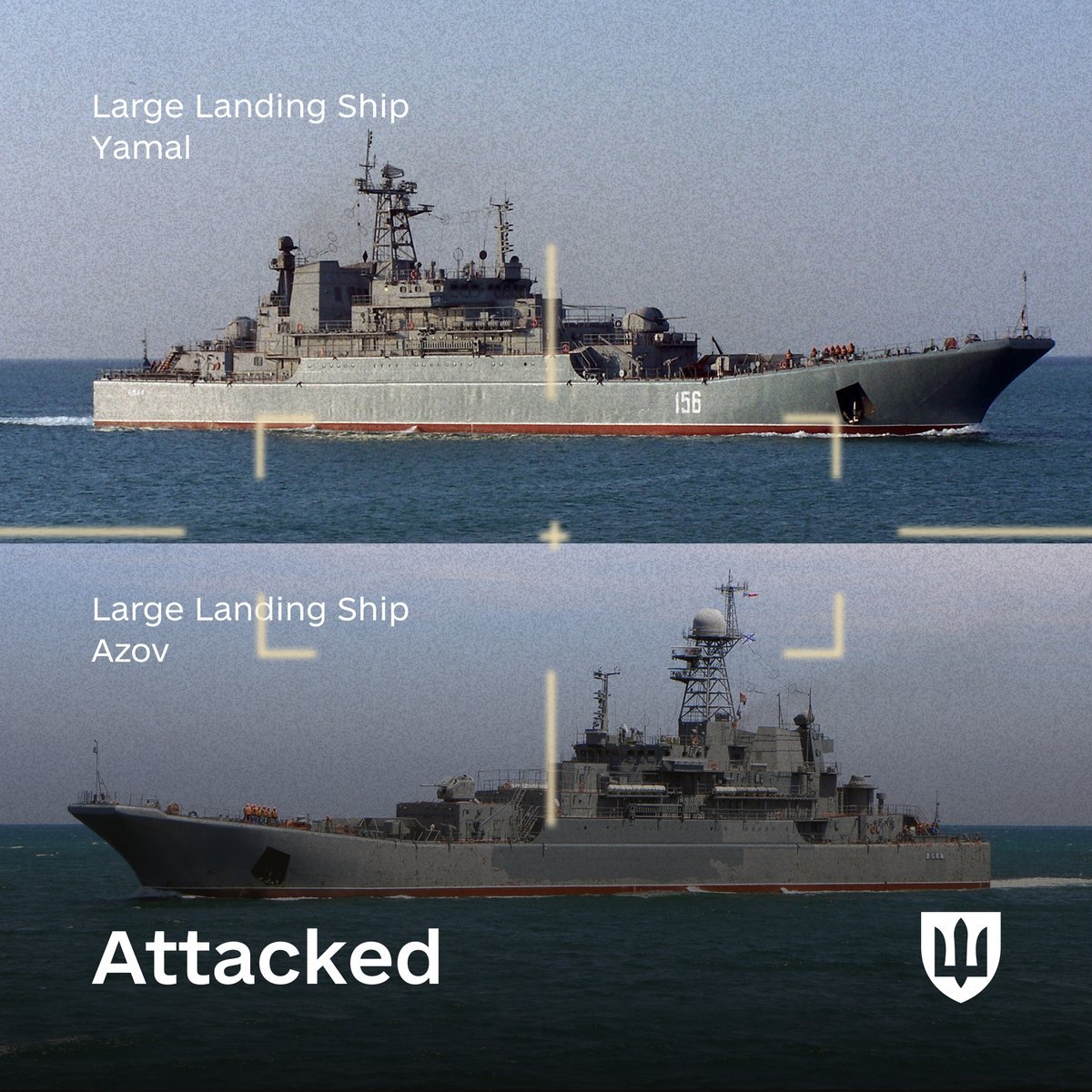
In the Black Sea theater, Ukraine’s Security Service (SBU) reported a strike on three Russian warships stationed in occupied Crimea at 11:09 UTC. The targeted vessels included the landing ships Yamal and Azov, as well as a Grachonok‑class patrol boat, alongside associated radar, communications infrastructure, and fuel storage facilities. Photographic evidence posted by monitor_the_situation confirms damage to the vessels and supporting assets, indicating a coordinated maritime interdiction effort.
On the eastern front, Russian forces deployed new interceptor drone units at 06:30 UTC to protect their troops from Ukrainian UAV incursions. The deployment, noted by the same monitoring channel, reflects Moscow’s adaptation to the growing Ukrainian drone threat and suggests an escalation in electronic‑warfare and counter‑UAV capabilities.
Analytical Assessment
The concentration of kinetic events on April 18 underscores a multi‑domain contest in Ukraine, where urban infiltration attacks coexist with sophisticated drone‑enabled strikes against conventional artillery and naval platforms. The Kyiv supermarket incident highlights vulnerabilities in civilian spaces, prompting a reassessment of security protocols for public venues. Simultaneously, Ukraine’s effective use of FPV drones against Russian artillery and heavy weapons demonstrates a cost‑effective force multiplier that erodes enemy firepower without exposing ground troops to direct combat.
Russian counter‑measures, notably the deployment of interceptor drones, indicate an awareness of the shifting balance toward unmanned systems. However, the continued success of Ukrainian UAV operations suggests that Russia’s defensive posture remains insufficient to fully neutralize the threat. The maritime strike in Crimea further illustrates Ukraine’s capacity to project power beyond its borders, targeting high‑value Russian assets in occupied territories.
Overall, the events of April 18 reflect an intensifying pattern of asymmetric engagements, where both sides leverage technology and rapid response units to achieve tactical gains. Monitoring these developments remains critical for anticipating future escalation pathways and for informing strategic decision‑making across the conflict spectrum.