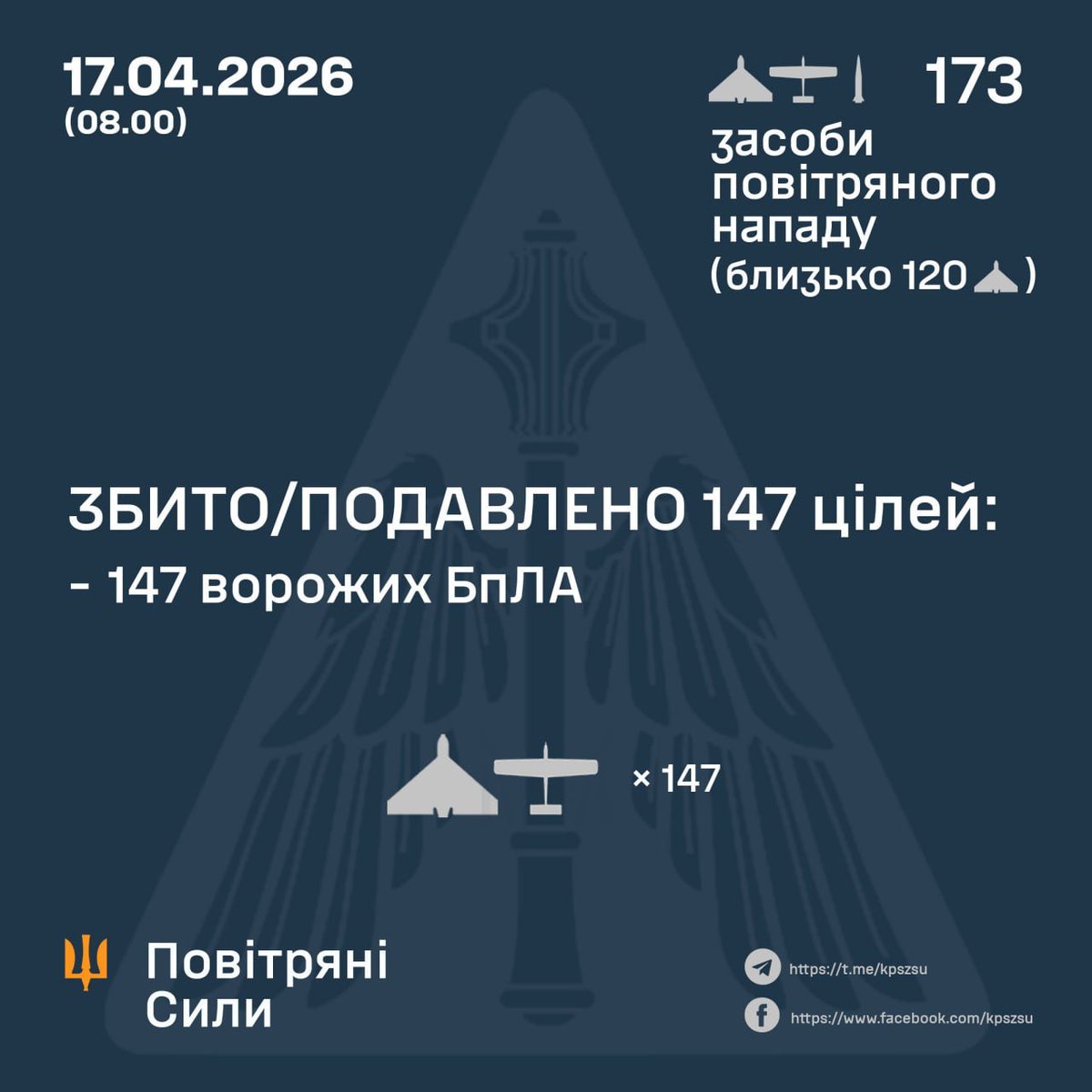
On the morning of 17 April 2026, Ukraine’s air‑defence forces reported a large‑scale Russian drone barrage targeting Kyiv and surrounding regions. According to the monitoring channel monitor_the_situation, Ukrainian systems shot down 147 of 173 unmanned aerial vehicles (UAVs), leaving 26 drones unaccounted for. The engagement underscores the intensity of the aerial contest and the growing reliance on UAVs by both belligerents.
Ukrainian forces intercept 147 of 173 drones launched in ongoing Russian aerial assault targeting multiple areas including Kyiv, with 26 still unaccounted for.
The intercepted drones were a mix of Shahed, Gerbera and other Russian‑manufactured platforms, many equipped with small warheads intended for precision strikes on command‑and‑control nodes. Ukrainian air‑defence units employed a layered approach, combining legacy Soviet‑era systems with newer, privately‑operated missile batteries, as reported by the same source (source).
Ukrainian Air‑Defence Performance
The successful interception rate—approximately 85 %—reflects several operational improvements. First, the integration of private air‑defence companies, such as the 414th Unmanned Strike Aviation Brigade “Birds of Magyar,” has expanded the coverage footprint around major urban centres. Second, electronic‑warfare (EW) measures appear to have disrupted the guidance of at least one Shahed drone that crashed onto the roof of a trolley‑bus depot in Dnipro, suggesting effective jamming of command links (source).
Ukrainian officials have not disclosed casualty figures from the Kyiv barrage, but the high interception count likely prevented further civilian injuries and infrastructure damage.
Russian UAV Campaign and Notable Failures
While the Kyiv attack demonstrated Russia’s capacity to launch massed UAV waves, several high‑profile failures were recorded on the same day. A Russian Gerbera UAV carrying an estimated 5 kg warhead attempted to strike a mobile Ukrainian air‑defence unit but failed to detonate, as captured on video by the @Archer83Able channel (source). The incident highlights persistent reliability issues with newer long‑range UAVs.
In a separate event, a Shahed drone veered off course—likely due to Ukrainian EW—and impacted the roof of a trolley‑bus depot in Dnipro, causing limited structural damage but no reported casualties (source).
Russian drone incursions also extended beyond Ukrainian borders. A Geran‑2 platform penetrated Romanian airspace for 16 km during attacks on the Izmail region, prompting a diplomatic note from Romania’s Ministry of Defence (source). The episode illustrates the cross‑border volatility of UAV operations in the wider theater.
Ukrainian Counter‑UAV Operations
Ukraine’s own UAV programme continued to expand its offensive reach. The 414th Unmanned Strike Aviation Brigade “Birds of Magyar” employed drones to destroy a Russian Pantsir‑S1 air‑defence system in occupied Mariupol, marking the 16th Russian air‑defence loss in April (source).
In the Donetsk region, the private Lazar Group used bomber‑type drones to strike Russian BM‑30 Smerch multiple‑rocket‑launcher (MRLS) batteries, disabling several launchers and associated fire‑control equipment (source).
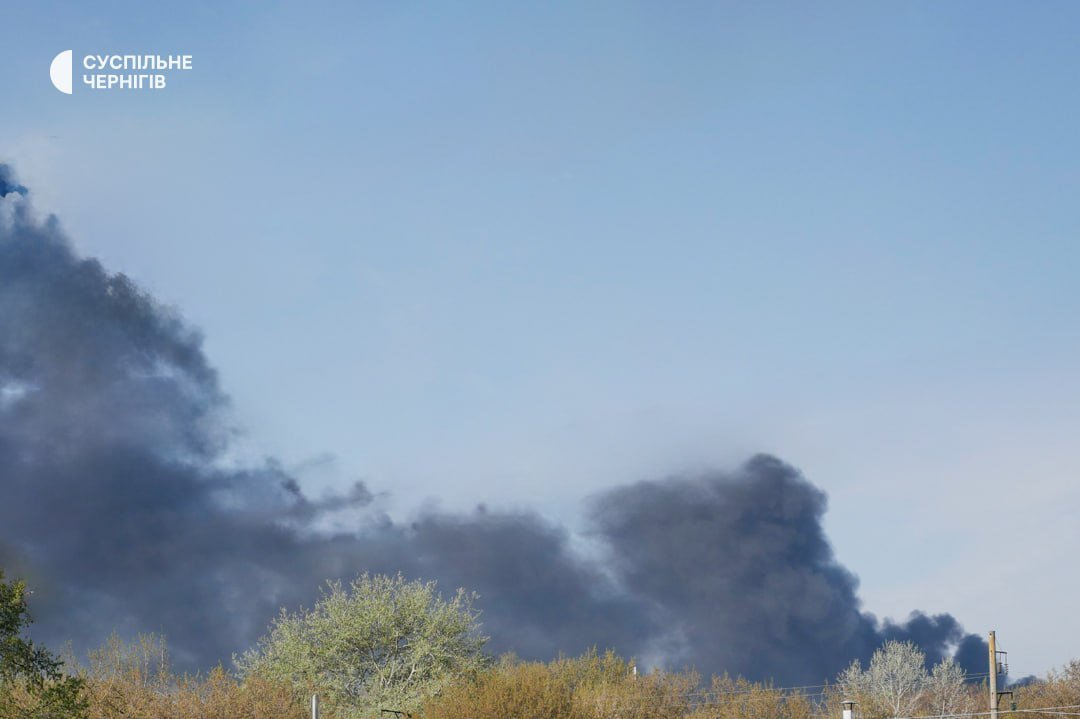
Further north, Russian Geran‑2 and Geran‑3 drones attacked the Chernihiv Thermal Power Plant, forcing a complete shutdown of the facility and disrupting power supplies to northern Ukraine (source). The strike demonstrates Ukraine’s vulnerability to UAV‑borne kinetic attacks on critical energy infrastructure.
In the Kryvyi Rih area, Russian Geran‑2 drones successfully hit a 150 kV substation, causing localized outages (source). Conversely, Ukrainian forces intercepted a Russian Shahed/Geran‑type drone over Dnipro, using a missile to bring it down (source).
Missile and Rocket Strikes Complement UAV Activity
Ukrainian kinetic actions were not limited to UAVs. A Russian Su‑34/35 launched a Kh‑31P anti‑radar missile that struck near Merefa in Kharkiv Oblast, targeting a presumed air‑defence radar site (source). The missile’s high‑speed, high‑altitude trajectory underscores Russia’s continued use of stand‑off weapons to degrade Ukrainian early‑warning capabilities.
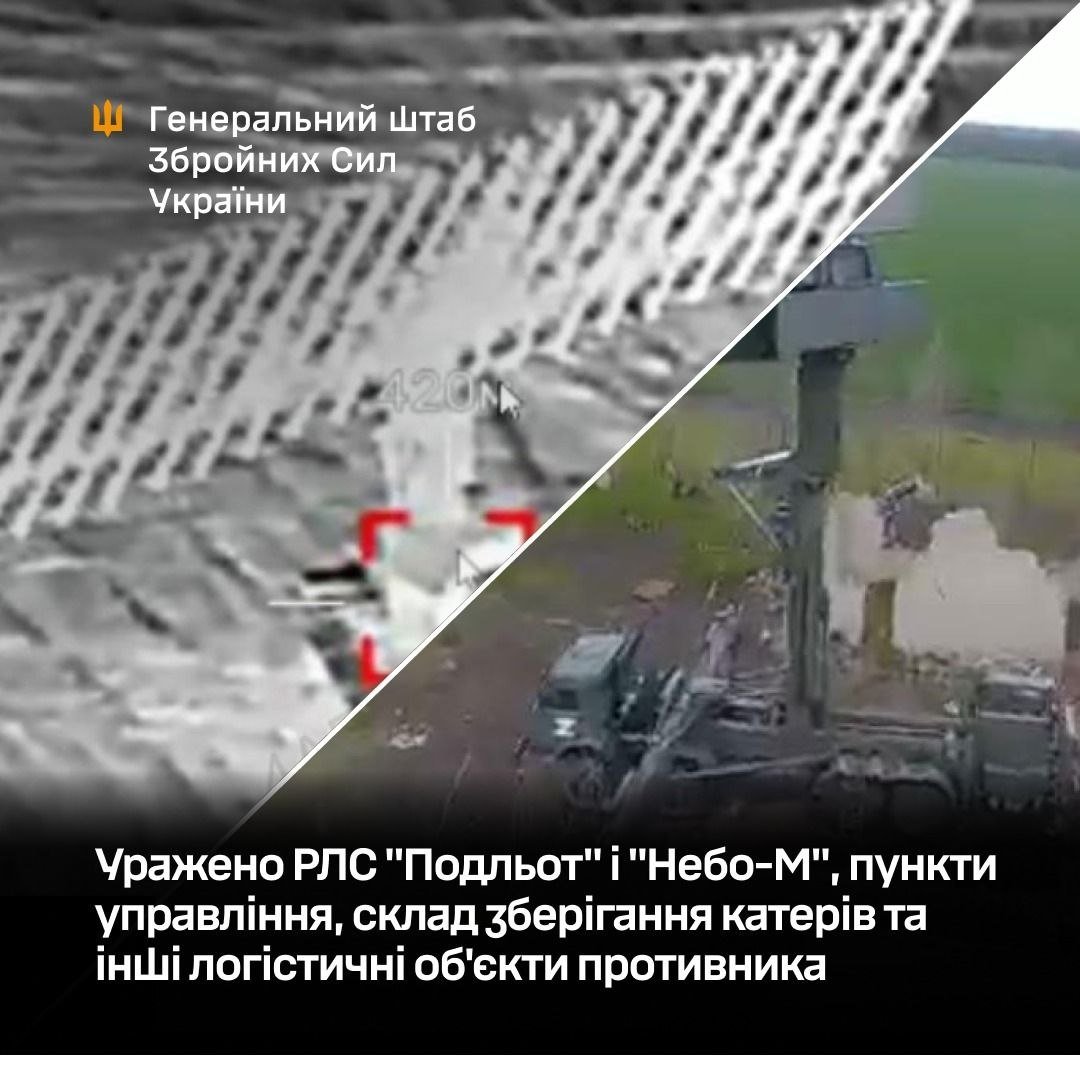
Ukrainian forces also conducted precision strikes against Russian radar and command assets across multiple front‑line regions, including Nebo‑M and Podlyot systems in Luhansk, Donetsk, Zaporizhzhia, Kursk, Crimea, Rostov and Belgorod. These coordinated attacks, reported by monitor_the_situation, employed a mix of air‑launched munitions and ground‑based missile systems (source).
Overall Kinetic Landscape on 17 April 2026
The day’s events illustrate a multi‑dimensional kinetic environment in Ukraine, where UAVs, missiles, and conventional artillery intersect. Russian forces continued to rely on swarms of low‑cost Shahed and Gerbera drones to pressure Ukrainian air‑defences and critical infrastructure, while Ukraine responded with an increasingly sophisticated blend of state‑run and private air‑defence assets, electronic‑warfare measures, and offensive drone strikes against high‑value Russian targets.
Casualty figures remain limited for most UAV incidents, but the cumulative effect on logistics, power generation, and air‑defence readiness is significant. The high interception rate over Kyiv suggests that Ukraine’s integrated air‑defence network is adapting effectively, yet the persistence of successful Russian strikes on power facilities indicates that vulnerabilities remain, particularly in the north‑eastern grid.
Continued monitoring of UAV deployment patterns, electronic‑warfare effectiveness, and the integration of private air‑defence units will be essential for assessing the evolving balance of kinetic power in the Ukrainian theatre.