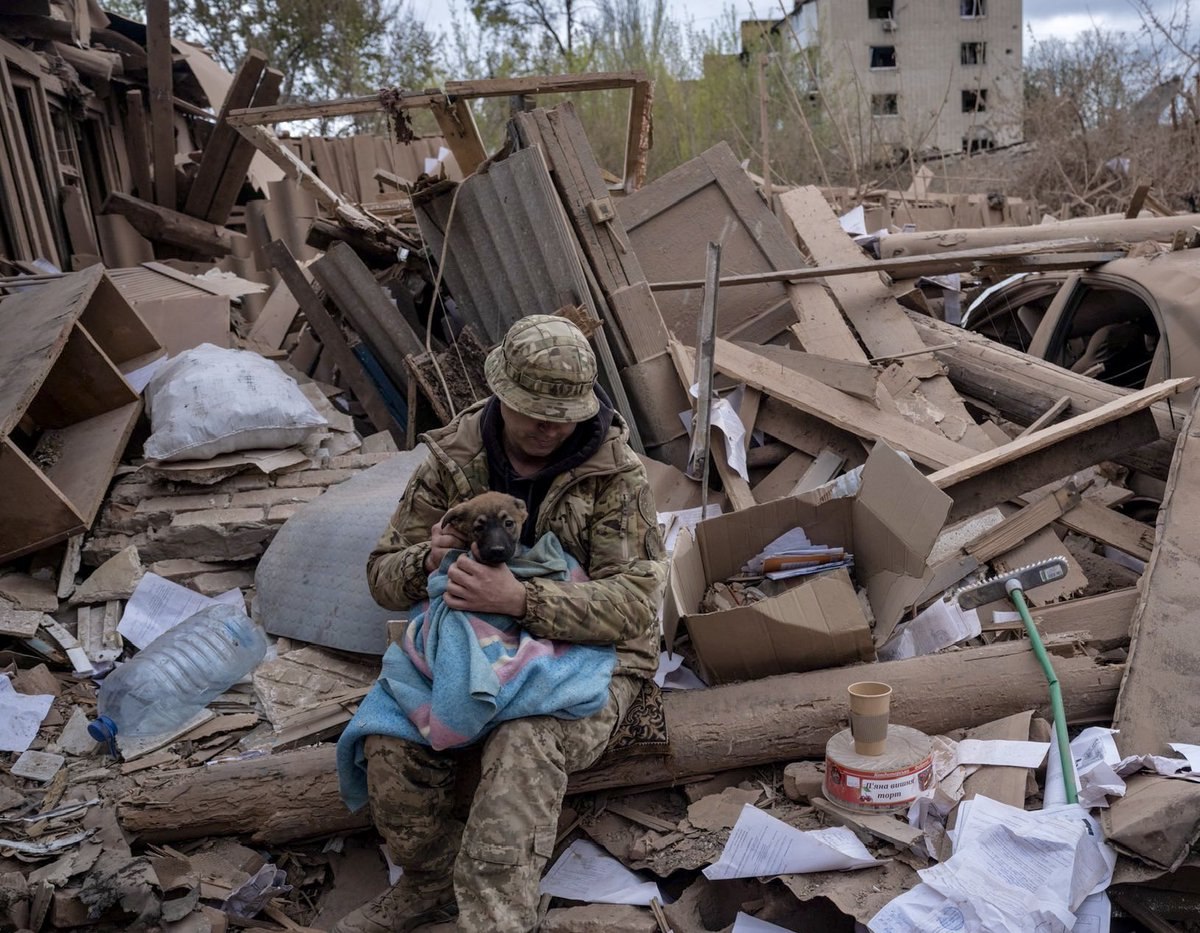
On 16 April 2026 a Russian airstrike on the town of Sviatohirsk in Donetsk Oblast marked the day’s most significant kinetic event. Rescue crews recovered a Ukrainian soldier and his service dog from the rubble, confirming the strike’s lethal impact despite the absence of reported civilian casualties. The incident, documented by the Telegram channel monitor_the_situation (source), illustrates the continued use of aerial bombardment in contested eastern regions.
Air and Missile Threats in the Capital
At 14:00 UTC a Russian‑operated Shahed‑type drone, also identified as a Geran UAV, engaged a Ukrainian police patrol in Kyiv. The patrol, part of the national police force, sustained injuries while responding to damage from a ballistic missile strike the previous night. The drone attack was reported by monitor_the_situation (source) and underscores the layered threat environment facing first‑responders in the capital.
Earlier, at 13:05 UTC, a ballistic missile struck Kyiv, exposing a critical shortfall in Ukraine’s interceptor inventory. Al Jazeera correspondent Audrey Macalpine highlighted that the shortage of Patriot‑type and other high‑altitude interceptors left the city vulnerable to long‑range attacks (source). No official casualty figures were released, but the impact on infrastructure was noted.
Ukrainian Drone Campaigns Against Russian Logistics
Ukrainian forces expanded their unmanned‑aircraft operations beyond the front line. At 14:36 UTC, the intelligence outlet intelslava released footage of kamikaze “wing‑type” drones flying over Donetsk city, targeting Russian logistics hubs located roughly 60 km from the front (source). The drones, described as loitering munitions, are intended to disrupt supply lines without direct pilot involvement.
In a parallel effort, Ukrainian FPV (first‑person view) drones struck multiple rear‑area assets across Crimea and eastern Ukraine. According to GeoPWatch, the attacks on 14:31 UTC destroyed a Pantsir‑S1 medium‑range SAM system in Feodosia, a 9K33 Osa short‑range SAM near Vodyane, a 2K22 Tunguska anti‑aircraft gun near Valeryanivka, and damaged a Buk‑M1 system. The same operation reportedly hit an Iskander‑M missile storage site, although verification of the latter remains pending (source).
Additional FPV drone strikes were recorded in Crimea at 14:31 UTC, where Ukrainian operators targeted a Pantsir‑S1 system in Feodosia and an Osa system near Vodyane, as reported by monitor_the_situation (source). The coordinated nature of these attacks suggests a deliberate strategy to degrade Russian air‑defence coverage in occupied territories.
Russian Aerial and Ground Advances
At 13:24 UTC a Russian Su‑35 fighter launched an R‑37/77 long‑range air‑to‑air missile at a Ukrainian tactical aircraft over Kupyansk, Kharkiv Oblast. The missile missed, but the engagement signals an escalation in aerial combat intensity (source).
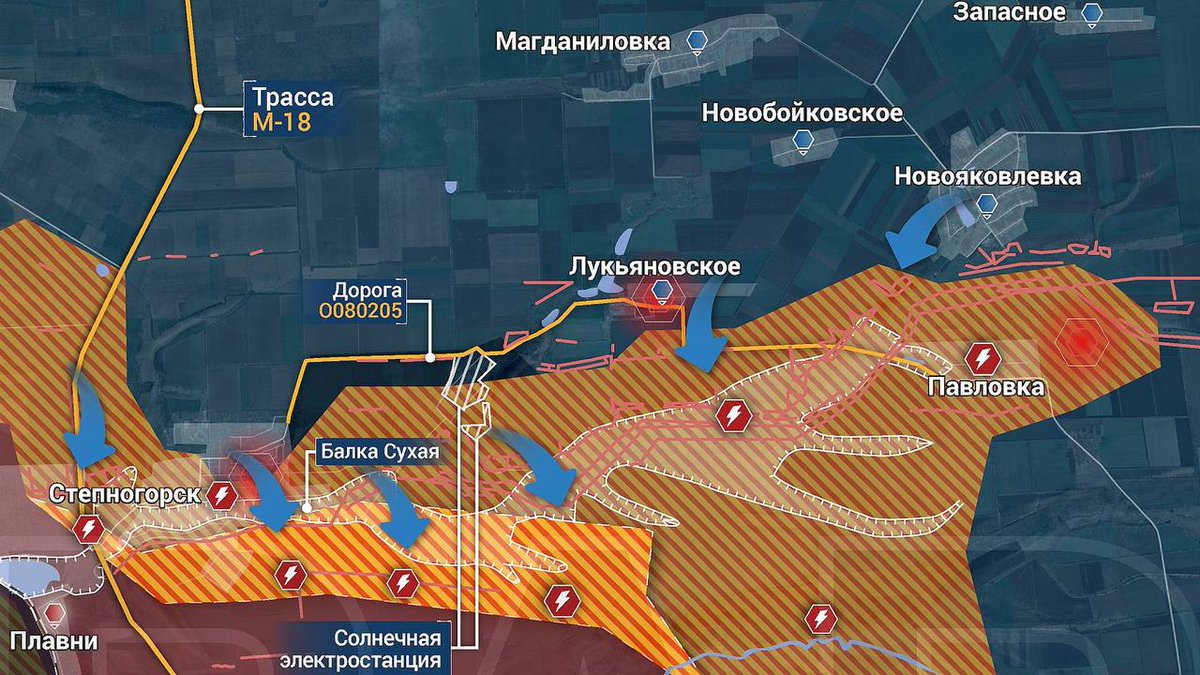
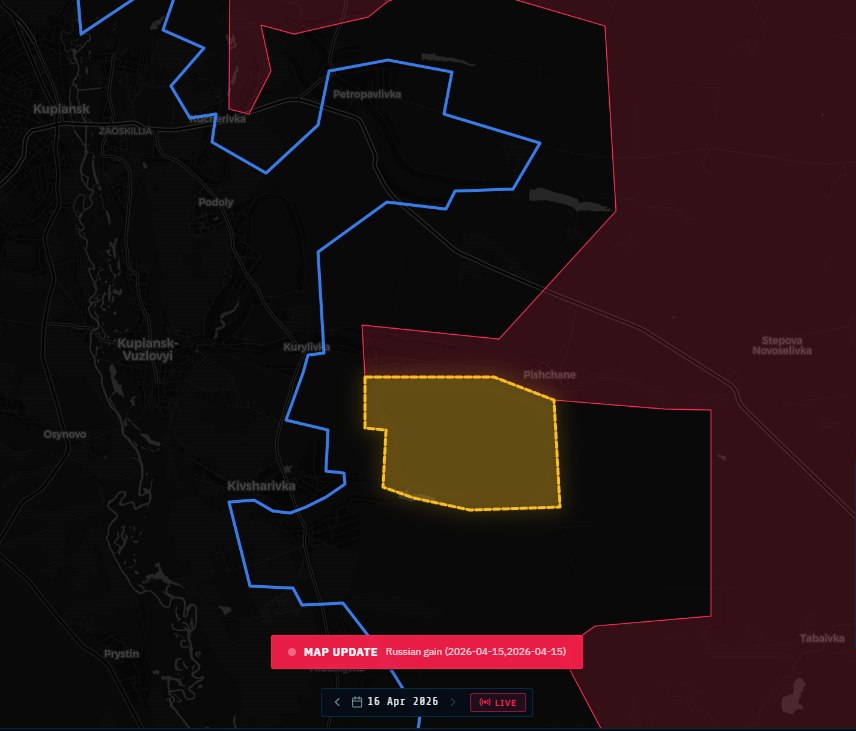
Ground movements were also notable. Russian troops advanced south of Kupyansk, gaining territory in the eastern offensive, as documented by monitor_the_situation at 06:47 UTC (source). Conversely, Ukrainian forces intercepted a Russian infiltration group in the Kharkiv Region later that morning, preventing a potential breach of defensive lines (source).
Special Forces Operations and Infrastructure Targeting
Ukrainian special‑operations unit “Artan” of the Main Intelligence Directorate (GUR) launched a large‑scale operation in the Zaporizhzhia direction at 12:31 UTC, aiming to liberate occupied settlements. While casualty figures were not disclosed, the operation reflects ongoing efforts to reclaim territory in the south (source).
In the Crimean theater, Ukrainian drones attacked 16 Russian military targets, including air‑defence batteries, Iskander missile sites, fuel depots and ammunition stores, according to monitor_the_situation (source). The breadth of the strike package indicates an expanding Ukrainian capability to conduct long‑range, precision strikes from within Ukrainian‑controlled airspace.
Railway and Logistics Disruption
A Russian FPV drone struck a diesel locomotive in Kherson at 14:29 UTC, temporarily halting rail traffic used for military logistics (source). The incident demonstrates the vulnerability of supply chains to low‑cost, high‑impact UAV attacks.
"The cumulative effect of these drone operations is to erode the enemy’s ability to move materiel across the rear, forcing them to allocate additional air‑defence assets to protect logistics hubs," a senior Ukrainian defence analyst noted in a briefing (source: intelslava).
Collectively, the events of 16 April 2026 reveal a multi‑domain escalation: Russian airpower continues to target urban centres and frontline positions, while Ukrainian forces increasingly employ UAVs to strike deep‑strike logistics and air‑defence assets. The interplay of high‑precision missiles, loitering munitions and special‑operations raids suggests both sides are intensifying efforts to shape the battlefield beyond the immediate front line.